Why creatine is the most under-served private label category in sports nutrition
Creatine monohydrate is the rare ingredient that combines three things brand owners almost never get at the same time: a large and still-growing consumer base, a regulatory status that is already settled in most major markets, and a manufacturing process that is genuinely straightforward to run well. It is the most studied sports supplement in the world, and demand has moved well beyond the bodybuilding aisle into women's health, healthy ageing, cognitive performance and everyday wellness categories. A brand that would never have listed a creatine SKU five years ago now treats it as a core range item.
And yet creatine monohydrate powder projects have a higher rate of going sideways than almost any other category we run at Yukang Medicine. The failures are almost never about the molecule. They are about physical behaviour in the hopper, taste that cannot be masked cheaply, particle size that settles out of a stick pack, and specification mismatches that only surface when a container reaches a retailer's own laboratory. When we reviewed our project data this year, creatine briefs took roughly 30% longer to reach a signed specification than collagen or magnesium briefs — not because the ingredient is difficult, but because most briefs arrive without any target specification for particle size, bulk density or flow.
If you are scoping a project right now, the format decision matters more than the ingredient decision. Our creatine monohydrate private label manufacturing page sets out the parameters we quote against — bulk density, mesh size, flow angle and disintegration targets — and if your channel is retail-first rather than DTC, the creatine gummies line is the format to compare against.
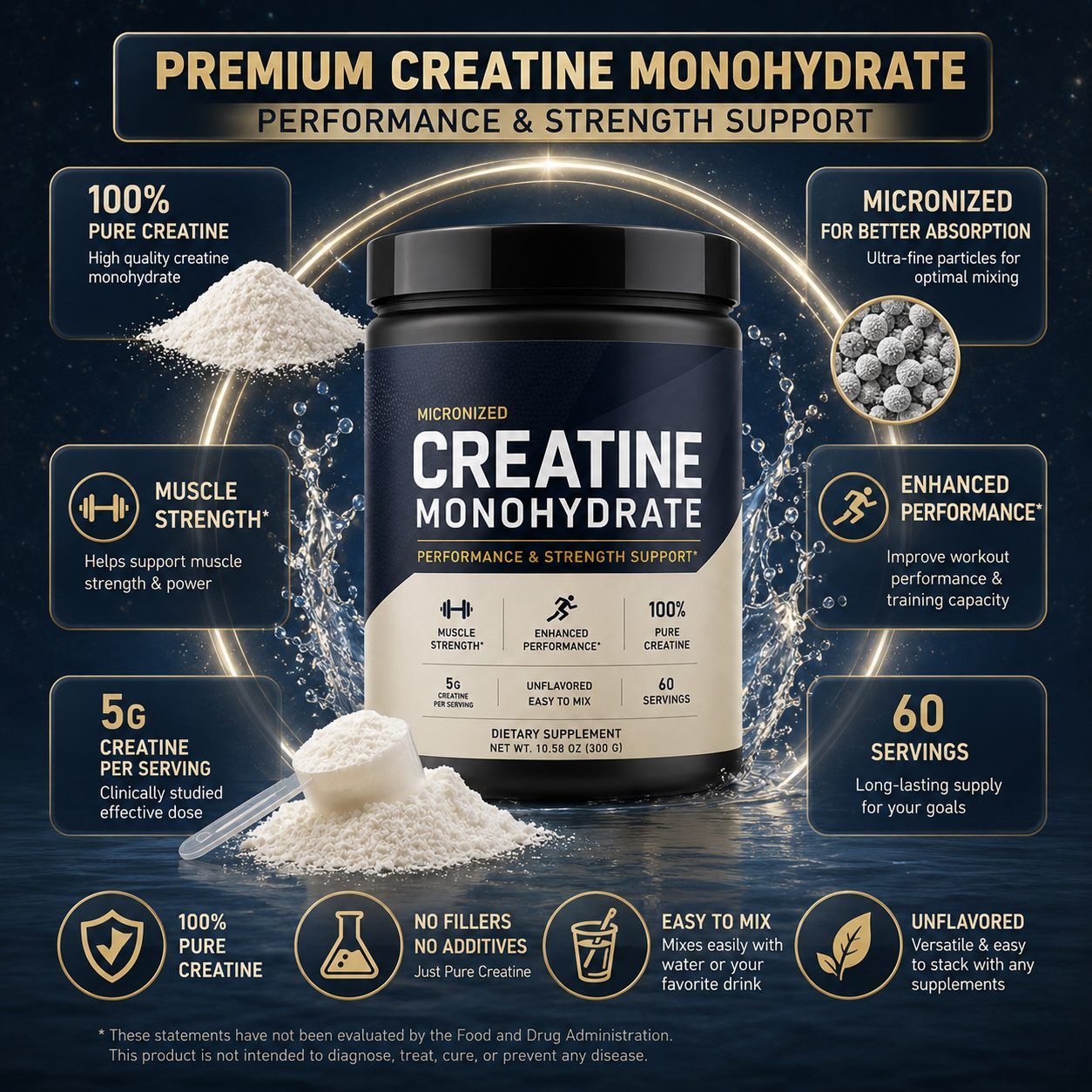
The five delivery formats brand owners actually order
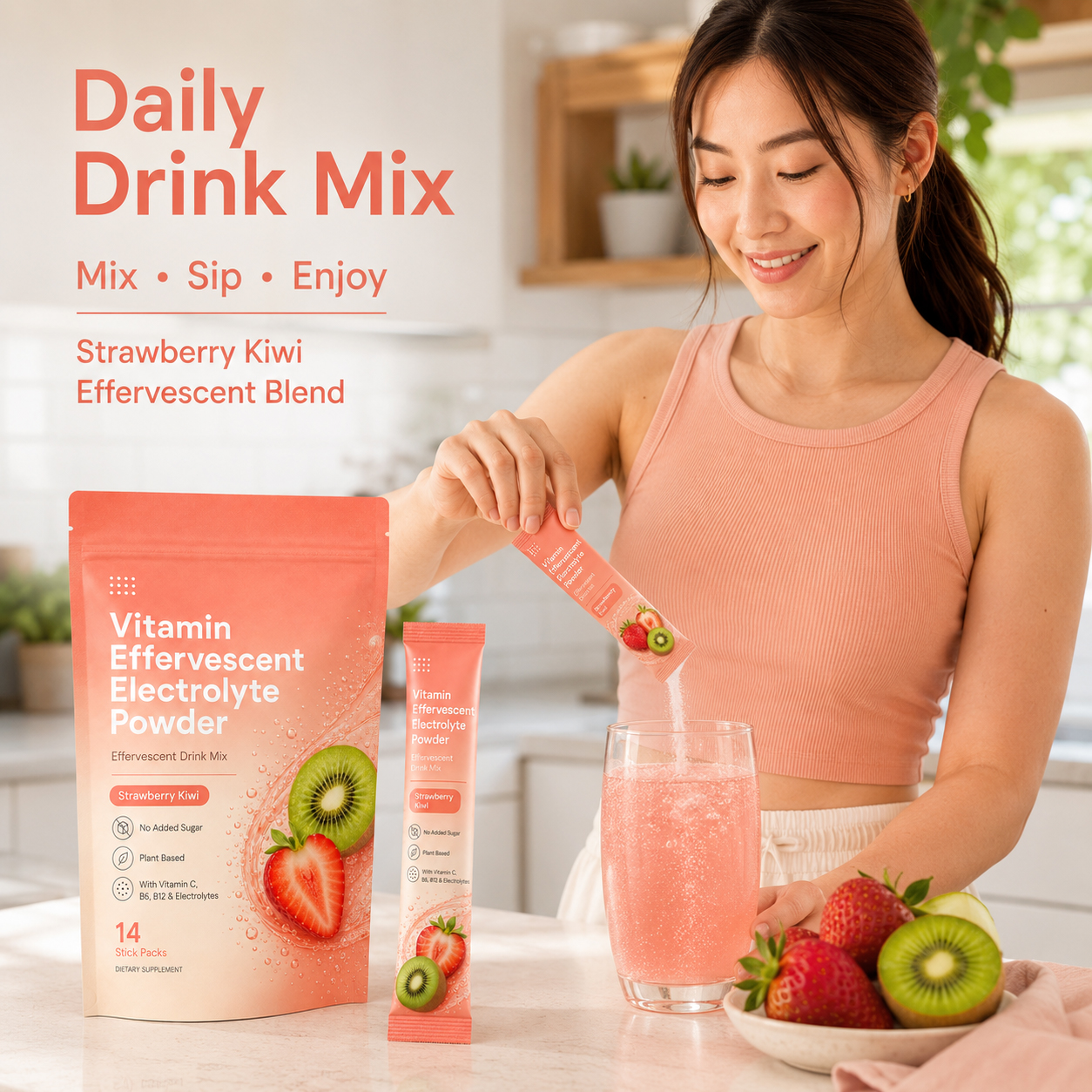
Creatine is unusually format-flexible for a commodity ingredient. The same 200-mesh monohydrate can be filled into a tub, a stick pack, a sachet, a gummy or a capsule. What changes is not the raw material but the processing route, the excipient load, the flavour system and the resulting cost per serving — and those differences are large enough to decide whether a product is viable at all in a given channel. A 22-dollar retail tub and a 45-dollar retail box of thirty stick packs can contain the same 1.80 dollars of creatine.
| Format | Typical dose | Relative cost per serving | Stability & shelf life | Best-fit channel |
|---|---|---|---|---|
| Loose powder (tub) | 5 g scoop | Lowest | 24 months; humidity-sensitive once opened | DTC, gym, Amazon |
| Stick pack / sachet | 5 g | Low to medium | 24 months; best moisture barrier of any format | Subscription, travel, sampling |
| Gummy | 1.5–3 g per piece | Highest | 18 months; heat-sensitive in transit | Retail shelf, women's health |
| Capsule (HPMC) | 0.75–1 g per capsule | High | 24 months; no flavour system needed | Convenience, multi-SKU ranges |
| Chewable tablet | 1–2 g | High | 18–24 months | Retail, family and kids' formats |
Where order volume actually sits
Across the creatine briefs we quoted over the last eighteen months, demand is not spread evenly. Loose powder still carries the majority of unit volume, but essentially all of the growth is concentrated in single-serve formats and gummies — the two routes that solve the biggest consumer complaint about creatine, which is that a five-gram scoop of unflavoured monohydrate tastes like chalk and does not dissolve in water. The chart below is our own enquiry mix, not a market forecast, but it matches what our retail-facing clients report from their sell-through data.
The practical read for a private label creatine range: if you are launching a single hero SKU, loose powder is the lowest-risk entry. If you are building a range, pair a tub with a stick-pack or gummy variant at a higher price point — the incremental formulation cost is small relative to the price premium the format supports.
Monohydrate vs HCl vs buffered creatine: what the evidence actually supports
The marketing narrative says creatine HCl absorbs better and that buffered creatine avoids conversion to creatinine. The peer-reviewed literature does not support a meaningful performance difference at matched doses. What the alternative forms genuinely buy you is formulation behaviour rather than efficacy — faster dissolution, less grit, a lower dose per serving — and they cost substantially more per kilogram. That trade is sometimes worth making, but it should be a deliberate decision, not a claim you inherit from a supplier's sell sheet.
| Form | Relative raw-material cost | Solubility | Performance evidence | Formulation note |
|---|---|---|---|---|
| Creatine monohydrate (200 mesh) | 1.0x (baseline) | Low, approx. 13 g/L | Strongest evidence base of any form | Needs a suspending agent in ready-to-drink formats |
| Micronised monohydrate | 1.2–1.4x | Low | Equivalent to monohydrate | Best default for powder blends and stick packs |
| Creatine HCl | 6–9x | High | No demonstrated advantage at matched dose | Lower dose per serving, noticeably less grit |
| Buffered / pH-adjusted | 8–12x | Moderate | No demonstrated advantage | Premium positioning; verify market status by country |
| Creatine nitrate | 10x and above | Moderate | Limited, confounded by the nitrate effect | Niche; check permitted status before formulating |
Our default recommendation for a first private label creatine monohydrate powder SKU is micronised monohydrate. It gives you the strongest evidence claim, the lowest landed cost and the widest regulatory acceptance across the US, EU, UK and Southeast Asia. The money you save belongs in the flavour system, which is where consumers actually notice the difference between one brand's tub and another's.
Taste-masking is the real cost driver
Unflavoured creatine monohydrate is bitter, chalky and faintly sour, and it does not dissolve. Masking it properly takes a combination of a flavour system, a mouthfeel modifier and a suspending agent — and the cost of that system is typically two to four times the cost of the creatine itself. This is the single most common budget surprise in a private label creatine monohydrate powder project: brand owners budget for the ingredient and then discover the ingredient was never the expensive part.
- Sweetener choice drives cost more than flavour choice. Stevia and monk fruit systems behave differently at the pH of a creatine solution, and behave differently again after three months on a shelf.
- Acidulants are the enemy of a clean label. Citric and malic acid improve perceived freshness but accelerate creatine degradation in solution — leave them out unless your format is a dry stick pack.
- A suspending agent is non-negotiable in any ready-to-drink format. Without one, the monohydrate settles into a dense layer within minutes and the consumer pours half the dose down the sink.
- Texture reads as quality. A small amount of a soluble fibre or a gum system changes the mouthfeel from gritty to smooth for a fraction of a cent per serving.
- Sample two or three flavour directions before you commit. Flavour approval is the most common cause of a two-week slip in a creatine launch schedule.
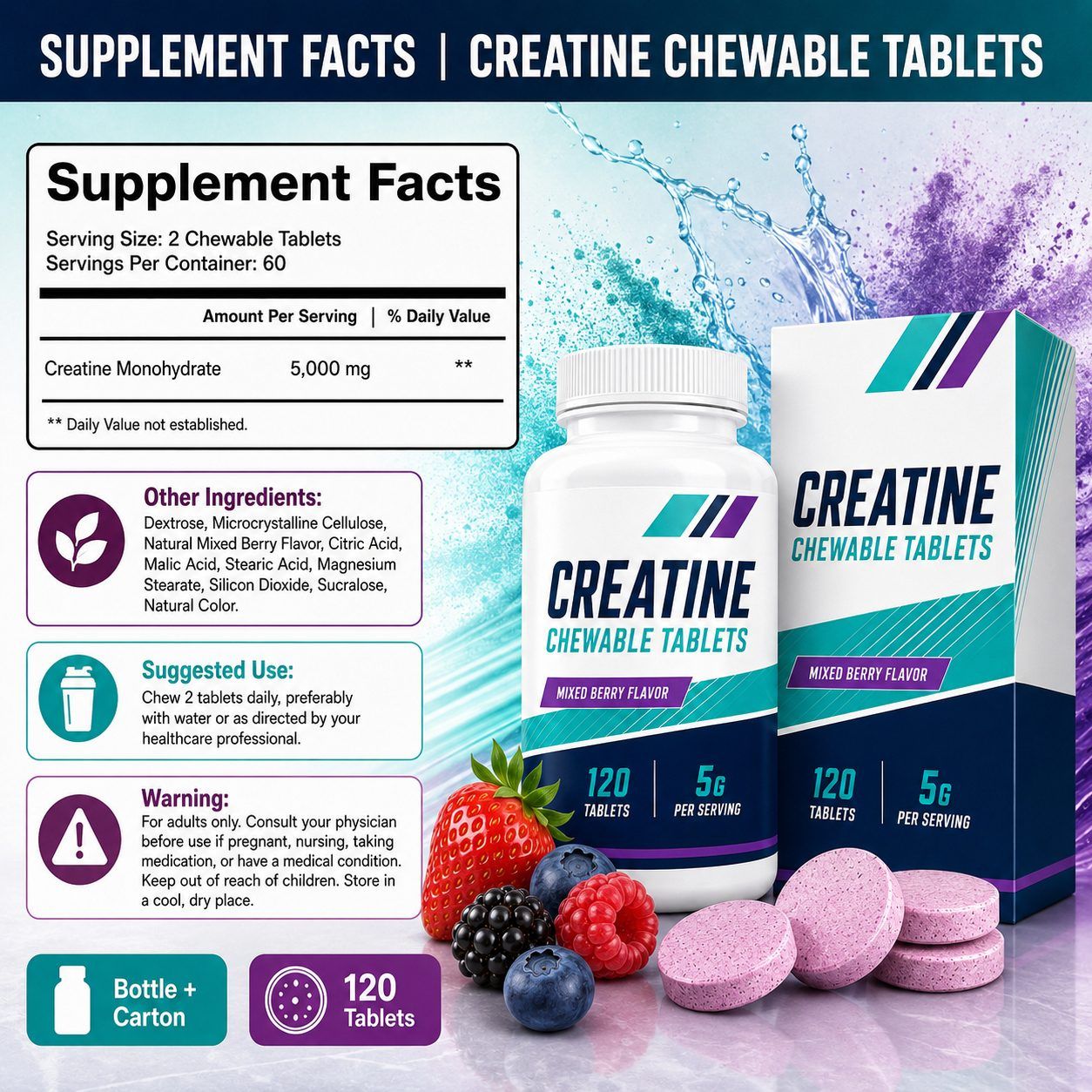
On a typical 30-serving creatine stick pack, the monohydrate is roughly 15–25% of total COGS. Flavour, sweetener, mouthfeel and packaging make up the rest. Brand owners who cost the formula as though it were pure creatine consistently under-budget by a factor of three.
What a creatine powder project actually costs
Cost per serving is the only number that matters commercially, and it is driven by the format rather than the molecule. The table below shows the typical contribution of each cost block for a 30-serving flavoured creatine monohydrate powder stick-pack project at 5 g per serving — our most common brief. Absolute figures move with flavour complexity and packaging artwork; the proportions are stable.
| Cost block | Share of unit COGS | What drives it up | Where you can pull it down |
|---|---|---|---|
| Creatine monohydrate | 15–25% | Switching to HCl or buffered forms | Stay on micronised monohydrate |
| Flavour & sweetener system | 25–35% | Novel or natural-only flavour profiles | Two or three SKUs sharing one base system |
| Mouthfeel & suspending agents | 8–12% | Ready-to-drink formats | Dry formats need less |
| Packaging (stick, carton) | 20–30% | High-barrier laminates, premium cartons | Standard laminate, single-colour carton |
| Testing & documentation | 5–8% | Extra market-specific panels | Bundle markets under one specification |
Specifications to demand before you sign a PO
- Particle size in mesh, not in words. "Fine powder" means nothing. Ask for 200 mesh, or a stated D90 in microns.
- Bulk density and tapped density, both with a stated method. This is what determines whether your stick pack fills accurately.
- Flow angle or a flowability index. Poor flow is the number one cause of underfilled sachets.
- Heavy metals panel from an accredited third-party laboratory, with the actual numbers on the certificate — not a pass/fail stamp.
- Microbiological limits for total plate count, yeast and mould, E. coli and Salmonella, with the method referenced.
- Loss on drying, so you know what moisture you are buying and how long the powder will stay free-flowing.
- A retention sample of the exact lot, held for at least the shelf life you intend to claim.
- A written flavour and colour specification with a sealed approved sample, so batch three matches batch one.
- An allergen and cross-contact statement covering the whole facility, not just your line.
- A stability protocol agreed in advance: which conditions, which timepoints, and what result counts as a failure.
Labelling, claims and the regulatory line
Creatine is one of the easier ingredients to label correctly, provided you resist the temptation to over-claim. In the United States it can be sold as a dietary supplement with a structure-function claim and the standard disclaimer; in the European Union it is authorised for use in foods for sportspeople, with dosage conditions attached to that authorisation. What you cannot do is promise a performance outcome, treat a claim authorised in one market as automatically valid in another, or reuse the same supplement facts panel across markets without review.
The country-by-country detail is worth planning before you commission artwork rather than after, because a label change is a packaging change and a packaging change resets your production slot. Our overview of FDA, cGMP and HALAL requirements covers the framework we work to with clients across the US, EU and Southeast Asia.
MOQ and lead times: the numbers to plan against
Creatine is a commodity raw material with a stable supply base, so the constraint on your minimum order is almost never the ingredient — it is the packaging and the changeover time on the filling line. That is genuinely good news for a first launch, because it means you can start smaller than most brand owners expect, and scale the format rather than the formula.
For realistic starting quantities across formats, and the timeline from brief to delivered pallet, see our breakdown of MOQ and lead times in supplement manufacturing.
Ready to cost a private label creatine project properly?
Send us your target format, serving size, flavour direction and destination market. You will get an itemised factory quote with a separate line for the flavour system, plus a free formulation consultation and a sample plan — NDA protected.
What to take into your creatine project
- Choose the format before the molecule. Format drives cost, stability and channel fit; the molecule is a commodity.
- Default to micronised monohydrate unless you have a specific reason to pay six to ten times more for another form.
- Budget the flavour system at two to four times the cost of the creatine itself.
- Write the specification in numbers — mesh, bulk density, flow angle, moisture — before you request a quote.
- Confirm permitted claims per market before you commission artwork, not after.
Sources
- International Society of Sports Nutrition position stand: creatine supplementation and exercise (JISSN)
- EFSA Panel on Nutrition, Novel Foods and Food Allergens — safety of creatine monohydrate as a food supplement
- US FDA — Dietary Supplement Ingredient Advisory List
- European Commission Regulation on foods for sportspeople — permitted substances and conditions of use
Key takeaways
- Format drives cost, stability and channel fit — choose it before the molecule.
- Micronised monohydrate is the right default: strongest evidence base, lowest landed cost, widest regulatory acceptance.
- Flavour, sweetener and mouthfeel systems cost two to four times the creatine itself. Budget for the system.
- Write specifications in numbers (mesh, bulk density, flow angle, moisture) before requesting a quote.
- Stick packs and gummies hold the growth; loose powder still holds the volume.
Frequently asked questions
Is creatine monohydrate private label production different from buying bulk creatine?
Yes. Buying bulk creatine is a commodity transaction; creatine monohydrate private label production is a specification exercise. The price per kilo of the raw material is only one input — mesh size, bulk density, flow behaviour, taste-masking load and packaging format usually move the unit cost more than the ingredient does. That is why we quote against a written specification rather than a per-kilo number.
What is the minimum order quantity for private label creatine monohydrate powder?
For standard micronised monohydrate in a stock tub or stick pack, MOQ usually starts in the low thousands of units, driven by packaging rather than by the raw material. Custom artwork, a bespoke flavour system or a new carton format raise that floor. We confirm the exact figure against your packaging choice in the quote.
Is creatine monohydrate or creatine HCl better for a private label product?
For efficacy, monohydrate has by far the strongest evidence base and no peer-reviewed study shows HCl outperforming it at matched doses. HCl dissolves more readily and has less grit, so it is sometimes chosen for premium ready-to-drink concepts. Expect to pay six to nine times more per kilogram for that difference in behaviour.
How long does a creatine powder project take from brief to delivery?
A standard project on an existing flavour system and stock packaging typically runs 8 to 12 weeks from approved specification to delivered goods, including a stability timepoint and packaging proofing. Novel flavours, new cartons or additional market testing panels add two to four weeks.
Why does my creatine powder settle out of the bottle?
Because monohydrate has low solubility — roughly 13 g per litre at room temperature — and no suspending agent was included. It is a formulation gap, not a raw-material defect. A food-grade suspending system fixes it, and it costs a small fraction of a cent per serving.
Can you supply creatine in gummy or chewable formats instead of powder?
Yes. Both are produced on our confectionery and chewable lines. They carry a higher unit cost and need a heavier flavour load, but they remove the chalk problem entirely, which is why they support the highest retail price premium of any creatine format.
Do you provide third-party testing documentation for creatine?
Yes. Every lot ships with a heavy metals panel, microbiological results and a loss-on-drying figure from an accredited laboratory, plus a retained sample held for the shelf life you intend to claim.
Have a project in mind? We'll come back with MOQ, formula options and lead time within 24 hours.
Request a Quote