Why buyers ask for the certificate before they ask for the price
Brand owners regularly ask for a certificate of analysis, an allergen statement and microbiological or heavy-metal results before they will discuss a deposit. The order of those questions is rational. A unit price is only useful if the lot behind it can clear customs, satisfy a retailer's technical reviewer and survive a marketplace document request three months later.
What most first-time buyers do not see is that the document arriving at the end is produced by three separate control points, and a factory that only tests at the end is testing a decision it can no longer influence. This guide walks through the three gates of supplement quality control, the numbers attached to each one, and the lines on a certificate that are worth challenging. It is written for brand owners who have to approve a specification sheet without a laboratory of their own.
Yukang Medicine publishes the document set it releases on its trust center, which is the fastest way to see the shape of the evidence pack before a project starts.
Quality control is three gates, not one test
Supplement quality control measures the product against a written specification. Quality assurance owns the system around those measurements: the standard operating procedures, the deviation log, the corrective actions and the change control that stops a formula drifting between batches. Release is neither of those. Release is a signature from someone who is not paid on output, confirming that the lot may be sold.
In supplement quality control the three gates are incoming raw material, in-process tests on the running line, and finished product release. Each catches a different class of failure, and the cost of catching it rises by roughly an order of magnitude at every step. A rejected drum costs a purchase order. A rejected blend costs a shift and a cleaning cycle. A rejected finished lot costs the packaging, the labor, the freight and the launch date, and it usually costs them after the marketing spend has already gone out.
Gate one: what happens to a raw material before it is weighed
Incoming inspection starts with a sampling plan, not a test. A common rule for a delivery of identical containers is the square root of the container count plus one, so a 25-drum shipment is sampled from six drums, and a 9-bag shipment from four. Composite sampling is cheap but hides a single bad container; discrete sampling costs more and finds it. For actives with a wide natural variation, ask which one is used, because a composite result can pass while one drum in the pallet is out of specification.
Identity testing is where substitution actually lives, and it is the cheapest test in the building. Magnesium stearate and stearic acid are different materials with the same fine white powder appearance and very different lubrication behavior. A glucosamine sulfate and a glucosamine hydrochloride are not interchangeable on an elemental basis. A botanical extract standardized to a marker can hit that marker number while the extract itself is mostly carrier. A Fourier transform infrared scan takes ten to fifteen minutes against a reference standard; a full high-performance liquid chromatography assay takes forty to sixty. That difference is why every container gets an identity scan and only the composite gets the assay.
| Material class | Identity | Assay or marker | Contaminants | Typical release window |
|---|---|---|---|---|
| Vitamin or mineral salt | FTIR against standard | HPLC or ICP for elemental share | Heavy metals, residual solvent | 3-5 working days |
| Botanical extract | FTIR plus macroscopic check | Marker compound by HPLC | Pesticides, PAHs, heavy metals | 5-10 working days |
| Protein powder | FTIR, supplier profile | Protein by Kjeldahl or Dumas | Melamine, heavy metals, micro | 5-7 working days |
| Excipient | FTIR, particle size | Usually identity only | Micro, foreign matter | 2-3 working days |
| Capsule shell | Visual, dimensional | Bloom strength, moisture | Micro, color match | 1-2 working days |
| Flavor system | Gas chromatography profile | Key aroma compounds | Allergen carrier, solvent | 3-5 working days |
| Primary pack | Dimensional, print proof | Seal and barrier spec | Migration, odor | 1-3 working days |
Supplier qualification sits underneath all of it. A workable rule is three consecutive conforming lots before a supplier is approved, then an identity test on every lot with a full panel once a year or on any process change. Manufacturers that skip the annual full test panel tend to discover a supplier's silent specification change two years later, inside a stability failure.
Gate two: the checks that run while the line is moving
Blend uniformity is the test that decides whether the label claim is true anywhere in the batch, not just in the sample. The usual protocol takes ten samples across the blender, top, middle and bottom, and asks for a relative standard deviation of five percent or less with every individual result between ninety and one hundred ten percent of label. Fail that and the batch gets more blending time, which is its own trap: over-blending a powder with magnesium stearate for more than about five minutes can coat particles and slow dissolution, so the fix for a uniformity failure can create a dissolution failure.
Fill weight is where powder brands lose money quietly. A 5 g stick running at plus or minus one and a half percent is plus or minus 0.075 g per stick, which sounds negligible until it is multiplied out: sixty sticks per pouch at the top of that tolerance is 4.5 g of free powder per pouch, and ten thousand pouches is 45 kg of active given away. Checkweighers catch individual outliers, but the drift between checks is what the fifteen-minute five-unit sample exists to find. Net content law adds a second layer: the average net quantity must meet or exceed the declared weight, and no single unit may fall below it by more than the tolerable negative error, which is roughly three percent for a 300 g pouch, about 9 g.
Seal integrity is the test that is easiest to skip and most expensive to miss. A dye penetration test on a stick crimp, a burst test on a pouch and a peel strength reading on the seal all take minutes. The failure mode is not a dramatic rupture; it is a channel leak along one crimp jaw that lets moisture in over six months, and it usually appears as a caking complaint from the market rather than as a line rejection. Crimp temperature and pressure drift with ambient conditions, so a seal check that passes at nine in the morning can fail at two in the afternoon without anyone touching a setting.
| Format | What is measured | Frequency | Typical acceptance criterion |
|---|---|---|---|
| Hard capsule | Fill weight, closure length | Every 15 minutes | Within 5 percent of target weight |
| Tablet | Weight, hardness, friability | Every 30 minutes | 4-8 kp; friability under 1 percent |
| Powder stick or pouch | Fill weight, seal strength | Every 15 minutes | Within 1.5 percent; 1.5-4 lb per inch peel |
| Softgel | Shell thickness, seam quality | Every hour | 0.6-0.9 mm shell, no leakers |
| Gummy | Brix, texture, piece weight | Start and end of each batch | 78-82 Brix, weight within 3 percent |
| Liquid or drops | pH, fill volume, cap torque | Start, middle and end | pH within 0.2 of target; fill plus 3 percent |
How long each test actually takes
Test turnaround is a scheduling constraint dressed up as a laboratory detail, and it decides whether a launch date is real. The identity test can be reported the same day. The assay test needs a standard curve and a run, so three to five days in a busy lab. Heavy metals by inductively coupled plasma mass spectrometry and a full microbiological test panel both sit around five to seven days, because the microbial incubation cannot be compressed by paying more.
The bar chart is illustrative and reads from typical third-party laboratory turnaround rather than from a specific contract, but the shape is the part that matters. A factory quoting a fifteen-working-day production lead time and a nine-working-day release panel is not contradicting itself: the batch is physically finished before the paperwork is. Book the laboratory slot when the filler slot is booked, and the release stops being the last surprise of the project.
Gate three: release, and the certificate that proves it
Finished product release is a review, not a test. Someone qualified and independent of production reads the batch record, the in-process test results, the finished panel and the deviation log, then signs. Under the US dietary supplement cGMP in 21 CFR Part 111, that review has to happen before the lot is distributed, and it has to be documented. The certificate of analysis is the customer-facing summary of that review; the batch record behind it is the evidence.
| Test | Method reference | Typical limit | What a weak COA shows |
|---|---|---|---|
| Identity | FTIR against reference standard | Matches standard | The word Conforms, no spectrum |
| Assay | HPLC or ICP for the active | 95.0-105.0 percent of label | No numeric result at all |
| Uniformity | USP 905 or weight variation | Acceptance value 15.0 or lower | Not reported |
| Microbiology | USP 61 and USP 62 | TAMC 10^3 CFU/g or lower | Within limits, no counts |
| Heavy metals | USP 232 limits by USP 233 methods | Lead 5 micrograms per day or lower | A single word, Pass |
| Water activity | Dew point or capacitance | 0.60 aw or lower for powders | Not reported |
| Net content | Gravimetric, per lot | Average at or above declared | Not reported |
A certificate that says Conforms next to heavy metals, with no limit and no method, is an opinion rather than evidence. Ask for the numeric result, the limit it was compared against and the method code, and check that the lot number printed on the page matches the carton in your warehouse. A certificate that cannot be tied to a lot is a template.
How to read a certificate in five minutes
Most of the value in a certificate of analysis is in the format rather than the numbers, and a buyer can audit the format without any technical training, which makes it the most accessible part of supplement quality control from outside the plant. The five-minute test below catches the failures that matter.
- Match the lot number on the certificate to the lot number on the carton, the pouch and the shipping document.
- Check that every specification line carries a measured value and a test limit, not a verdict word.
- Confirm each test method is named, either as a pharmacopeial chapter or as a validated in-house method with a number.
- Compare the test date against the production date; a result dated before the batch was made is a copy and paste error.
- Verify the laboratory, its accreditation number and whether the specific test appears in its scope.
- Lay the panel beside your approved specification sheet and confirm the limits are yours, not a generic template.
Third-party laboratories, ISO 17025 and the scope trap
Accreditation is granted per test method and per matrix, not to a laboratory as a whole. A lab can hold ISO/IEC 17025 accreditation for lead in food by inductively coupled plasma mass spectrometry and still not be accredited for arsenic by hydride generation, or for a softgel matrix at all. The certificate on the wall proves nothing about your test. Ask for the scope document, search your specific analyte and method, and check the revision date. The ILAC mutual recognition mark on a report is only meaningful when the test line is inside that scope.
There is a second trap that costs brands real time: the matrix declared on the chain of custody. A sample submitted as food and a sample submitted as a dietary supplement can be run against different microbiological limits, and a report that is technically correct can still be rejected by a retailer's reviewer because the wrong limit was applied. Write the intended market and the product category on the submission form, not just the product name.
In-house versus external is a straightforward trade. Identity, weight, seal and appearance tests belong in-house because the feedback loop has to be minutes, not days. Heavy metals, allergen enzyme-linked assays, pesticide panels and any claim you may have to defend to a retailer belong outside, because the equipment and the accreditation are not worth owning for one SKU. Budget sixty to three hundred US dollars per external test line and treat the total as part of the lot cost, not as an overhead.
Reserve samples, lot codes and the recall you hope never to run
Under 21 CFR 111.83 a manufacturer has to keep a reserve sample of every lot of finished product for one year past the shelf life, in the same container closure system, and at least twice the quantity needed to run the full test panel. For a 300 g pouch with 60 servings that means two untouched pouches per lot sitting in storage for roughly twenty-five months. Ask to see the reserve sample log; a factory that cannot produce it has no way to investigate a complaint eighteen months after shipping.
The lot code is a packaging decision that quietly sets the granularity of any recall. A stick crimp is only eight to ten millimetres wide, the code needs characters around two millimetres high to stay legible, and printing on the crimp disturbs the seal area. If the code goes on the crimp, the seal integrity test has to be repeated after coding, because both the ink and the heat change the seal window. If the code goes on the pouch body, the seal stays clean but the code can be hidden behind a label or worn off in transit. Either choice is defensible; not asking the question is not.
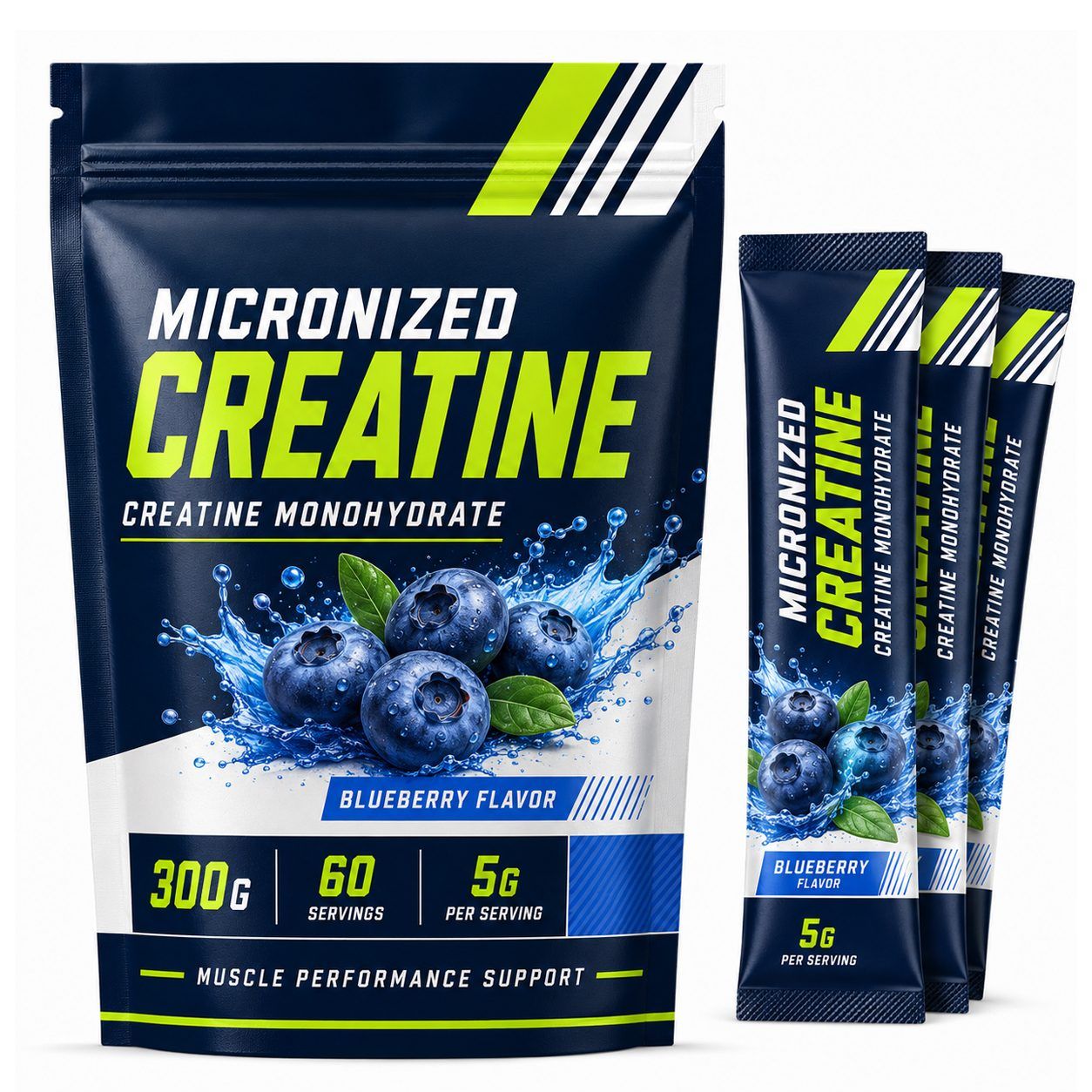
The recall arithmetic follows from the same decision. A batch-coded 5,000-unit run means recalling 5,000 units to remove a fault that may sit in 200 of them. A shift-coded or line-coded run lets a brand pull a fraction of that, which is the difference between a costly week and a company-ending quarter. This is the kind of detail that never appears in a brochure and always appears in an audit.
What release testing costs per unit
Testing is a fixed cost per lot, which is why small lots look expensive and large lots look cheap. A standard release test panel of identity, assay, microbiology, heavy metals and net content typically lands between four hundred and nine hundred US dollars per lot at a commercial laboratory, before any retest. Spread over a thousand units that is forty to ninety cents a unit; spread over twenty-five thousand it is under four cents.
| Lot size | Release panel per lot | Cost per unit | Share of a 3.20 USD unit cost |
|---|---|---|---|
| 1,000 units | 400-900 USD | 0.40-0.90 USD | 12-28 percent |
| 5,000 units | 400-900 USD | 0.08-0.18 USD | 2.5-5.6 percent |
| 25,000 units | 450-950 USD | 0.018-0.038 USD | 0.6-1.2 percent |
The figures are illustrative and will move with the panel and the laboratory, but the conclusion does not: below about two thousand units, testing is a material part of unit cost and should be quoted as a line item rather than buried. That is also where brands overspend. Paying for a full heavy-metal panel on every lot of a material whose supplier already tests every lot is duplication, while skipping the microbiological test on a powder that will sit in a humid market is the kind of saving that turns into a market withdrawal.
The document pack to request before the deposit
A manufacturer's quality system can be assessed in an afternoon with the right eight or ten documents, long before anyone visits the plant. Ask for these as a set, and read the ones that are uncomfortable rather than the ones that are glossy.
- A signed quality agreement naming who is responsible for release, complaints and recalls.
- The approved specification sheet for your exact SKU, including test methods and limits.
- A redacted certificate of analysis from a real shipped lot, not a blank template.
- One page of a redacted batch record showing the in-process tests and the release signature.
- The external laboratory's ISO 17025 scope document, with your tests highlighted.
- The reserve sample policy, including storage conditions and retention period.
- The stability protocol for your format, with the time points and storage conditions.
- An allergen and cross-contact matrix covering the whole plant, not just your line.
- A summary of deviations and corrective actions from the last twelve months.
- The change control clause that governs formula, supplier and process changes after approval.
None of these documents is commercially sensitive in a way that justifies withholding it, and a supplier that treats them as state secrets is telling you something useful. The two that reveal the most are the redacted batch record and the deviation summary, because both are produced by the system rather than for the sales meeting.
Ask for one released lot, not one brochure
Send us the SKU you are planning and we will walk you through the release test panel, the reserve sample policy and the certificate your buyers will receive, then quote the testing as a visible line in your supplement quality control budget.
What a released lot really requires
- Supplement quality control runs across three gates: incoming material, in-process checks and finished release, each catching a different failure at a different cost.
- Identity testing is the cheapest and most valuable check, because substitution and carrier dilution are invisible in a finished powder.
- Blend uniformity at five percent relative standard deviation and fill weight within one and a half percent decide whether the label claim is true.
- A certificate without a numeric result, a limit and a method is an opinion, and it must carry the lot number you can match to a carton.
- Release testing is a fixed cost per lot, so it dominates unit cost below about two thousand units and becomes negligible above twenty-five thousand.
For the calendar around these checks, the MOQ and lead time guide covers the count ladder, and the guide to shelf life and stability testing explains what happens to the reserve sample after release.
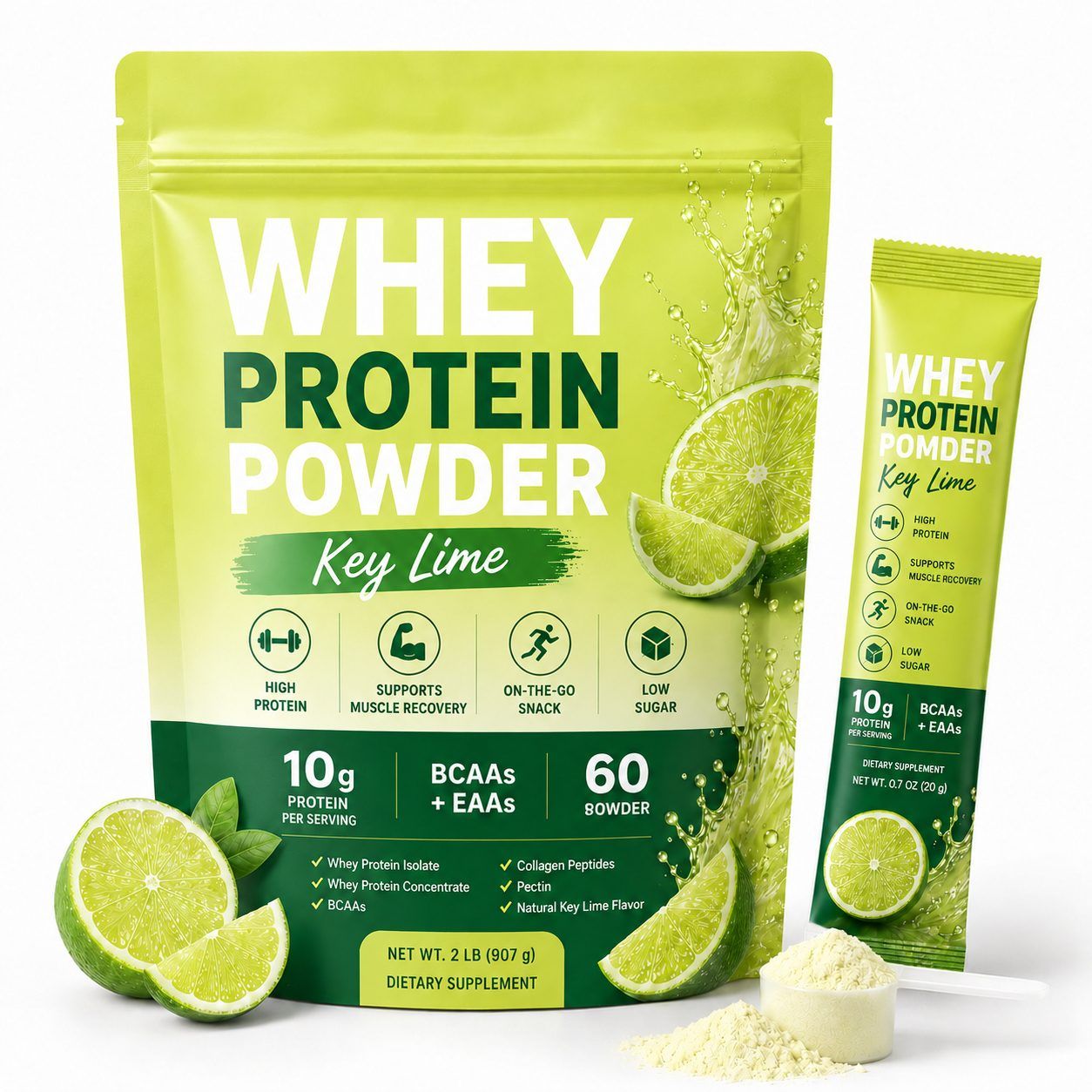
If the SKU in question is a powder, the whey protein powder program and the creatine monohydrate program show the pack formats these checks are written against, and the packaging guide explains why the lot code position is a packaging decision before it is a quality one.
Where a quality system shows up on the invoice
Quality is not a department that adds cost; it is the mechanism that keeps a launch from being repeated. The measurable version is simple. A rejected finished lot costs the batch value plus the packaging plus the lost selling window, and a launch that slips a month rarely recovers it. A release panel that costs nine hundred dollars and catches a non-conforming lot before it ships has already paid for the next three years of testing. That is the argument to make internally when a supplier quotes testing as a separate line, and it is also the reason a serious supplement quality control program should look boring on paper: the exciting version is the one where a batch was released without it.
Key takeaways
- Supplement quality control has three gates, incoming material, in-process checks and finished release, and the cost of a failure rises about tenfold at each one.
- Identity testing by FTIR takes minutes and catches substitution; assay by HPLC takes days and only confirms quantity.
- Blend uniformity at 5 percent RSD and fill weight within 1.5 percent are what make the label claim true anywhere in the batch.
- A certificate of analysis is only evidence when it carries a lot number, a numeric result, a limit and a named method.
- Reserve samples are required for one year past shelf life at twice the quantity needed to retest, and the lot code position decides how narrow a recall can be.
Frequently asked questions
Does every supplement batch need to be tested before it ships?
Yes. Under the US dietary supplement cGMP in 21 CFR Part 111, a lot has to be reviewed against its specifications and released by a qualified person before distribution, and the reserve sample has to be retained. In practice that means identity, assay, microbiology, heavy metals and net content on the finished lot, plus the incoming and in-process results that sit in the batch record behind the certificate.
What should a supplement COA include?
A lot number that matches the packaging, the product name and strength, the specification limits, a measured result for each line, the method used for each test, the test and release dates, and the name of the releasing laboratory or unit. If any of those is missing, ask for a corrected copy. A certificate that lists tests without numbers is a formatting exercise, not a release record.
How long does batch release take?
Plan on five to ten working days for a standard panel after the last unit is packed. Identity can report the same day, assay usually takes three to five days, and heavy metals and microbiology each take five to seven because incubation cannot be accelerated by paying more. The release signature comes after those results, so a fifteen-working-day production lead time and a nine-day release panel overlap rather than stack.
Can you send a COA before I place an order?
Yes, but read it carefully and ask what it represents. A certificate from a previous lot of the same formula tells you the panel the factory normally runs; it does not guarantee the results of your batch, because raw material suppliers and line conditions change. Ask for the specification sheet as well, since that is the document your lot will actually be judged against.
What is the difference between quality control and quality assurance?
Quality control is the measurement: sampling, testing and the numbers on the certificate. Quality assurance is the system that decides what gets measured, what happens when a result fails, and who is allowed to sign a release. A factory can have good laboratories and a weak assurance system, which usually shows up as repeat deviations instead of corrected root causes.
Do you test for allergens and heavy metals?
Both, but the matrix matters. Allergen testing is normally an enzyme-linked assay on the finished product and a cross-contact assessment of the whole plant, not just your line. Heavy metals are run by inductively coupled plasma mass spectrometry against the permitted daily exposure limits, and the result is only meaningful if the laboratory is accredited for that specific method and matrix, which is why we send the scope document with the report.
Have a project in mind? We'll come back with MOQ, formula options and lead time within 24 hours.
Request a Quote