What a stability claim actually commits you to
A supplement shelf life claim is one of the few numbers on a panel that a brand cannot choose freely: it has to be supported by data, it travels with the container the product ships in, and it is one of the first things a serious buyer asks about after the formula. This guide explains how stability studies are actually built for private label supplements, which variable decides most stability outcomes, and what the program costs in time and money.
The commercial stakes are easy to underestimate. Retail buyers and marketplaces increasingly ask for the study behind the supplement shelf life, not just the date itself, and a claim that cannot be defended turns into a reformulation, a reprint and a quarter of lost shelf time. The discipline is learnable, and the brands that understand it negotiate better terms than the brands that treat the date as decoration.
In the United States, federal rules do not require an expiry date on dietary supplements, but a date that is printed has to be supported: 21 CFR 101.95(g) requires that it be selected on the basis of proof that the product will not be misleading when the date arrives. In the European Union, Regulation 1169/2011 makes a durability indication mandatory, best before for most shelf-stable products. In practice, the supplement shelf life you print describes the product as packed, in the exact container and closure shown on the artwork, stored as directed.
What fails first is rarely the active. The earliest stability failures are physical: a powder that cakes, a gummy that hardens, a colour that fades ahead of the assay, a capsule shell that turns brittle in a dry warehouse. The active usually declines on a gentle curve that the overage absorbs. The physical failure is what the customer sees and complains about, which is why the stability release file below includes attributes most brands never think to ask about.
- Identity confirmation on every incoming raw material lot, by HPLC or infrared fingerprint, and not by the supplier certificate alone.
- Assay against the label claim at release and at every stability pull, so the stability decline curve is measured rather than assumed.
- Heavy metals panel covering lead, arsenic, cadmium and mercury, each against the limits of the destination market.
- Microbial panel with total plate count, yeast and mould, plus targeted pathogens where the format or the claim requires them.
- Water activity on every powder, with a target below 0.3 on a 24-month stability claim.
- Peroxide value and anisidine value for any oil-bearing format, including omega-3 softgels and oil-based drops.
- Appearance, colour and odour judged against the approved stability retention sample, not against a written description.
- Tablet hardness and friability re-checked at the 12- and 24-month stability pulls, because drift shows up before the assay moves.
- Capsule dissolution re-tested at each pull, since shell cross-linking slows release before any potency loss is visible.
- Seal and closure integrity tested on the pack that actually ships, not on a laboratory-only variant.
How a stability study is actually built
The conventions come from ICH Q1A(R2), the pharmaceutical stability guideline the supplement industry borrows because it has nothing better. Long-term storage runs at 25°C and 60% relative humidity. Accelerated storage runs at 40°C and 75% relative humidity for six months, and a clean six-month accelerated pull is conventionally taken to support a 24-month claim at room temperature. Real programs pull samples at 0, 1, 3 and 6 months on the accelerated arm, and at 0, 3, 6, 12, 18 and 24 months on the long-term arm.
The practical consequence is that a launch never waits for the long-term study. Brands launch on six months of accelerated data plus a commitment to finish the real-time arm, and a mature manufacturer runs the program on the first production batch, not on a pilot. What the accelerated arm cannot do is prove the claim: it is a stress screen that tells you which way the formula degrades and how fast, and the long-term arm is what the printed date stands on.
| Study design | Conditions | Duration | What it proves | Role at launch |
|---|---|---|---|---|
| Real-time | 25°C, 60% RH | 24 to 36 months | The claim as printed | Runs after launch on the first batch |
| Accelerated | 40°C, 75% RH | 6 months | Degradation path and rate under stress | Supports the launch claim |
| Intermediate | 30°C, 65% RH | 12 months | Bridge for warm, humid markets | Added when accelerated fails |
| Bracketing | Extremes of a variant range | 24 months | Covers a family by testing its ends | Cuts pull count on flavour ranges |
| Photostability | Defined light cycle | 1 to 2 weeks | Colour and light-sensitive vitamin loss | Added for transparent packs |
Bracketing is the underused design, and the fine print matters. A seven-flavour range can legitimately be tested on its two extreme variants only while the variants differ by the flavour concentrate alone. The moment one variant adds a real fruit powder, a colour system or an extra acidifier, it changes water activity and light sensitivity, and the bracket no longer covers it. The saving is real: a bracketed program runs two studies instead of seven, which is where a five-figure gap opens up in the year-one stability budget.
Moisture: the variable that decides most stability outcomes
Water is the single variable that separates a smooth stability program from a failed one, and it works on three fronts at once. It plasticises powders until they cake, it hydrolyses esters until flavours flatten, and it opens the door to microbial problems in anything above a water activity of roughly 0.6. Dry formats aim below 0.3. The formula contributes the residual moisture of the blend, and the package contributes everything that arrives afterwards, which is what the stability study measures.
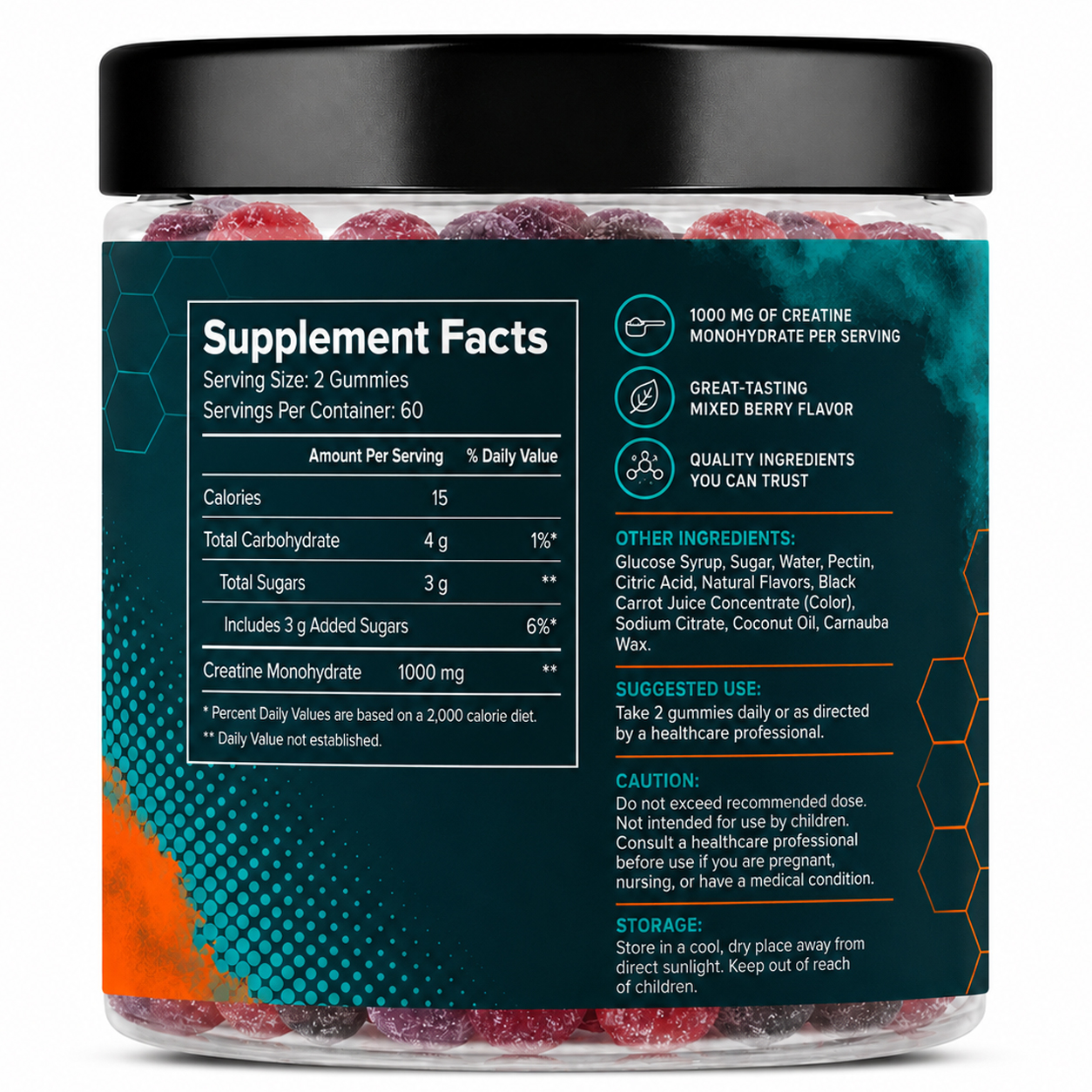
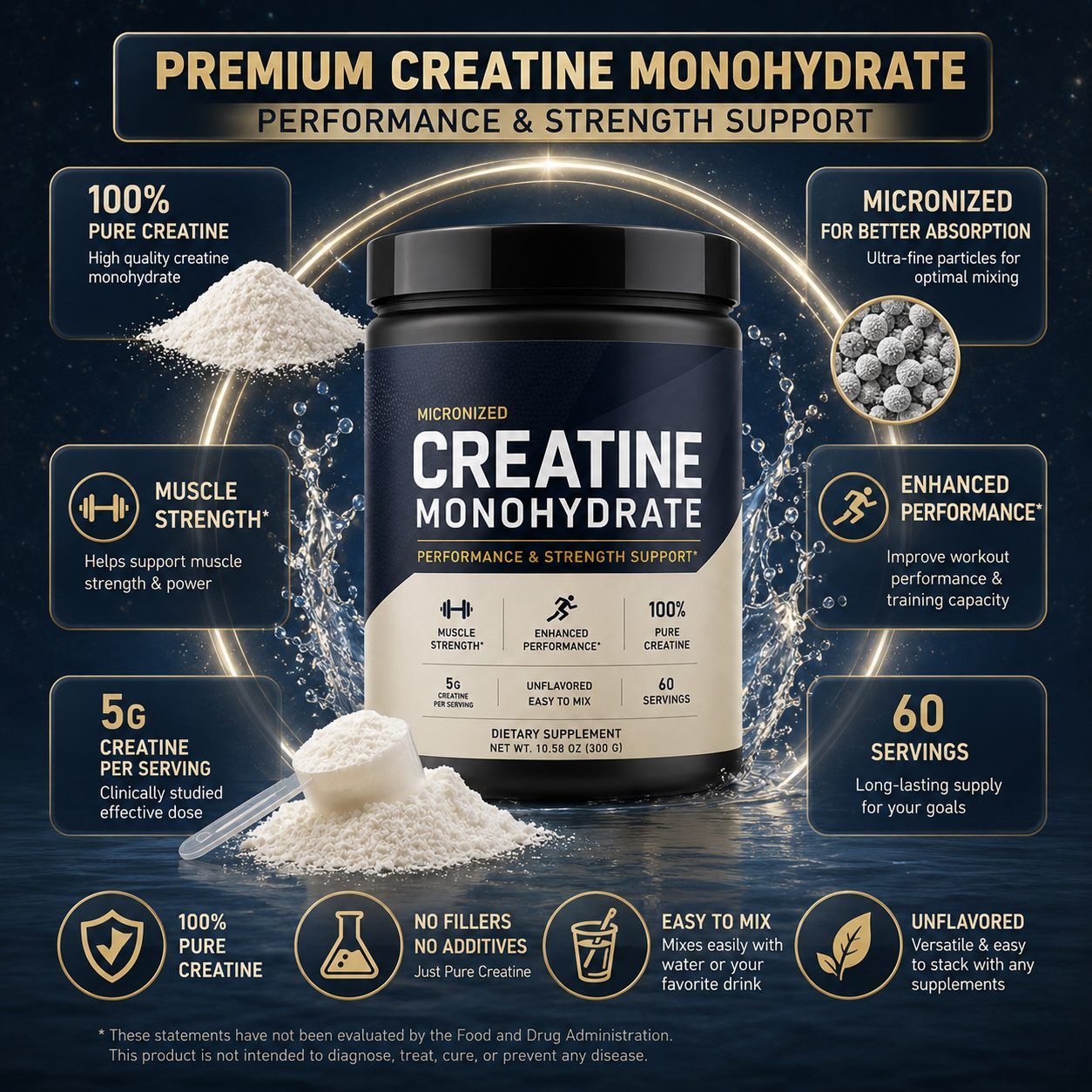
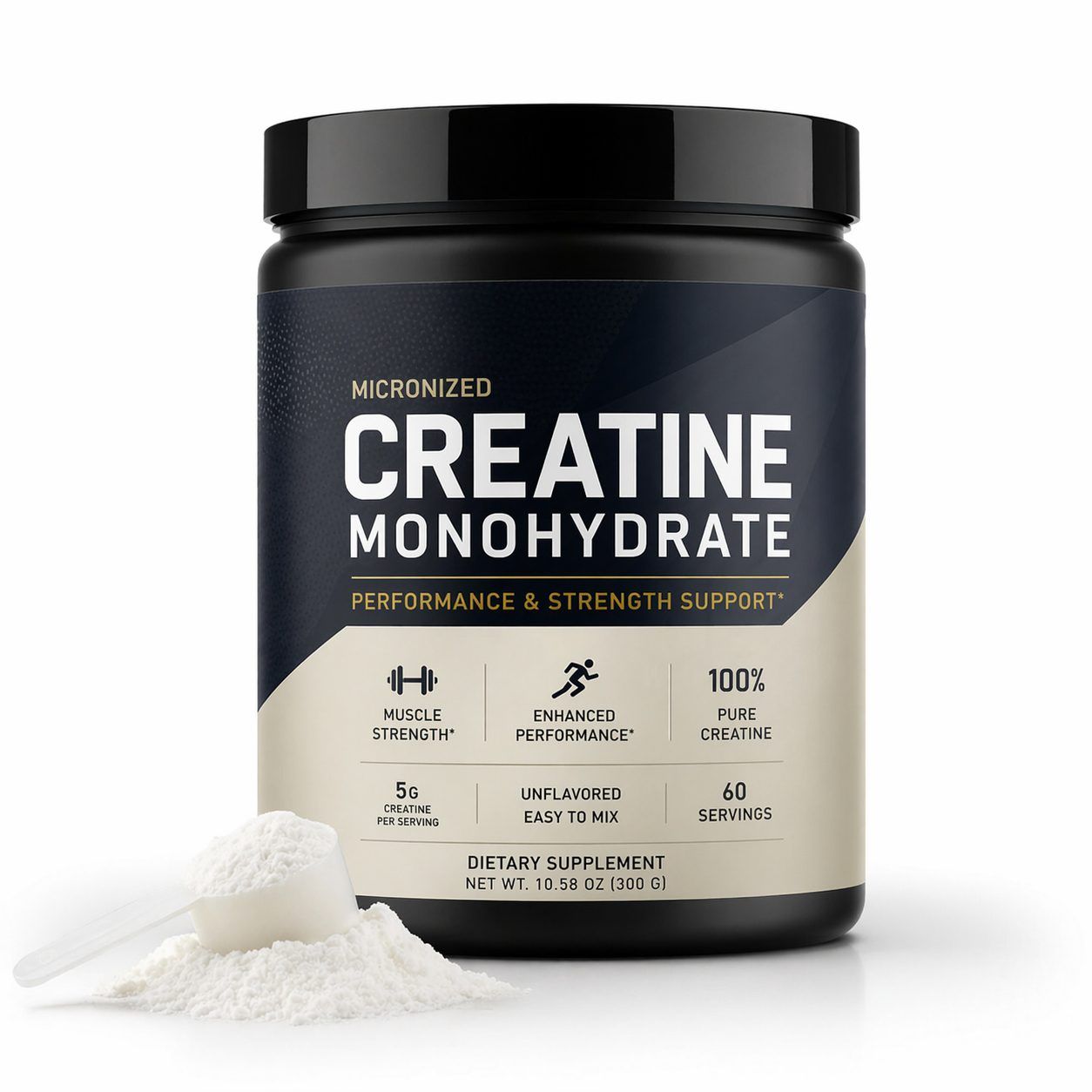
Creatine makes the point better than any diagram. Micronized creatine monohydrate held as a dry powder is stable for years: the 300 g canister above carries a 24-month stability claim without drama. Dissolve the same molecule in water and it cyclises to creatinine at a measurable rate within days at room temperature, which is why a ready-to-drink creatine is a different stability project from a creatine monohydrate powder, and why dry stick packs dominate the category.
The packaging side of stability deserves its own arithmetic, because this is where brands get burned in year two. The desiccant must cover the moisture that migrates through the closure over the whole claim plus whatever the blend carried in. A flip-lid canister opened twice a week ingresses orders of magnitude more water than a foil stick pack that is never reopened, so the same formula in the two packs needs different protection. Copying the same desiccant sachet from a stick program to a canister program is one of the most common and most expensive shortcuts we see.
A nitrogen flush in a canister, a foil stick pack instead of a zipper pouch, and a desiccant sachet sized to the closure rather than to habit. Together they usually add under a cent per unit, and together they remove most of the physical failures we see at the 12-month stability pull.
Format-specific stability failure modes
Every dosage form ages along its own dominant path, and the panel attributes that matter are different for each. The table is the version we walk through with clients before the first stability protocol is written, because it shows where to spend testing money for the format you actually chose. The dosage form selection guide covers the commercial side of the same choice.
| Format | Fails first at | Attribute to watch | Typical supported claim |
|---|---|---|---|
| Capsules | Shell brittleness in dry air, cross-linking in humidity | Dissolution at each pull | 24 to 36 months |
| Tablets | Hardness drift, colour fade | Friability at 12 and 24 months | 24 to 36 months |
| Softgels | Fill oxidation, shell moisture migration | Peroxide and anisidine values | 18 to 24 months |
| Gummies | Texture drift, browning | Water activity, reducing sugars | 12 to 18 months |
| Powders | Caking, flavour loss | Water activity, headspace oxygen | 24 months |
| Probiotics | CFU decay | Strain survival in the actual matrix | 18 to 24 months |
| Liquids and drops | pH drift, preservative exhaustion | pH and preservative efficacy | 18 to 24 months |
Oil formats carry a number most buyers never ask for and should: the industry's voluntary target for oxidised fish oil is a total oxidation value below 26, built from a peroxide value below 5 and an anisidine value below 20. A softgel can pass its vitamin assay while the oil inside has turned, so the oxidation panel belongs on the release file and on every stability pull, not only in the marketing deck. Our omega-3 softgels are specified and pulled against exactly that panel.
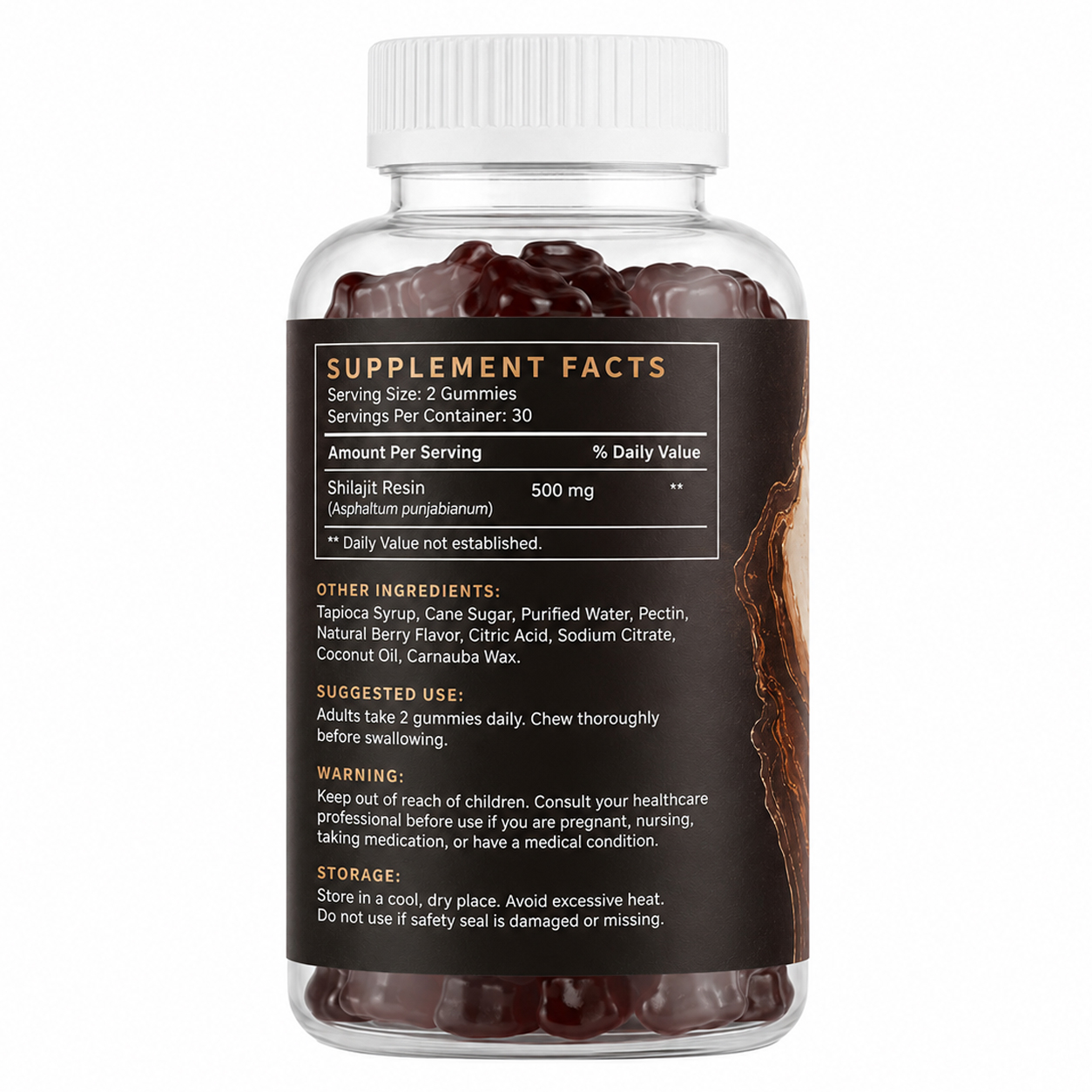
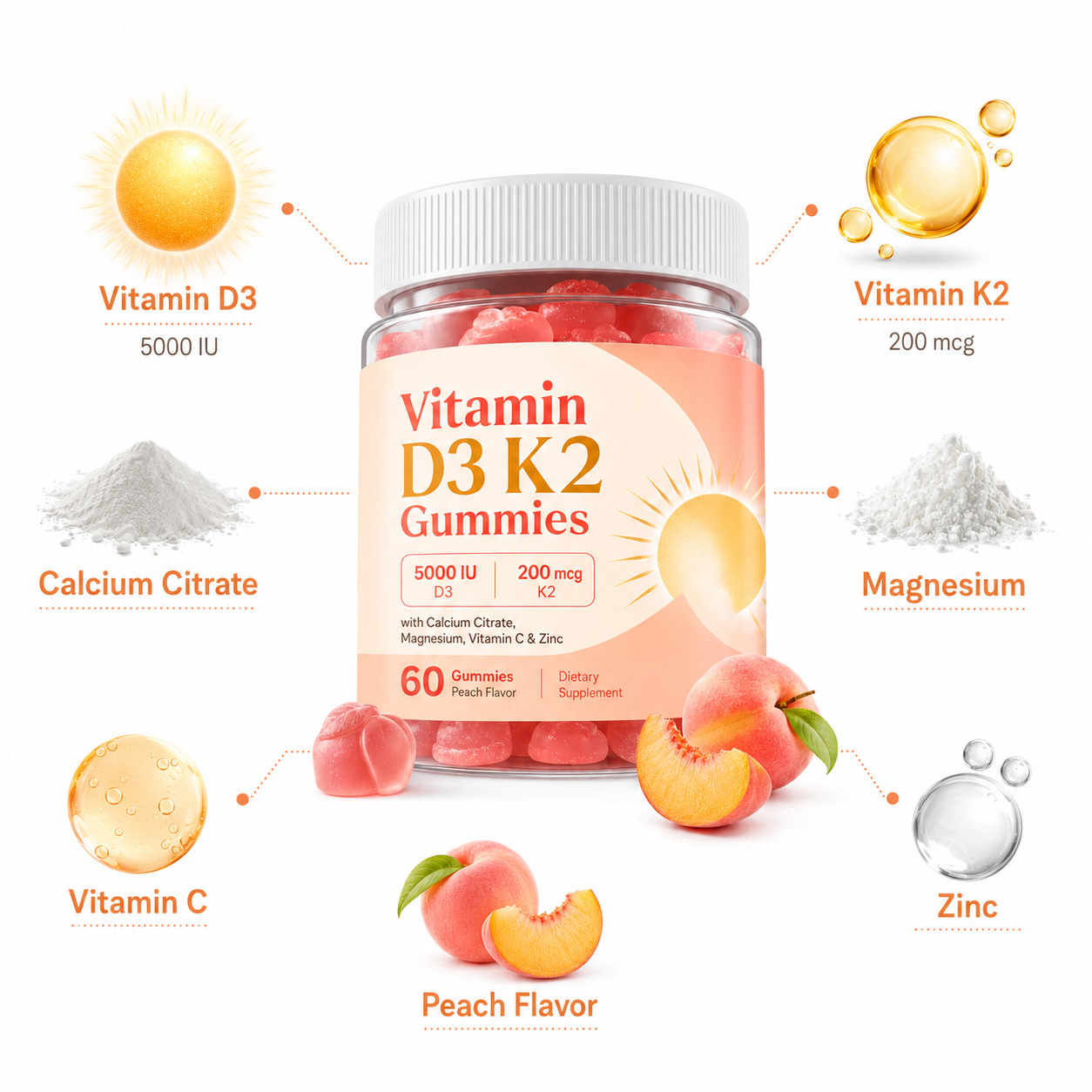
Gummies are the honest exception to every tidy table, because they usually fail on texture before they fail on potency. Gelatin gummies harden as moisture migrates, pectin gummies weep, and reducing sugars brown the surface within 12 to 18 months in a warm market. The commercial answer is a shorter claim plus a barrier that works, and a stability panel that tracks water activity rather than assuming the vitamin number will fail first. Probiotic gummies combine both problems, which is why the probiotic gummies program runs a strain survival curve through the same pulls.
Overages: the recurring cost of a claim you print once
An overage is extra active blended above the label amount so the product still meets the claim at the end of its shelf life. It is a legitimate, universal tool, and it is also a recurring stability cost of goods that runs on every batch for the life of the product, so it belongs in the unit economics conversation at quotation stage. Where the overage lands depends on the degradation data from the accelerated stability arm, not on habit.
These are formulator starting points, not specifications; the real number comes from the degradation data in your stability study, not from habit. The economics, though, are universal, and they are the practical insight: a 20% overage on an active costing a cent per serving is a rounding error, while the same overage on a premium branded active at 80 cents per serving adds 16 cents to every unit for the whole life of the supplement shelf life claim. That arithmetic is why we would rather fix a package barrier than blend a bigger overage into an expensive formula.
Packaging: the other half of the stability equation
The same formula in two packs is two supplement shelf life projects. A foil-laminated stick pack is close to hermetic: it is never reopened, each dose is protected individually, and the failure mode moves to the seam. A canister's stability lives or dies on its closure liner and on shopper behaviour. Glass is the best barrier on the shelf and the heaviest to freight. Nitrogen flushing a canister costs a fraction of a cent per unit and roughly doubles the aromatic life of sensitive flavours, which makes it the cheapest stability upgrade available.
| Pack | Barrier | Relative cost | Best for | Watch |
|---|---|---|---|---|
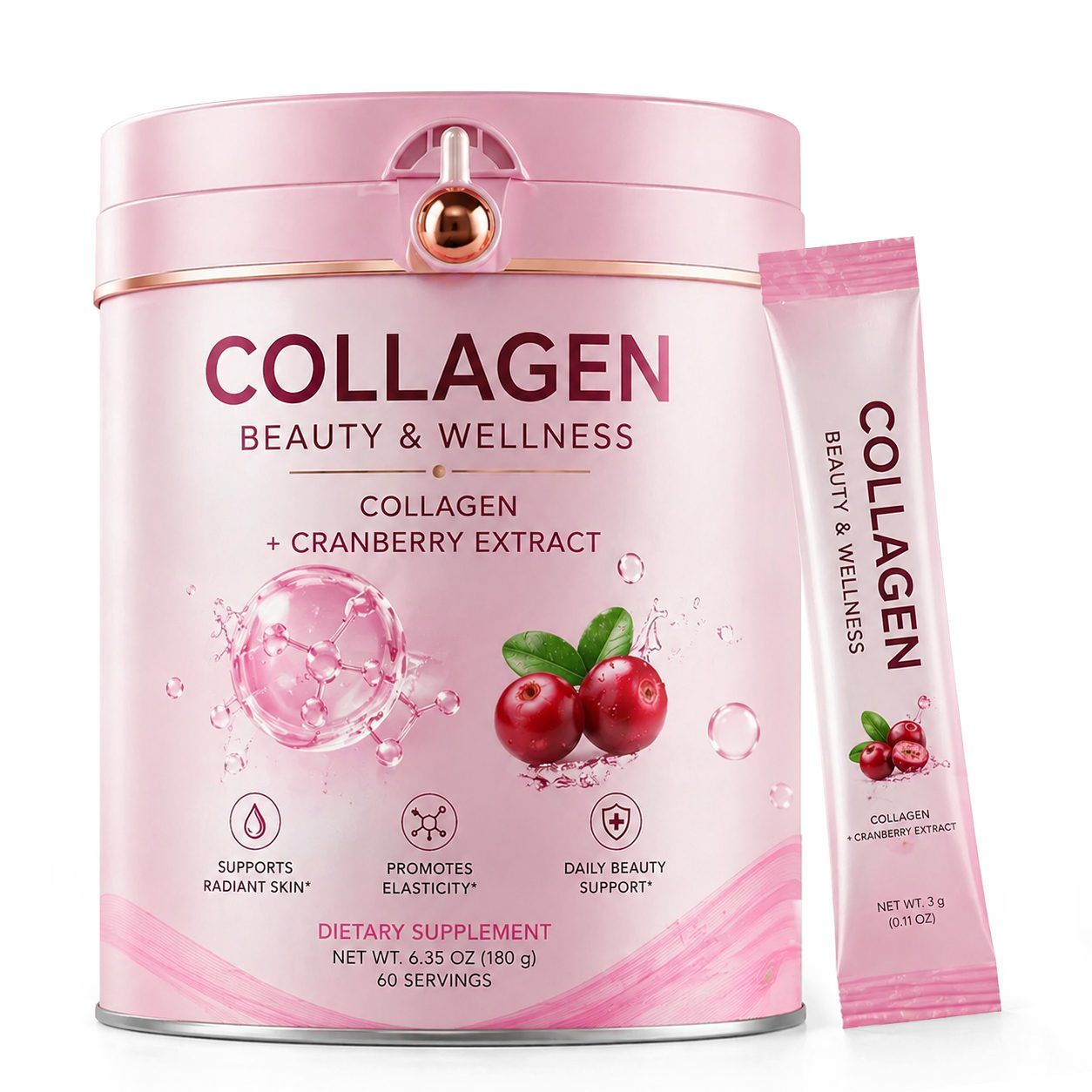
| Foil stick pack | Near-hermetic | Low per dose | Powders, creatine, collagen sticks | Seal integrity and seam quality |
| HDPE bottle, lined cap | Moderate | Base index | Capsules and tablets | Moisture ingress through wall and closure |
| PET bottle | Moderate to low | Slightly below HDPE | Lightweight retail | Light exposure for riboflavin and colour |
| Glass bottle | Highest | Premium, freight heavy | Liquids, drops, premium oils | Breakage and shipping weight |
| Stand-up pouch, zipper | Moderate, falls at the zipper | Low per gram | Bulk refills, protein | Reseal gap after opening |
Climatic zones: one formula is not one product worldwide
The ICH zoning exists because a product stored in Hamburg and one stored in Dubai are not having the same career. Zone II covers temperate markets and validates at 25°C and 60% relative humidity. Zone IVb, which covers the Gulf and much of Southeast Asia, validates at 30°C and 75%. A formula that passes its stability study at 25 and 60 can fail at 30 and 75, and it usually fails physically first, through caking or textural drift, rather than through the assay.
This is the question we wish more buyers asked before the quote: which zone is the stability claim valid for? Export shipments add a wrinkle no chamber study models, because a metal container standing on a Gulf tarmac in summer regularly exceeds 45°C inside. The practical mitigations are a higher-barrier pack, a lower printed claim, and an intermediate or Zone IVb arm added to the study for the markets that need it.
| Market | Dating rule | What buyers check | Storage statement |
|---|---|---|---|
| United States | No expiry required; a printed date must be data-supported | The study behind the date | Optional, expected on powders and probiotics |
| European Union | Best before mandatory for supplements | Durability and storage wording on artwork | Required where conditions matter |
| United Kingdom | EU-style durability indication retained | Same wording discipline as the EU | As EU |
| Gulf states | Buyers expect 30°C and 75% data | Zone IVb stability arm | Conditions must match the data |
| Southeast Asia | Humidity dominates acceptance | Caking resistance and barrier | Tightly worded, often stricter than the claim |
What the stability program costs and where it sits on the calendar
A full outsourced program for a single SKU across two storage conditions and a complete pull schedule commonly lands in the low tens of thousands of dollars once the assays across six or more pulls are counted, before any reformulation. This is the structural reason established manufacturers cost less to launch with: a formula family that has already been through the stability program carries overage assumptions and packaging data that a first-time formula has to generate from scratch.
On the calendar, stability work starts with the first production batch, and a late formula change restarts the accelerated arm, which is six months you do not get back. Our standard terms put samples in 7 to 10 days and production at about 15 working days after material release, and a 24-month supplement shelf life is quoted as standard on stock formulas with the accelerated arm agreed before the batch runs. The MOQ and lead time guide shows where the rest of the weeks go.
Ten stability questions to put to a manufacturer before you sign
The list below is what a stability-literate buyer asks, and the answers separate a partner from a printer. The global regulations guide covers the certification layer behind these questions.
- Which conditions does the accelerated arm run at, and for how many months?
- When do the real-time pulls happen, and who owns the pull calendar after launch?
- Which attributes are tested at each stability pull, and is water activity among them?
- Is the stability study run on the finished good in the shipping pack, or on bulk material?
- How are flavour variants handled: a bracketing protocol, or one study per variant?
- What overage assumptions sit inside the 24-month stability claim?
- Which climatic zone is the claim valid for, and can a 30°C and 75% arm be added?
- Who pays for the program, and who owns the data if the brand moves manufacturers?
- Can the protocol, chamber logs and raw pull data be shared with a retailer or marketplace?
- What is the retest policy on raw materials held beyond half of their dating?
Validating a formula before you commit?
Send the formula, the format and the destination market for your supplement shelf life requirement. We will return a stability risk read, a packaging recommendation and a testing plan, usually within two working days.
What to lock before the first batch runs
- A supplement shelf life claim is a data commitment, and the proof has to exist whether or not a retailer asks for it.
- Launch happens on six months of accelerated stability data plus a committed real-time arm, never on a guess.
- Moisture decides most stability outcomes: water activity below 0.3, a barrier that matches the format, a desiccant sized for the closure.
- Bracketing covers a flavour range with two studies, but only while the variants differ by concentrate alone.
- Formats fail differently: gummies on texture, softgels on oxidation, powders on caking, capsules on dissolution.
- Overage is a recurring cost of goods, and on a premium active it can cost more than the packaging fix.
- Name the climatic zone the stability claim is valid for before the quote is signed, especially for Gulf and Southeast Asian markets.
References
- ICH Q1A(R2) - Stability Testing of New Drug Substances and Products
- US FDA - 21 CFR 101.95 Food labeling; dietary supplements
- US FDA - 21 CFR Part 111 Current Good Manufacturing Practice for Dietary Supplements
- EU Regulation 1169/2011 on the provision of food information to consumers
- GOED - Global Organization for EPA and DHA Omega-3s, voluntary monograph
Key takeaways
- A shelf life claim is a data commitment: 21 CFR 101.95(g) requires the proof to exist even though no US rule forces a date onto the panel.
- Launches run on six months of accelerated data plus a committed real-time arm on the first production batch, never on a guess.
- Moisture decides most outcomes, and packaging is half the equation: foil sticks, lined canisters and a correctly sized desiccant are the cheap wins.
- Bracketing covers a flavour family with two studies, but a real fruit powder or colour addition breaks the bracket.
- Every format fails differently, so the stability panel should track the dominant failure mode, not just the assay.
- Overage is a recurring cost of goods that scales with the raw material price, which is why a barrier fix often beats a bigger blend.
- Name the climatic zone the claim is valid for before quoting, because 25°C and 60% data does not cover the Gulf or Southeast Asia.
Frequently asked questions
How long are supplements good after the expiration date?
A date is a quality commitment, not a safety cliff. Dry formats such as capsules and tablets usually retain a large share of their labelled potency for months past the printed date when stored cool and dry, while oil formats and probiotics decline faster. What a manufacturer should commit to is the opposite end: the product meets the panel at the printed date, and the study exists to show it.
Do supplements need an expiration date by law?
Not in the United States: no federal rule requires a date on dietary supplements, but a printed date must be supported by data showing it is not misleading. In the European Union a best before date is mandatory under Regulation 1169/2011, and storage conditions must appear wherever the product needs them. In practice most export buyers expect a date regardless of the local rule.
Can a product launch with only accelerated stability data?
Yes, and it is standard practice: six months at 40°C and 75% relative humidity supports the launch, with the real-time arm running on the first production batch to confirm the claim. Retailers and marketplaces increasingly ask for the protocol and the pull data, so the program needs to be real and documented rather than a promise on a slide.
Why do gummies carry a shorter shelf life than capsules?
Because the failure mode is physical. Gelatin gummies harden as moisture migrates, pectin gummies weep, and reducing sugars brown the surface, usually between 12 and 18 months in warm markets. Capsules and tablets age on a slower curve and support 24 to 36 months. The honest answer for a gummy range is a shorter claim plus a barrier that works, rather than a printed 24 months the texture will not honour.
How do you keep probiotics alive through the whole shelf life?
Three layers: a strain survival curve measured in the actual matrix, an overage sized from that curve rather than copied from another product, and packaging with a real moisture barrier. The CFU number on the pack must hold at the end of the shelf life, which is why it is checked at the final pull. The probiotics manufacturing guide on this site covers the full arithmetic.
Does humidity really ruin supplement powders?
It is the most common physical failure we see. Powder held above a water activity of roughly 0.4 cakes, loses citrus flavour notes and, in the case of creatine, faces faster degradation once free moisture is present. The controls are a low-residual-moisture blend, a foil stick pack or a well-lined canister with nitrogen flush, and a desiccant sized against the closure rather than against habit.
Have a project in mind? We'll come back with MOQ, formula options and lead time within 24 hours.
Request a Quote