Why private label supplement packaging is a sourcing decision, not a design afterthought
Most brand owners spend eighty percent of their brief on the formula and twenty percent on the container, then discover that the packaging can make or break the launch. Private label supplement packaging is usually fifteen to twenty-five percent of the finished goods cost for a solid-dose SKU, and it can be thirty percent or more for powders that need a high-barrier pouch, a carton and a scoop. The wrong format locks you into a minimum order quantity your first sales channel cannot absorb. The wrong label panel runs out of space before the Supplement Facts panel is finished. The wrong closure turns a perfectly stable powder into a clumped brick after one humid summer.
A manufacturer who treats packaging as sourcing solves these problems before artwork starts. The question is not what looks best in a render; it is which bottle, pouch, jar or stick pack fits the dose, the moisture sensitivity, the retail channel and the launch volume. This guide walks through the format comparison, the cost structure, the print minimums and the compliance details that reshape a quote.
How each primary format fits a different launch profile
Every dosage form has a natural primary packaging format, but natural does not mean automatic. A capsule line can run into a bottle, a blister or a stick pack. A powder can go into a tub, a stand-up pouch or a sachet carton. The choice depends on serving size, moisture sensitivity, shelf presence and, above all, the empty-pack minimums each supplier demands.
| Format | Typical unit capacity | Empty-pack MOQ | Print lead time | Best fit |
|---|---|---|---|---|
| Round HDPE bottle + pressure label | 60-180 count capsules/tablets/softgels | 3,000-5,000 bottles | Labels 7-10 days; bottles often stock | Solid-dose lines with existing count formats |
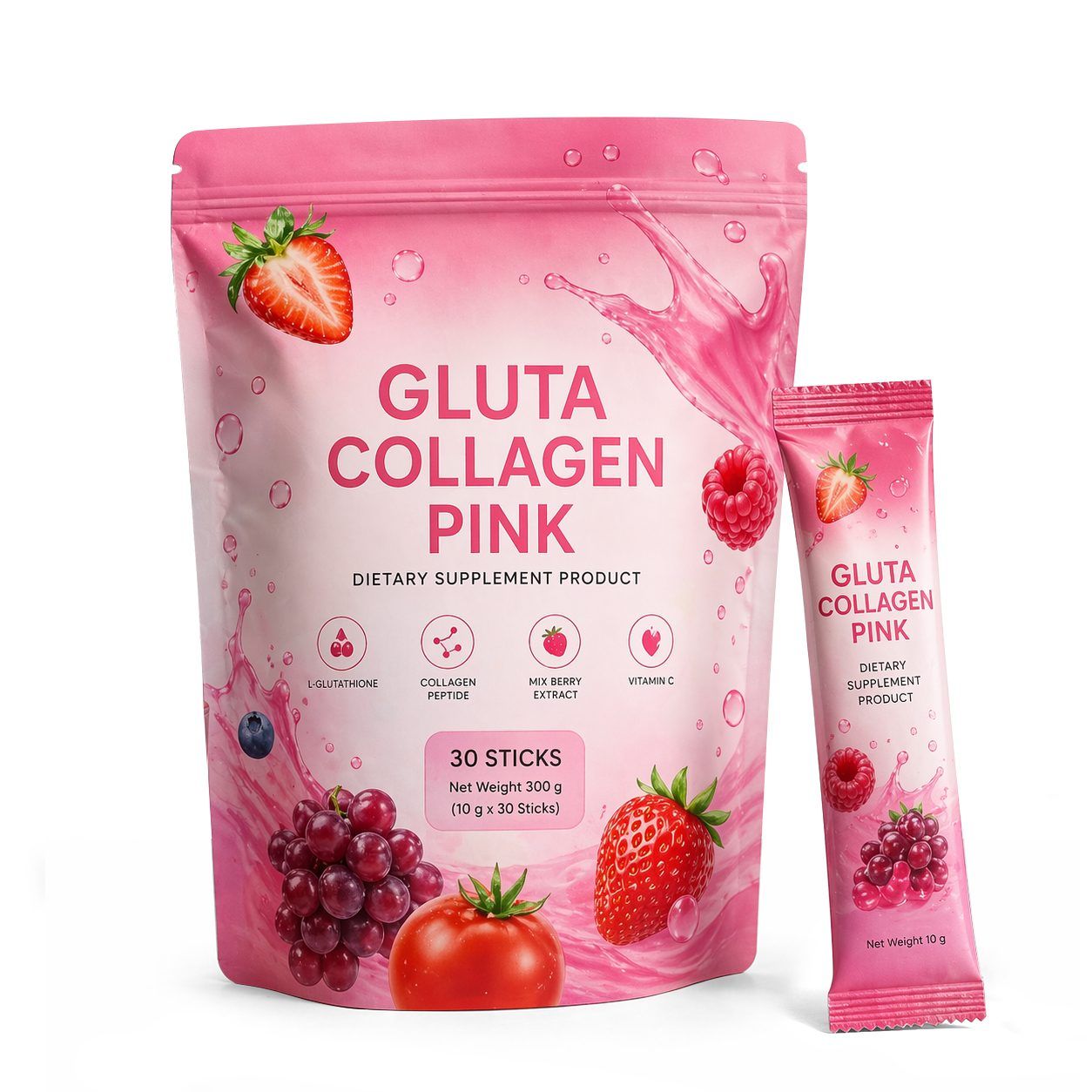
| Stand-up flexible pouch | 150-500 g powders | 5,000-10,000 pouches | 12-18 days after film approval | Sports powders, collagen, greens, single-flavour launches |
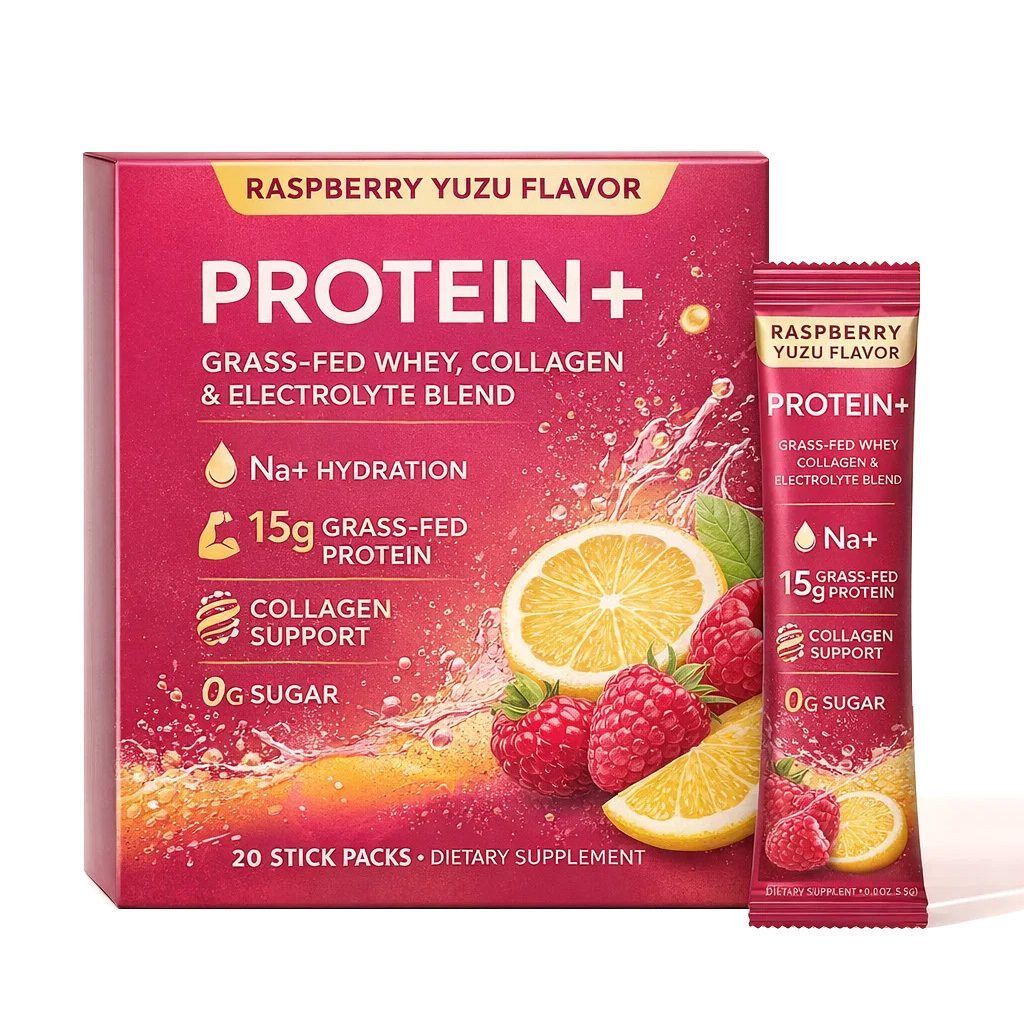
| Stick pack carton | 7-15 g x 20-30 sticks | 10,000-20,000 sachets | 15-20 days after tooling | On-the-go powders, electrolytes, fibre blends |
| Wide-mouth gummy jar | 60-90 count gummies | 3,000-5,000 jars | Labels 7-12 days | Gummies where moisture barrier and count visibility matter |
| Glass or PET liquid bottle with dropper | 30-60 mL drops/liquids | 3,000-5,000 bottles | 10-15 days | Liquid supplements, liposomal drops, tincture-style formats |
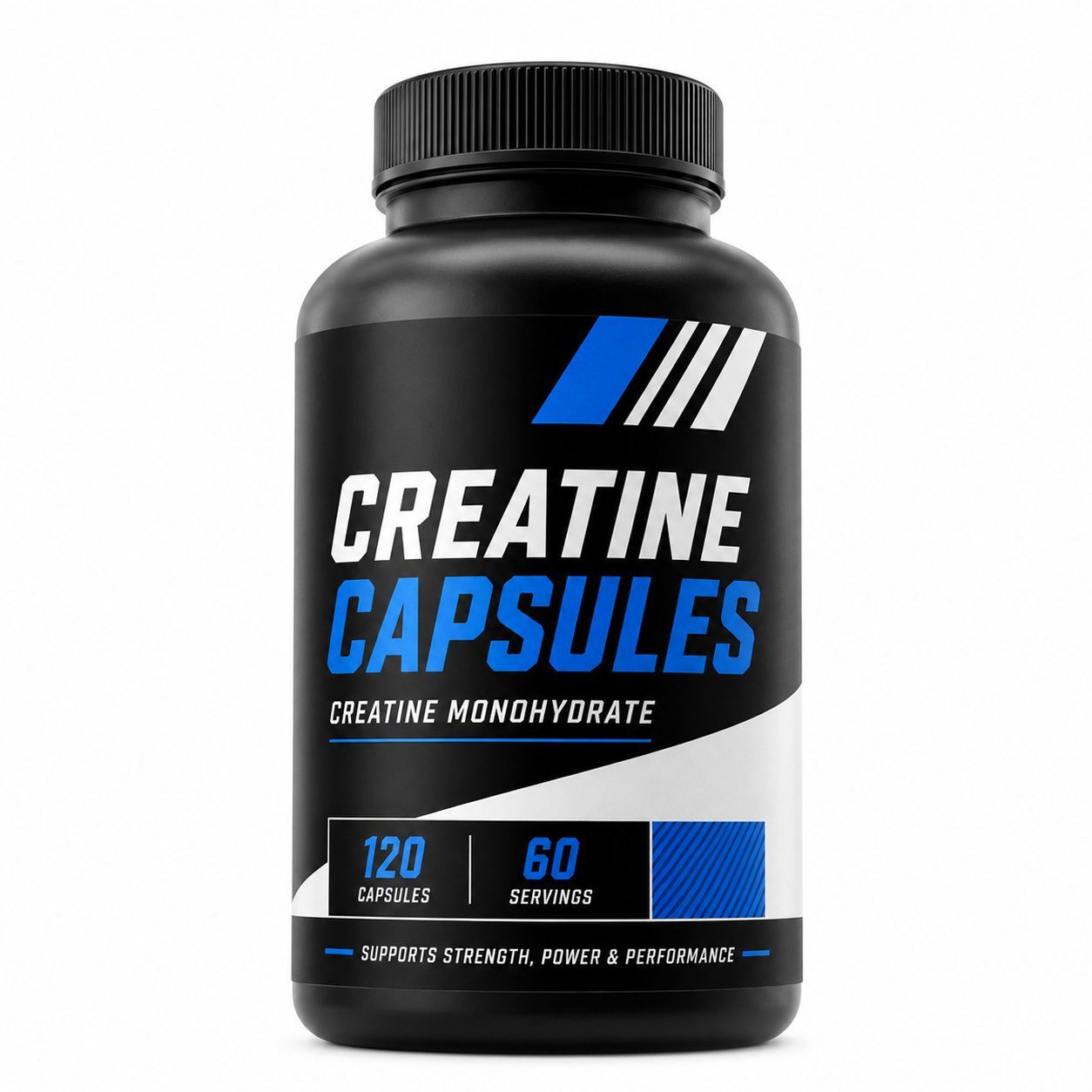
The same product can often be packaged in more than one of these formats. Our creatine monohydrate powder ships in a stand-up pouch, the HMB capsules run in a 120-count bottle, the omega-3 fish oil softgels need an amber bottle or blister, and the melatonin gummies use a wide-mouth jar. The dosage form selection guide explains how the dose itself pushes the decision, and the products page shows the full private label range.
Label real estate: what must fit on the panel
Before a designer opens a file, the label has a fixed list of mandatory content. In the United States, 21 CFR 101.36 governs the Supplement Facts panel, and the Fair Packaging and Labeling Act governs the principal display panel. The back or side panel must carry the statement of identity, net quantity of contents, ingredient list, allergen statement, lot number, expiration date, manufacturer or distributor name and address, and the structure-function disclaimer if any claims are made. That is a lot of words for a sixty-count bottle.
The most common surprise is that the Supplement Facts table itself is the largest consumer of space. A multivitamin with twenty actives plus minerals needs a taller panel than a single-ingredient collagen tub. Gummies add a calories-per-serving line and often a added sugars declaration. Powders sold by weight must state the net weight in metric and US customary units. European labels add the nutrition declaration in a different order, the EFSA health claim wording if used, and the country of origin in the language of the market.
Our regulations guide walks through FDA, EU and HALAL labelling differences in more depth. The short version is that the label is a legal document first and a brand asset second.
What packaging actually costs: a cost index
Packaging costs are not a single line item. They are the sum of the primary container, the closure, the seal, the label or sleeve, the carton, any insert, and the desiccant or oxygen absorber. The chart below is a relative index for a typical 120-count capsule SKU, using a stock bottle and a printed pressure-sensitive label as the baseline. Actual numbers move with resin prices, print colours and freight, but the ratios are stable.
The closure is worth a second look. A standard continuous-thread cap is cheap, but a child-resistant closure adds roughly twenty to forty percent to the cap cost and may require a different bottle neck finish. For iron-containing products at thirty milligrams or more per serving, the United States requires special packaging under the Poison Prevention Packaging Act, which usually means unit-dose blisters or a certified child-resistant bottle. That single ingredient decision can double the packaging budget.
Print MOQs and lead times that shape the quote
Custom packaging has two gates: the component MOQ and the artwork lead time. A brand can often launch faster by choosing a stock bottle or pouch size and adding a custom label, then moving to a fully custom mould after volumes justify the tooling cost. The table below shows the typical entry points.
| Component | Typical MOQ | Lead time | Why it matters |
|---|---|---|---|
| Pressure-sensitive label | 5,000 labels | 7-10 days after proof | Lowest-risk custom entry point; easy to revise |
| Printed shrink sleeve | 10,000 sleeves | 10-15 days | 360-degree graphics but higher MOQ and slower changeover |
| Folding carton | 3,000-5,000 cartons | 7-12 days | Size changes need new die lines and carton vendor setup |
| Custom coloured or shaped bottle | 5,000-10,000 units | 25-35 days | Colour-matched resin ties up inventory; amortise over larger runs |
| Flexible pouch rollstock | 10,000-20,000 m or units | 15-25 days | Film structure decides shelf life; cannot easily be changed mid-run |
| Stick pack film | 10,000-20,000 sachets | 15-20 days | Line width is fixed; switching widths doubles the tooling commitment |
A practical insight most buyers learn only after the first quote is that stick pack film is ordered by roll width, not by SKU. If a line runs a forty-millimetre width and your design calls for sixty millimetres, the film commitment and tooling change. That is why experienced brands finalise the stick dimensions before artwork, not after.
Packaging engineering: what only experience teaches
Three technical details separate a package that survives eighteen months in a warehouse from one that fails before the sell-by date. The first is bulk density. A powder that weighs three hundred grams can occupy anywhere from three hundred millilitres to seven hundred and fifty millilitres depending on whether its bulk density is one gram per millilitre or zero point four. Quote the container before the label, because the tub or pouch size changes the freight cube and the retail facing.
The second is water activity. A hygroscopic powder such as creatine monohydrate or certain mineral salts needs a headspace desiccant sized for the void volume and the climate. A one-gram silica gel canister is typically rated for about one hundred and twenty millilitres of headspace at twenty-five degrees Celsius and sixty percent relative humidity; double the desiccant for tropical destinations. Gummies sit at a much higher water activity, around zero point six, and the jar needs a good seal more than extra desiccant, because overdrying turns a gummy into a rock.
The third is gas and light barrier. Oils, omega-3 softgels, lipid-soluble vitamins and some botanicals oxidise quickly. A clear bottle looks premium but lets light in; an amber or opaque bottle, or a pouch with aluminium foil layer, pays for itself in shelf life. The two numbers to request are the oxygen transmission rate and the moisture vapour transmission rate for the chosen material.
For solid-dose specifics, the capsule manufacturing guide covers fill-weight capacity by capsule size, and the tablet manufacturing guide covers tooling, count and coating decisions that feed into the bottle size.
The format-capacity trap
The most expensive packaging mistake is choosing the packaging format before confirming that the formula fits inside it. A gummy can only carry about two to three grams of active matrix per piece, most of which is gelatin or pectin, so a multivitamin with heavy mineral claims cannot become a gummy without shrinking the panel. A two-piece size-zero capsule holds roughly seven hundred milligrams of powder; two capsules give about one point four grams, which is enough for a vitamin panel but not a full calcium-magnesium panel. A stick pack has plenty of volume but its film area is limited, so a long ingredient list can force a smaller font or a larger sachet.
Solving the trap means running the packaging brief in parallel with the formulation brief. The formulator needs the target serving size and the pack-out count; the packaging buyer needs the bulk density and the finished dimensions. Waiting until the formula is frozen to choose the bottle is how brands end up with two tablets per serving instead of one, or a pouch that looks half empty on shelf.
Compliance: when packaging becomes a regulatory requirement
Some packaging choices are not optional. In the United States, any dietary supplement containing thirty milligrams or more of iron per serving must be packaged in unit-dose blister packs or other special packaging, with a specific warning statement on the label. This is why most adult multivitamins keep iron low or leave it out. Child-resistant closures are required for iron-containing products and are strongly recommended for any supplement that could be mistaken by children for candy, such as gummies.
Tamper-evident features are expected by retailers even when not always mandated. Induction seals are the default for bottles, shrink bands for jars and cartons, and tear notches for pouches. The country of origin must appear on the label, and it must be in the dominant language of the destination market. For the European Union, the label must list the responsible food business operator, the net quantity, the best-before date, storage conditions, and the batch or lot number.
The compliance crossover with product design is covered in our regulations guide; the packaging lesson is that regulatory requirements often choose the format before marketing does.
A private label supplement packaging checklist
- Confirm the serving size and count per container before any artwork dimensions are fixed.
- Measure the bulk density of the finished blend and choose the primary container volume from that number.
- Decide whether the SKU needs child-resistant packaging based on the actives and the target market.
- Request the oxygen and moisture transmission rates for pouches, sleeves or transparent bottles.
- Size the desiccant to the headspace void and the worst-case climate, not to a default one-gram sachet.
- Run a label panel mock-up in the actual language and font size before finalising the Supplement Facts table.
- Check whether the chosen format requires a carton, insert or additional labour for hand-packing.
- Ask for the empty-pack MOQ separately from the finished-goods MOQ; they are not the same number.
- Confirm the artwork lead time for the longest-lead component, usually custom moulded bottles or rollstock film.
- Plan a second label version from the start if the product will sell in both the United States and the European Union.
MOQ, sampling and lead times
The product MOQ and the packaging MOQ are two different conversations. A manufacturer may be willing to produce five hundred finished units of an existing formula, but the label printer still wants five thousand labels. The practical minimum is the higher of the two. For new brands, the safest path is to use a stock bottle or pouch and a five-thousand-label print run, which brings the effective packaging minimum into line with a five-hundred to one-thousand-unit production run.
Samples of the filled and sealed package take seven to ten days after artwork approval. Bulk production runs about fifteen working days for most formats, with stick packs and fully custom bottles adding five to ten days. Ocean freight to North America adds another eighteen to twenty-five days, and DDP delivery through our United States warehouse is available for qualifying orders.
The full timeline from deposit to dock is covered in the MOQ and lead times guide; the packaging piece is usually the longest-lead item after raw material release.
Need private label supplement packaging specs for your next supplement?
Send the formula, the target format and the launch volume. We will confirm the container fit, the empty-pack MOQ, the print lead time and the landed cost per unit, usually within 24 hours.
Private label supplement packaging decisions that protect margin
- Packaging is fifteen to twenty-five percent of finished cost for solid-dose SKUs and higher for high-barrier powders.
- Each format has a different empty-pack MOQ; a stock bottle with a custom label is the lowest-risk entry point.
- Bulk density, water activity and gas barrier are the three technical checks that decide shelf life.
- Iron at thirty milligrams or more per serving forces child-resistant or unit-dose packaging in the United States.
- Label panel space is a binding constraint; run the Supplement Facts mock-up before final artwork.
- Product MOQ and packaging MOQ are not the same; the effective minimum is the higher of the two.
References
- US FDA - 21 CFR 101.36, Nutrition labeling of dietary supplements
- US FDA - Poison Prevention Packaging Act, 21 CFR 1700.14
- US FDA - Guidance for Industry: Questions and Answers Regarding Food Allergens
- European Commission - Food information to consumers regulation (EU) No 1169/2011
- ASTM D3985 - Standard test method for oxygen gas transmission rate through plastic film
Key takeaways
- Packaging is fifteen to twenty-five percent of finished cost for solid-dose SKUs and higher for high-barrier powders.
- Each format has a different empty-pack MOQ; a stock bottle with a custom label is the lowest-risk entry point.
- Bulk density, water activity and gas barrier are the three technical checks that decide shelf life.
- Iron at thirty milligrams or more per serving forces child-resistant or unit-dose packaging in the United States.
- Label panel space is a binding constraint; run the Supplement Facts mock-up before final artwork.
- Product MOQ and packaging MOQ are not the same; the effective minimum is the higher of the two.
Frequently asked questions
Can you use my existing private label supplement packaging artwork and supplier?
Yes, as long as the artwork meets the regulatory requirements of the destination market and the supplier can deliver components that fit our filling lines. We review every label for panel layout, claim wording and allergen formatting before production, and we verify bottle neck finish, pouch dimensions and carton specs against the line equipment. If the components are not compatible, we flag the issue during the onboarding sample stage rather than at production.
What is the minimum order quantity for custom private label supplement packaging?
The practical minimum is usually the higher of the product MOQ and the packaging component MOQ. For a stock bottle with a custom pressure-sensitive label, labels start at about five thousand units and the product can run from five hundred to one thousand units. Custom bottles, shrink sleeves and flexible rollstock start at five thousand to twenty thousand units depending on the component. We recommend starting with stock formats to test the SKU before committing to custom tooling.
How long does packaging artwork and print take?
Label artwork approval takes two to three business days once the die line and regulatory text are final. Pressure-sensitive labels print in seven to ten days. Folding cartons take seven to twelve days. Custom bottles and flexible rollstock are the longest, at fifteen to thirty-five days. The variable that most often delays launch is a label panel that does not fit the container, which is why we require a panel mock-up before any print order is placed.
Do you provide child-resistant caps or tamper-evident seals?
Yes. Child-resistant closures are available for bottles and jars, and tamper-evident induction seals, shrink bands or tear notches are standard for most formats. For iron-containing products at thirty milligrams or more per serving, we use unit-dose blister packs or certified child-resistant packaging to meet United States requirements. These features are quoted separately so the cost impact is transparent.
Can you ship supplements in bulk and package them locally?
Yes, bulk powder or bulk capsule shipments are an option for brands that want to finish-pack close to market. Bulk powder is usually shipped in twenty-five-kilogram lined drums, and capsules in sealed polyethylene-lined cartons. The trade-off is local labour and packaging logistics versus the landed cost of finished goods. We can quote both models so the decision is based on numbers rather than assumptions.
Which packaging format has the lowest MOQ for a new brand?
A stock bottle or jar with a custom pressure-sensitive label typically has the lowest effective MOQ, because the bottle itself is not custom and the label print minimum is around five thousand units. Gummy jars and liquid bottles follow a similar path. Stick packs and stand-up pouches look attractive for portability, but their film MOQs and tooling costs are higher, so they usually suit brands with confirmed velocity or larger launch volumes.
Have a project in mind? We'll come back with MOQ, formula options and lead time within 24 hours.
Request a Quote