Capsule stability testing fails on appearance before it fails on potency
Most buyers order capsule stability testing to prove one number: the active is still there at the end of the shelf life. In practice, the assay is rarely the first thing to go. The first complaint is usually visual or physical - capsules that dent when a customer picks up the bottle, a rattle that sounds dull because the units have fused into a block, or a batch that will not disintegrate inside the fifteen minutes allowed by the pharmacopoeia. All three are water problems, and none of them shows up on a certificate of analysis that only reports potency and micro.
The distinction that matters is between water content and water activity. Two fills can both read 5.0 percent loss on drying and behave completely differently: a spray-dried botanical at a water activity of 0.55 will soften a shell within weeks, while a crystalline amino acid at 0.25 in the same bottle will stay free-flowing for two years. The capsule shell does not equilibrate to the oven number; it equilibrates to the water activity of whatever it is touching. That is why a capsule stability programme built only on assay, micro and appearance photographs can pass three months and still fail in a customer's bathroom cabinet.
Which fills pull water, and how much
Hygroscopicity is not a single property, and the ingredient list rarely tells you which class you are dealing with. The table below groups the fill types we see most often in capsule projects, with the water activity range we plan around and the specific damage each one does to a two-piece shell. The ranges are working starting points from project experience, not pharmacopoeial limits; the number that governs your batch is the one measured on your blend.
| Fill class | Typical water activity | What it does to the capsule shell | Handling rule |
|---|---|---|---|
| Spray-dried plant extract | 0.40–0.60 | Plasticises the capsule shell; units turn tacky and stick at the shoulder | Dry to 0.35 or below, or declare a desiccant-backed pack |
| Deliquescent mineral salts (magnesium chloride, calcium chloride, some citrates) | 0.35–0.55 | Pulls water quickly; the capsule shell softens within weeks at 30 °C and 75% RH | Switch to oxide or carbonate where the label allows, or double the desiccant |
| Ascorbic acid | 0.25–0.40 | Acidic and hygroscopic; browning and shell discolouration follow | Use sodium ascorbate or a coated grade, and keep the headspace small |
| Probiotic blend with cryoprotectant | 0.10–0.20 | Dries the capsule shell and makes it brittle; viable count falls as moisture rises | Keep the fill dry, hold the capsule shell at 4–6% moisture, never over-dry |
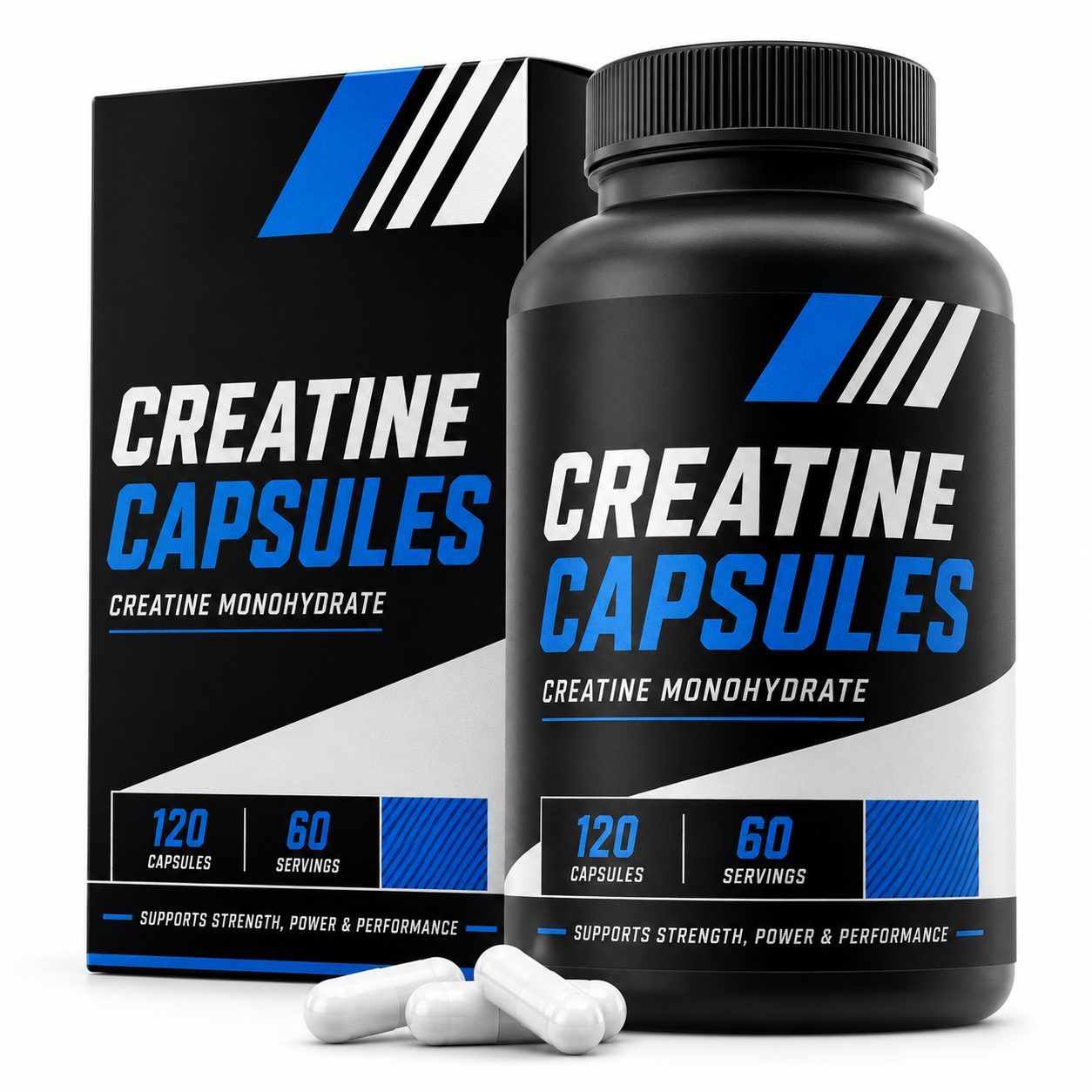
| Creatine monohydrate | 0.30–0.45 | Cyclises to creatinine; the shell picks up water from the fill | Hold the fill below 0.30 and validate assay at the shelf-end pull |
| Protein hydrolysate or amino blend | 0.25–0.40 | Moderate uptake; caking and Maillard browning with reducing sugars | Control the sugar carrier and the headspace oxygen together |
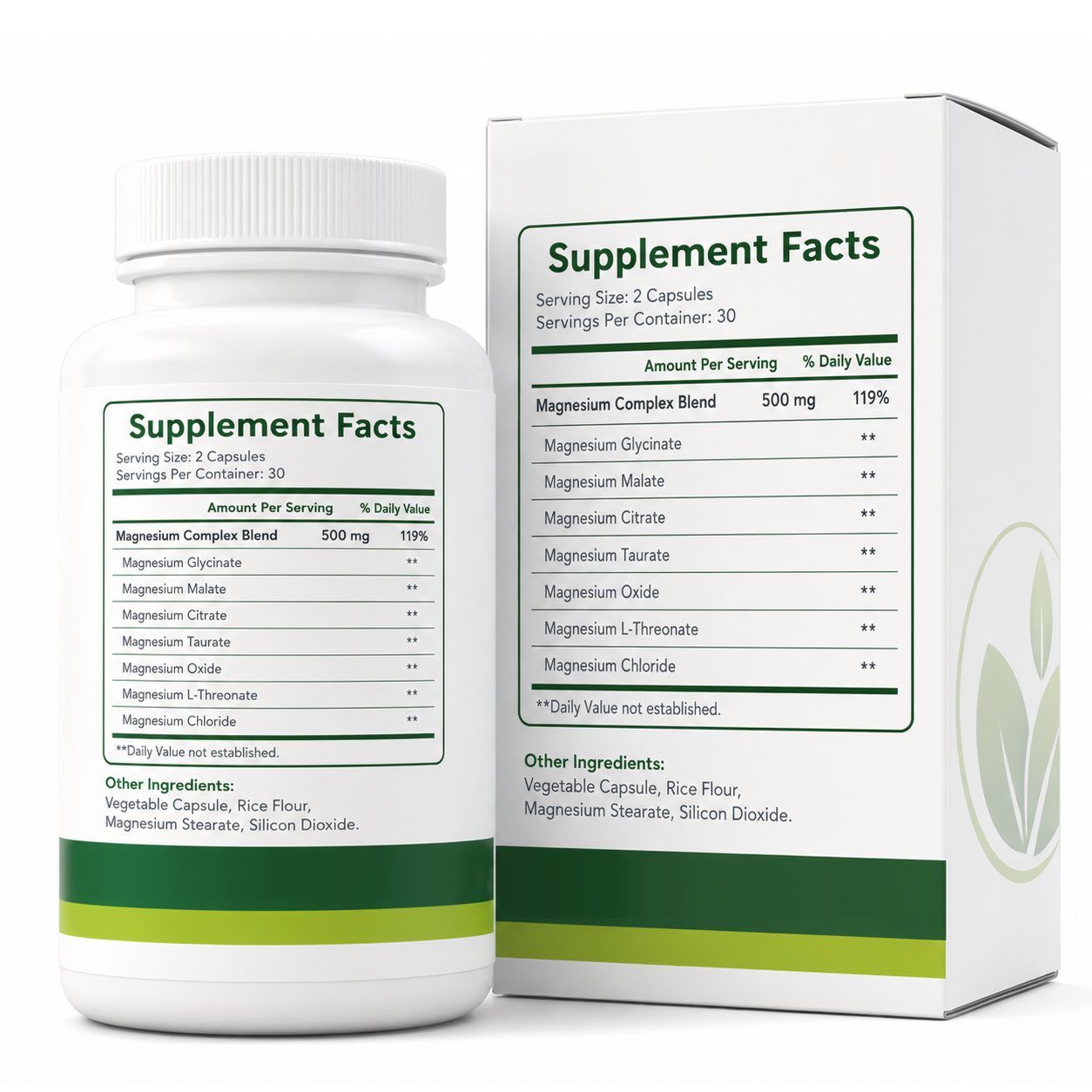
The mineral salt row deserves a warning because it is where most surprises come from. A magnesium blend built around eight forms can contain chloride and citrate salts that are far more hygroscopic than the oxide most formulators picture. We have seen a 500 mg blend that passed release at 0.32 water activity climb past 0.45 in a 100-count bottle within three weeks at 30 °C and 75% RH, while the same formula in a cold-form foil blister stayed below 0.30 for six months. The formula did not change; only the pack did. That is the difference between a stability failure and a packaging specification.
Water activity, not moisture content, is the number to specify
A capsule fill specification should carry a water activity limit, a test method and a sampling plan, not just a loss-on-drying figure. Water activity is measured with a chilled-mirror or capacitive sensor on a equilibrated sample, takes twenty to forty minutes per reading, and costs little once the instrument is in the quality lab. For most two-piece capsule fills we specify 0.35 or below at release, with an action limit at 0.40. Above that line, shell moisture climbs, and the failure sequence is predictable: tackiness at the surface, then sticking at the shoulder, then a soft unit that dents under light finger pressure.
Capsule shell moisture has its own window. HPMC and gelatin shells arrive from the supplier at roughly 4 to 6 percent moisture. Below about 3 percent the capsule shell becomes brittle and splits at the cap joint, especially in a dry climate or a pressurised aircraft hold; above about 8 percent it softens and loses the dimensional accuracy that makes the lock work. The practical rule is to keep the fill and the shell within about 0.1 water activity of each other at filling, so neither has a reason to trade water across the interface. When a buyer asks why a capsule specification includes a fill water activity limit that looks stricter than the finished-product specification, this is the answer: the limit is there to protect the shell, not the label claim.
Accelerated conditions: what each one actually answers
Capsule stability testing is often treated as a pass or fail gate. It is better read as a set of questions, each answered by a different condition. The table below sets out the conditions we run for capsule projects and the specific capsule behaviour each one exposes. The logic follows ICH Q1A(R2), which is written for drug substances and products but has become the common language between supplement brands, contract manufacturers and auditors.
| Condition | What it answers | When to run it | Capsule-specific watch point |
|---|---|---|---|
| 40 °C / 75% RH, 3 months | Fastest signal on moisture ingress and shell integrity | Every new formula and every new pack | Softening can appear while assay is still inside specification |
| 30 °C / 65% RH, 6–12 months | Long-term baseline for temperate markets | From the first production batch | Closest to a European or North American warehouse |
| 30 °C / 75% RH, 6–12 months | Long-term baseline for hot, humid markets | Any market with a Gulf, South Asian or Latin American summer | Sticking and colour migration usually appear here first |
| 25 °C / 60% RH, 12–24 months | Reference condition for cooler markets and long dating | When the label claims a date beyond 18 months | Brittleness if the pack over-dries the shell |
| 5 °C to 40 °C cycling | Transport and container excursions | Export lanes with a long ocean leg | Hairline cracks and cap-joint splitting |
Two limits are worth stating plainly, because the marketing around stability data often blurs them. First, three months at 40 °C and 75% RH is a signal, not a shelf-life grant; it supports a tentative date while real-time data accumulates, and the real-time data is what defends the label if a customer or a regulator asks. Second, a passing accelerated result does not prove the pack is airtight. No HDPE bottle with a threaded closure is hermetic. It is a barrier with a measurable water-vapour transmission rate, and that rate is what you are really qualifying when you choose a bottle, a liner and a desiccant together.
Packaging decides the last part of the shelf life
If the fill is dry and the shell is in its moisture window, the pack becomes the variable that decides whether the product arrives in the same condition it left. The comparison below is the one we use in project reviews. The barrier column is deliberately qualitative: suppliers quote water-vapour transmission rates on their own test conditions, and comparing two data sheets without checking the method is a reliable way to choose the wrong pack.
| Pack format | Moisture barrier | Best for | What to watch |
|---|---|---|---|
| HDPE bottle, induction seal and desiccant | Good, not hermetic | 60 to 180 count retail bottles, the default for US and EU shelves | Desiccant saturation and headspace volume |
| HDPE bottle without desiccant | Adequate only for dry fills | Low-activity fills with a short date | The first humid week after filling decides the outcome |
| Cold-form aluminium blister | Excellent, close to absolute | Single-dose and pharmacy lines in humid markets | Tooling cost and a higher unit price |
| PVC/PVDC blister | Moderate, depends on the PVDC coat | Cost-sensitive lines with a short shelf life | Moisture ingress through the lidding |
| Aluminium bottle or seamed tin | Excellent | Premium packs and very hygroscopic fills | Denting in transit and a higher pack cost |
One gram of silica gel holds roughly 0.3 to 0.4 grams of water at 40% relative humidity. A 100 mL bottle holding 60 capsules at 5% moisture carries around 3 grams of water in the fill alone. A single gram sachet cannot dry that fill; it can only slow the surface exchange and buy time. If a fill arrives wet, the fix belongs upstream in drying, granulation or raw-material specification, not in a bigger sachet. Cotton wool is worse than useless as a moisture control: it holds water against the capsules and gives a false sense of protection.
Four failure modes that reach the customer
The value of a stability programme is not the certificate at the end; it is the failure you catch before the container ships. These are the four modes we see most often in capsule projects, with the root cause and the corrective action that actually holds. Note that three of the four are water-related and none of them is solved by adding more active to cover an assay loss.
| Failure mode | What the customer sees | Usual root cause | Fix that works |
|---|---|---|---|
| Softening | Capsules dent or collapse under light pressure | Fill water activity above the shell equilibrium, or an under-specified pack | Dry the fill to 0.35 or below, upsize the desiccant, repeat the 30 °C / 75% RH pull |
| Sticking and caking | Units fuse at the shoulder; the bottle rattles dull | Surface water film, high fill weight, or excess magnesium stearate | Cut fill moisture, review lubricant level, control filling-room humidity |
| Brittleness and splitting | Cracks at the cap joint and shell dust in the bottle | Shell dried below about 3% moisture, or storage in very low humidity | Hold shell moisture at 4–6% and avoid an over-drying pack |
| Slow disintegration | Batch fails the 15-minute disintegration limit | Gelatin cross-linking, or a hygroscopic fill forming a gel plug | Move to an HPMC shell, remove aldehyde sources, review disintegrant use |
| Colour migration | Dye bleeds into the shell or the fill | Free dye in a humid environment, or a lake pigment mismatch | Use lake pigments, verify colourant compatibility, lower water activity first |
Disintegration deserves a separate note because it is the failure most often mistaken for a formula problem. USP <701> allows 15 minutes for capsules. A gelatin shell that has cross-linked through contact with aldehydes - from an oxidised oil, a flavour carrier or a degraded ingredient - can stay intact for an hour and still pass assay, because the active is present and measurable; it simply never becomes available. HPMC shells are far less prone to cross-linking, which is one reason vegan capsules have spread beyond the vegan claim. If a batch fails disintegration, the first question is not which disintegrant to add but which aldehyde entered the formula and at what water activity it acted.
A capsule stability protocol you can hand to a supplier
- Test three production lots, not one: a single lot cannot separate a formula effect from a blending or filling-day effect.
- Pull at 0, 1, 3, 6, 12 and 24 months for real-time, and at 0, 1, 2 and 3 months for accelerated, with the same test panel at every point.
- Measure water activity and shell moisture at every pull, alongside assay, micro, appearance and disintegration.
- Photograph a fixed set of units under the same lighting at every pull; colour migration and surface tack are easier to defend with images than with adjectives.
- Record fill weight and capsule dimensions at release and at each pull, because a shell that has absorbed water grows measurably.
- Keep at least twice the quantity needed for the full pull schedule as reserve samples, stored under the same conditions as the retention sample.
- Write the acceptance criteria before the first pull, including the action limit that triggers an investigation rather than a re-test.
- State the pack, the desiccant size and the headspace volume in the protocol; a stability result is only valid for the pack that was tested.
- Decide in advance what counts as a significant change - typically 5 percent assay loss, a disintegration failure, or a visible appearance change.
- Review the data against the market's climatic zone, not against a generic room-temperature assumption.
MOQ, calendar and what the programme really costs
Capsule stability testing is a project cost, not a laboratory fee, and it should be planned into the launch calendar rather than bolted on after the artwork is approved. On our own capsule lines, pilot batches start at 500 units and standard production at 1,000 units; pre-production samples take 7 to 10 working days and bulk production around 15 working days after material release. A three-lot accelerated programme adds roughly four to eight weeks before the first bulk run, depending on how quickly the shell and the pack are fixed. The real-time arm continues long after the product ships, which is why the reserve samples and the pull schedule matter as much as the first certificate. Buyers comparing quotes should treat a supplier who cannot describe the pull schedule as a supplier who has not run one, and the MOQ and lead-time assumptions behind any capsule quote are worth checking line by line.
For the format side of the decision, the capsule product range shows the shell sizes and counts we run most often, and the capsule size and fill-weight guide explains how the fill weight is matched to the shell. The packaging guide covers bottle, blister and label choices in more depth, and the general shelf-life and stability guide covers study design for powders, liquids and softgels. Our quality and compliance page lists the documents a brand owner can request with each batch.
Start capsule stability testing before the artwork is approved
Send the formula, the target pack and the market you are launching in. We will come back with a fill-activity target, a three-lot pull schedule and a packaging recommendation, usually within 24 hours.
What to remember about capsule stability
- Water activity, not loss on drying, decides whether a shell softens or cracks.
- Specify fill water activity at 0.35 or below and hold the shell at 4–6% moisture.
- Three months at 40 °C / 75% RH is a signal, not a shelf-life grant; real-time data defends the date.
- A desiccant buffers the headspace; it cannot dry a wet fill, and cotton wool makes things worse.
- A disintegration failure is usually a cross-linking or gel-plug problem, not a missing disintegrant.
- A stability result is only valid for the exact pack, desiccant size and headspace that was tested.
References
Key takeaways
- Water activity, not loss on drying, decides whether a capsule shell softens or cracks.
- Specify fill water activity at 0.35 or below and hold the shell at 4–6% moisture.
- Three months at 40 °C / 75% RH is a signal, not a shelf-life grant; real-time data defends the date.
- A desiccant buffers the headspace; it cannot dry a wet fill, and cotton wool makes things worse.
- A disintegration failure is usually a cross-linking or gel-plug problem, not a missing disintegrant.
- A stability result is only valid for the exact pack, desiccant size and headspace that was tested.
Frequently asked questions
How long does capsule stability testing take?
A three-lot accelerated arm takes about three months of conditioning plus testing time, so four to five months from the first batch. The real-time arm runs for the shelf life you intend to claim, typically 18 to 24 months, with pulls along the way. You can launch on the accelerated data plus a tentative date, but the real-time results are what support the label if a customer audits the file.
Can you run stability testing before I place a bulk order?
Yes, and it is cheaper than discovering the problem after a bulk run. We can build the pilot batch at 500 units, test the fill's water activity and run an accelerated pull on the intended pack before the order is confirmed. The result tells you whether the formula and pack agree; if they do not, the change is made at pilot scale, where it costs a fraction of a finished-goods rework.
What water activity should a capsule fill have?
For most two-piece capsule fills we specify 0.35 or below at release, with an action limit at 0.40. Deliquescent mineral salts and spray-dried extracts need the lower end of that range. The exact limit depends on the shell material and the pack, so it should be confirmed with a short sorption test rather than copied from another product.
Why do my capsules stick together in the bottle?
Sticking is almost always a surface water film. The fill is above the shell's equilibrium water activity, or the pack is letting moisture in faster than the desiccant can buffer it. Check fill water activity, headspace volume, desiccant size and filling-room humidity in that order. Adding more lubricant can hide the symptom for a while, but it does not remove the water.
Do I need both accelerated and real-time testing?
Yes, for any serious launch. Accelerated conditions give you a fast signal on moisture ingress and shell integrity, which is what you need before committing to a bulk run. Real-time conditions give you the data that supports the printed date. Running only accelerated leaves you without a defensible shelf life; running only real-time leaves you guessing for a year.
Can you supply capsules with a desiccant in the bottle?
Yes. We can specify a silica gel sachet or canister, an induction seal and a controlled headspace as part of the pack, and we will size the desiccant against the fill's water activity and the bottle volume rather than adding a standard sachet. The sizing is validated in the stability study, because a desiccant that is too small gives a false sense of protection and one that is too large can over-dry the shell.
Have a project in mind? We'll come back with MOQ, formula options and lead time within 24 hours.
Request a Quote