GLP-1 companion supplements are the fastest-growing shelf in weight management, and most brands still build the line backwards. Injectable and oral GLP-1 therapies are changing how millions of consumers eat, and the knock-on demand does not land on the drug shelf. It lands on the nutrition aisle beside it: fiber that keeps digestion moving, protein that protects muscle, electrolytes that replace what queasy days take away, and a multivitamin that covers what a shrunken appetite no longer delivers. None of that requires a pharmaceutical license. It requires a factory that can hold a 4 g fiber serving inside one sachet, and a label that survives a claims review.
The commercial signal is already public. In a compilation of the TikTok Shop US supplement category top 100 products published in September 2026, weight, metabolism and gut management is the single largest function, taking 565,053 of roughly 1.83 million units sold - 30.9 percent of unit volume - ahead of sleep and sports nutrition. Around 30 percent of that top 100 carries no identified dosage form in the same compilation, so treat format shares as directional rather than exact, but the demand signal itself is unambiguous. Positioning matters just as much: these are companion products for people on or considering GLP-1 therapy, not the therapy itself. For how all seven dosage formats compare on cost and MOQ before you commit, start with our supplement dosage form selection guide, then decide which of the four gaps below your first SKU should own.
The four gaps a GLP-1 companion line has to fill
Reduced food intake is the mechanism behind the category, and it is also the source of every product brief in it. A smaller appetite means fewer calories, which is the point. It also means fewer grams of protein, less fluid, and a narrower vitamin and mineral intake each day. Add the gastrointestinal side effects that commonly accompany the therapy and the result is four predictable gaps. Build one SKU against each gap and you have a line, not a single product.
| Nutritional gap | What the user feels | Product response | Typical actives |
|---|---|---|---|
| Protein below need | Muscle lost alongside fat | GLP-1 protein powder, 20-25 g per serving | Whey concentrate or isolate, BCAAs |
| Fiber below need | Slowed digestion, constipation | GLP-1 fiber sachet or tub, 3-5 g soluble fiber | Glucomannan, inulin, partially hydrolyzed guar |
| Fluid and electrolytes | Queasy days, low fluid intake | GLP-1 electrolyte stick pack or drops | Sodium, potassium, magnesium, vitamin B6 |
| Micronutrient shortfall | Reduced vitamin and mineral intake | GLP-1 multivitamin capsules or liquid | Vitamins A, C, D3, B6, B12 and zinc |
Read the chart as a shelf snapshot, not a forecast. It is compiled from public platform listings, it counts units rather than revenue, and the 30 percent of products with no identified dosage form sit outside these bars. Even so, when the largest functional block in a top-100 list is weight and gut management, a GLP-1 companion line is not a niche bet any more.
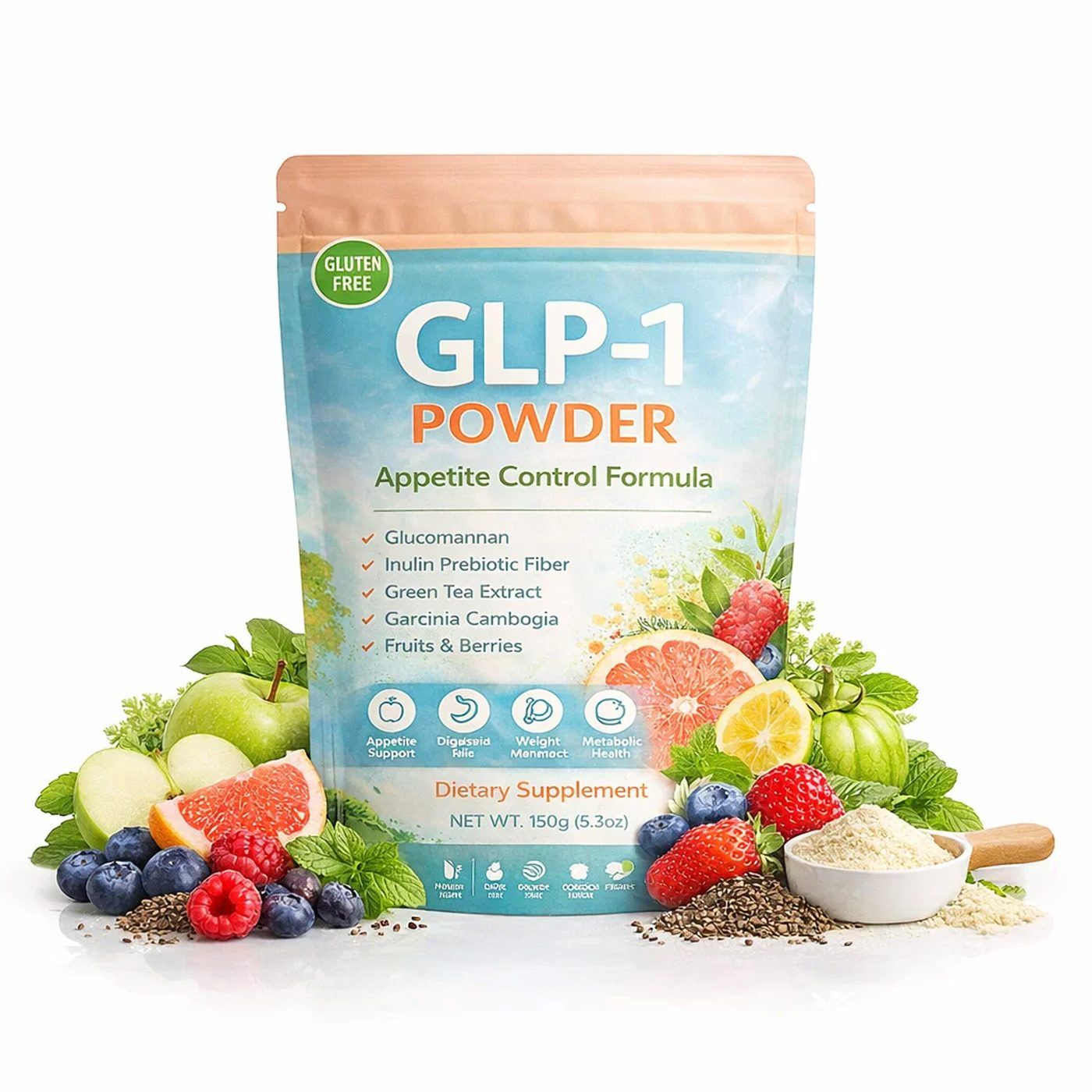
The satiety fiber core: get the glucomannan right
Glucomannan from konjac root is the technical heart of most GLP-1 satiety products, and it is the one ingredient in this space with a top-tier regulatory backbone behind it. In Europe, an authorised health claim allows glucomannan to state that it contributes to weight loss in the context of an energy-restricted diet - at 3 g per day, taken as three 1 g doses with one to two glasses of water before meals. That dosing detail is not fine print. It is the difference between a label that a reviewer accepts and one that gets pulled.
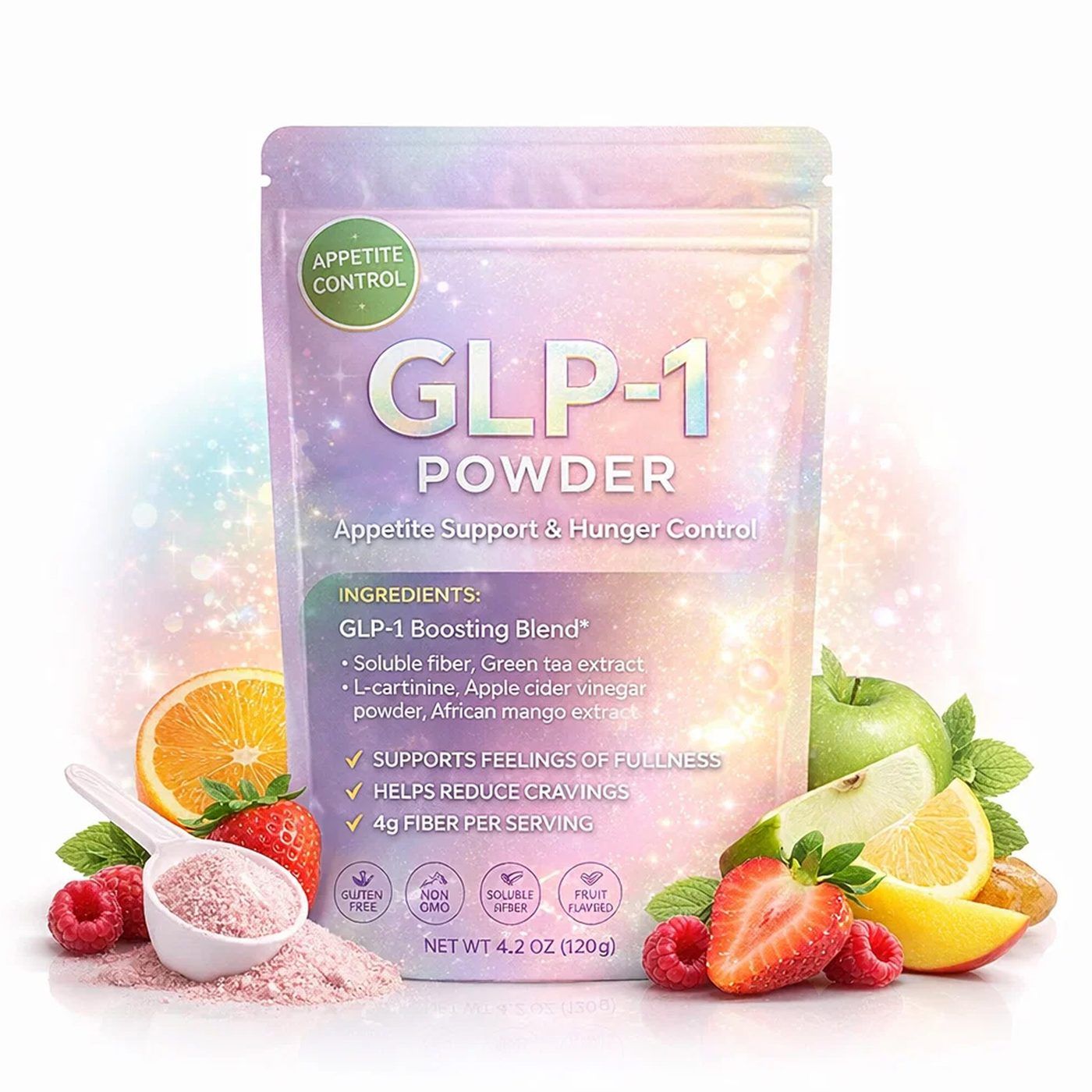
The part nobody tells first-time brand owners is that glucomannan is a viscosity problem before it is a marketing asset. Konjac glucomannan carries a molecular weight of roughly 200,000 to 2,000,000 daltons, and a 1 percent solution can reach several thousand centipoise. It starts hydrating the moment it touches water, which is exactly what you want in the stomach and exactly what you do not want in a mixing bowl. Where it hydrates decides the process: a sachet needs an agglomerated, instantized grade that disperses without clumping into a lump; a shaker tub blends fine with inulin alongside it; in a ready-to-drink liquid it begins gelling in the holding tank, so the dose has to drop or the grade has to change. That is why our own appetite-support liquid, SKU YL012, carries ginger root, fennel seed and gentian root extracts with vitamins A, C, D3, B6, B12 and zinc in a 15 mL tropical-flavored serving - a botanical and micronutrient profile that stays pourable - rather than trying to force konjac fiber into a bottle. The fiber job belongs in a sachet or a tub: the 120 g pouch pictured above delivers 4 g of fiber per serving across 30 servings. If you are planning the powder side, our <a href="/products/powders/">powder manufacturing range</a> covers sachet, stick pack and tub formats, and our guide to <a href="/blog/private-label-powder-supplements-solubility-mesh-flavor-packaging/">powder solubility, mesh size and packaging</a> explains why instantizing matters so much for fibers in particular.
Evidence and marketing are not the same shelf
Weight management attracts more ingredient theatre than almost any category, and a GLP-1 companion label gets audited by more skeptical eyes than a general wellness product. The honest move - and the defensible one - is to know which actives carry published support and which ones sell on familiarity. The table below is how we brief brand owners before a single claim is written.
| Ingredient | What published evidence supports | Where marketing usually outruns it |
|---|---|---|
| Glucomannan | Authorised EU satiety and weight-loss claim at 3 g per day with water | Doses under 3 g still implying the full effect |
| Inulin and prebiotic fiber | Well-documented prebiotic fiber, gentle at 3-5 g per day | Bloating complaints above roughly 10 g per day |
| Green tea extract | Modest thermogenic support data at studied doses | High-dose extracts drawing liver-safety scrutiny |
| Apple cider vinegar | Thin human data at supplement doses | Fat-burning implications with no basis at dose |
| Garcinia cambogia | Mixed to weak trial evidence overall | Selling on familiarity while implying transformation |
| Chromium picolinate | Small, mixed effects on metabolic markers | Positioned as a hero actives when it is a supporting mineral |
A defensible label uses the support register: helps maintain, supports feelings of fullness, contributes to regular digestion. It saves the transformation language for the drug companies that are allowed to make it, which incidentally is why the honest tone reads as expertise to the buyers who compare ten factories in a row.
Protein is the second pillar, not an accessory
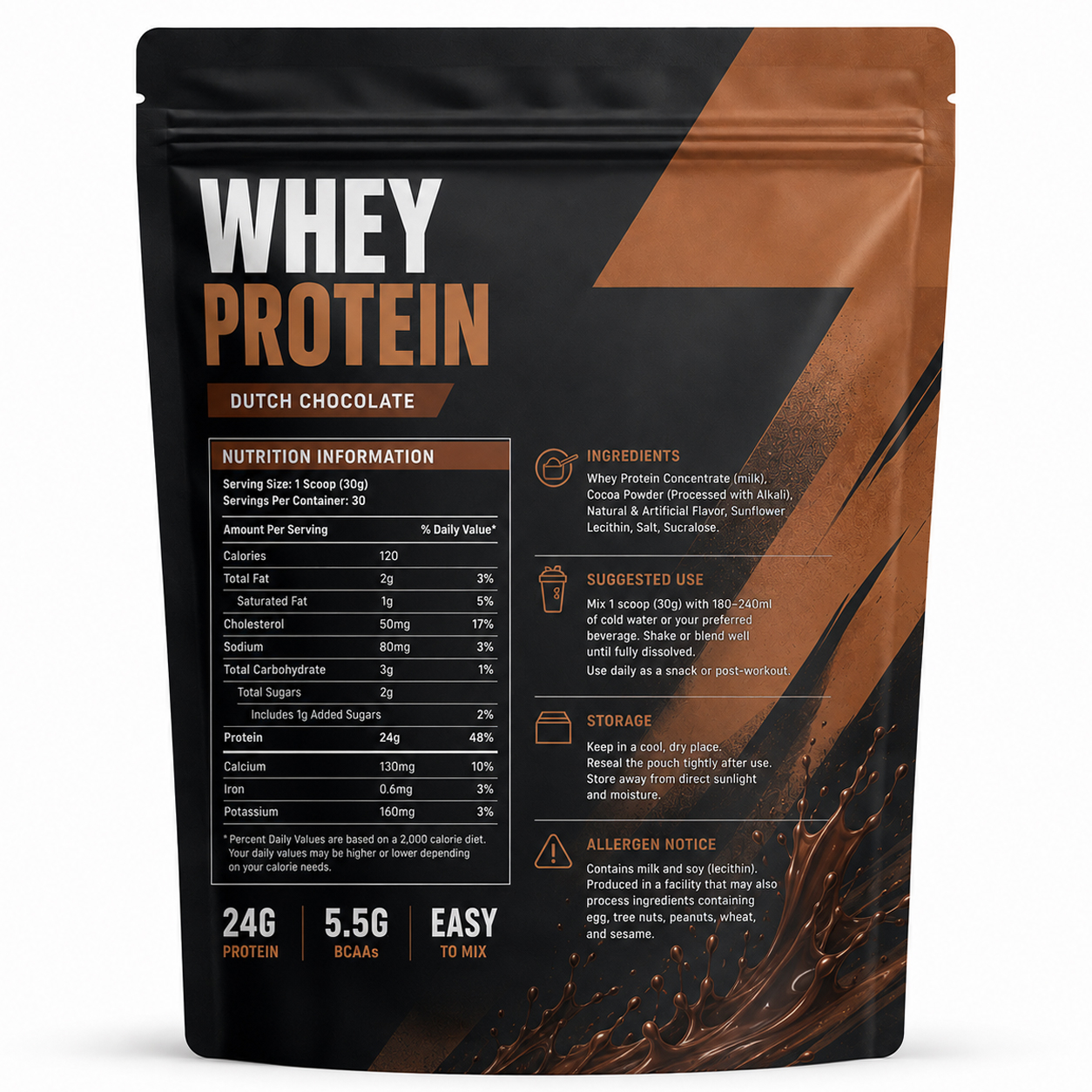
Body-composition analyses from published injectable GLP-1 trials estimate that roughly a third to two fifths of the total weight lost can come from lean mass. Resistance training and adequate protein are the countermeasures, GLP-1 users consistently rank it as their hardest target, and intake levels commonly cited in weight-loss contexts run at 1.2 to 1.6 g of protein per kilogram of body weight per day. When appetite has collapsed, that target is the hardest macro to hit with food alone - which is why a protein powder is the natural second SKU in a GLP-1 companion supplements lineup. The design template is simple: our GT424 Dutch chocolate whey delivers 24 g of protein in a 30 g scoop with roughly 5.5 g of naturally occurring BCAAs at 120 calories, and the same chassis takes isolate, plant protein or flavor changes without reformulation.
See the whey protein powder manufacturing page for the full specification, or the inositol supplement for women for the capsule-side analogue: SKU YJN010 pairs a 40:1 myo-inositol to D-chiro-inositol ratio at 2,000 mg and 50 mg per two-capsule serving with omega-3, vitamin D3, magnesium, zinc, folate and B12 - a micronutrient chassis aimed at the same reduced-intake user.
Hydration deserves its own GLP-1 SKU
Nausea phases reduce both drinking and retention, and dehydration is one of the most common reasons GLP-1 users report feeling worse than the therapy alone should make them feel. A GLP-1 hydration SKU is cheap to build and easy to explain: our GT286 electrolyte stick pack runs a 7.6 g serving of sodium, potassium and magnesium with vitamin C, B6 and B12 in a strawberry kiwi, stevia-sweetened base, citric acid for the tartness that makes people actually finish the bottle. See the <a href="/products/powders/private-label-electrolyte-powder-manufacturer/">electrolyte powder manufacturing page</a> for the specification. Stick packs also happen to be the cheapest format to ship per serving, which matters once freight enters the margin conversation.
Format decisions: sachet, capsule, gummy or liquid
Once the gaps are mapped, the GLP-1 format decision is mostly a dose-capacity problem with a margin wrapped around it. Fiber doses of 3 g and up rule out every compressed and gelled format on their own; capsules and gummies earn their place on the micronutrient and habit rows instead. The table below is the trade-off as it plays out on real production lines.
| Format | Workable dose per unit | Typical MOQ | Watch-outs |
|---|---|---|---|
| GLP-1 fiber sachet or tub | 3-8 g fiber per serving | 500-1,000 units | Viscosity control, instantizing, scoop size |
| GLP-1 multivitamin capsule | 500-1,100 mg per capsule | 500 units | Count per serving grows quickly |
| GLP-1 gummy | 2-4 g total mass per gummy | 1,000 units | A sugar base fights the positioning |
| GLP-1 liquid serving | 15-60 mL per serving | 1,000 units | Preservative pH window, freight weight |
Notice what the table quietly says about gummies. A GLP-1 companion gummy can carry a pleasant micronutrient or ACV dose, but 3 g of fiber would need roughly five sugar-bearing gummies, and sugar in a weight-management line is a positioning problem before it is a formulation one. Sugar-free pectin systems exist and we build them, but the gummy is the habit row of the line, not the fiber row.
Fiber dose dictates packaging economics. A 4 g fiber serving needs a 10-25 mL scoop and a pouch or tub proportioned to look right on shelf; the same fiber delivered by capsule would take eight units a day. Decide the format after the dose, never before - reversing the order is the most expensive mistake we see in first GLP-1 companion supplements briefs.
One more format note from live production: liquid servings shine for botanical and micronutrient profiles, and the 15 mL / 250 mL appetite-support liquid mentioned above has been engineered around exactly that boundary - pourable botanicals, no gelling fibers, a 17-serving bottle. Matching the active to the format it tolerates is most of the formulation work in the GLP-1 category; the rest is flavor and stability.
Naming and claims: where GLP-1 companion brands get into trouble
Regulators have already drawn the line for this category, in public. The FDA has issued warning letters to brands marketing dietary supplements as GLP-1 alternatives or as so-called herbal versions of prescription GLP-1 medicines - the problem is never the ingredient list, it is the implication that a food product replicates a prescription therapy. Drug names on a supplement label, before-and-after transformation claims, and disease claims such as treating obesity are all in the same bucket: each one converts a compliant product into a misbranded one.
The safe register is structure and function: supports appetite management, helps maintain regular digestion, supports daily metabolic nutrition. Even the term GLP-1 on a product name sits in a gray zone, because regulators have treated names that imply drug effects as a risk factor; most experienced manufacturers recommend companion framing - appetite support, daily fiber, metabolic nutrition - with the mechanism explained in your marketing copy instead of implied on the front panel. Our guide to global supplement regulations, FDA cGMP and Halal covers the claim framework in full, and our 2026 manufacturing trends review tracks how the regulatory weather is shifting for weight-management products specifically.
MOQ, samples and lead time for a GLP-1 companion line
Practical numbers, because a four-SKU line lives or dies on whether a brand can afford to launch it. Our baseline MOQ runs from 500 units per SKU for capsules up to 1,000 units for powders, sachets and liquids, with pilot batches from 300 to 800 units for powder formats. Samples take 7 to 10 days; standard production runs about 15 working days after approval, with a 10-day expedited path for repeat orders; finished shelf life is 24 months under accelerated and real-time stability testing. Launching all four GLP-1 companion supplements gaps at once is rarely the right first move - one fiber sachet plus one protein powder covers the two strongest demands and keeps the first purchase order inside a five-figure budget. Our breakdown of <a href="/blog/understanding-moq-and-lead-times-in-dietary-supplement-manufacturing/">MOQ and lead times in supplement manufacturing</a> explains how to sequence the rest.
Start your GLP-1 companion supplements project
Send us your target market, the gap you want to own first and the format you have in mind. We will come back within 24 hours with a formulation route, MOQ and a sample plan - and we will tell you plainly if the dose you want does not fit the format you asked for.
A launch checklist for GLP-1 companion supplements
- Pick one of the four gaps as your hero SKU, and build the claim architecture around it before the flavor.
- Fix the fiber dose first: if glucomannan is in the GLP-1 formula, 3 g per day with water is the evidence-based anchor.
- Specify an instantized, agglomerated fiber grade for any GLP-1 sachet, and demand a dispersion test before approval.
- Keep protein servings at or above 20 g, because anything less competes with food rather than supplementing it.
- Write every claim in the support register and keep drug names, before-and-after imagery and disease language off the label entirely.
- Check sweetener load: stevia and monk fruit carry a bitter edge above roughly 400-600 ppm that acid systems can mask better than more sweetener can.
- Plan the line as sachet plus protein first, gummy and liquid second, so the first purchase order stays inside budget.
- Ask for Halal certification against the specific formula, not just the facility, if Middle East or Southeast Asia is on the roadmap.
- Get the stability protocol agreed before production, not after, so the 24-month shelf-life statement is supported from batch one.
Sources
- EFSA Journal 2010; 8(10):1798 - Glucomannan and weight loss in the context of an energy-restricted diet (authorised health claim)
- US FDA - Warning letters concerning dietary supplements marketed as GLP-1 alternatives or so-called herbal versions of prescription GLP-1 medicines
- TikTok Shop US supplement category public top-100 ranking, compiled September 2026 (platform listing data, not internal sales figures)
- Yukang Medicine product specifications for SKUs YL012, YJN010, GT424 and GT286
Key takeaways
- A GLP-1 companion supplements line maps to four gaps - protein, fiber, hydration and micronutrients - and each gap points at a different format.
- Glucomannan is the only satiety ingredient in the GLP-1 aisle with a top-tier authorised claim, at 3 g per day with water, and it is also the most technically demanding fiber on the line.
- Where a fiber hydrates decides the process: instantized grades for sachets, botanicals for liquids, and no konjac in a ready-to-drink bottle.
- Published trial body-composition analyses put a third to two fifths of GLP-1 weight loss at risk of being lean mass, which is the whole case for a protein SKU.
- Name the line appetite support or daily metabolic nutrition, not after a prescription drug - the FDA has already warned the brands that tried.
- MOQ runs 500 to 1,000 units per SKU with 7-10 day samples and about 15 working days of production, so a two-SKU launch is a five-figure project, not a seven-figure one.
Frequently asked questions
Can you manufacture GLP-1 companion supplements under 1,000 units?
Yes for most formats. Capsules start at 500 units per SKU, powders, sachets and liquids at 1,000 units, and powder pilot batches run from 300 to 800 units. Samples take 7 to 10 days, standard production about 15 working days after approval, with a 10-day expedited path for repeat orders.
Do your GLP-1 companion products contain actual GLP-1?
No, and no legitimate supplement does. GLP-1 medicines are prescription drugs. What we manufacture is companion nutrition - fiber, protein, electrolyte and micronutrient products designed for people on or considering the therapy - with claims written in the structure-and-function register so the label stays compliant.
Can glucomannan go into a ready-to-drink liquid?
Not at meaningful doses. It begins hydrating immediately and gels in the holding tank at the concentrations a satiety claim requires. That is why our appetite-support liquid carries ginger, fennel and gentian extracts with vitamins and zinc instead, while the fiber job belongs in an instantized sachet or a shaker tub.
What claim language is safe on a GLP-1 companion label?
Structure-and-function language: supports appetite management, helps maintain regular digestion, contributes to daily metabolic nutrition. Avoid prescription drug names, transformation promises and disease claims such as treating obesity - the FDA has already sent warning letters to brands marketing supplements as GLP-1 alternatives.
Can the line be vegan and sugar-free?
Yes. Fiber sachets and protein powders are sugar-free by design and can be sweetened with stevia or monk fruit; plant protein versions of the whey chassis run on the same blending line; capsule shells are available in vegetarian HPMC as well as gelatin across the range.
What certifications cover these products?
Production runs in an FDA-registered, cGMP facility operating to ISO 22000 and HACCP food safety systems, and our group includes a BRCGS-audited site. Where halal certification is required for your market, the certificate is issued against your specific formula rather than the facility as a whole, and we support that audit on your behalf. Every batch ships with a COA plus stability data supporting the 24-month shelf life.
Have a project in mind? We'll come back with MOQ, formula options and lead time within 24 hours.
Request a Quote