Why a beauty range is a claims problem before it is a formula problem
Private label beauty supplements are the most commercially forgiving category in the industry and the most legally exposed. A hair, skin and nails range sells on results the shopper expects to see in the mirror, which is exactly why every regulator watches the wording, and why the same panel can ship in one country and be pulled in another. The actives themselves cost cents; the discipline around what the pack may claim is what separates a range that builds a reorder cycle from one that dies quietly in a warehouse.
The economics explain the category's growth. Biotin, vitamin C and zinc are cheap enough that the dose can be set by the evidence rather than the budget, collagen peptides and hyaluronic acid price between them, and the beauty retail bracket tolerates premium packaging that would sink a mainstream multivitamin. What first-time beauty brands get wrong is rarely the formula. It is the panel: a dose copied from a competitor who copied someone else, a skin brightening claim that is not lawful in the destination market, or a colour system that fades before the container sells through.
The workable sequence is the one we follow in our collagen manufacturing guide: fix the dose the research used, choose a format that can carry it, then write the pack. For a beauty range the realistic chassis options are a collagen drink mix powder at 6 g per scoop, a capsule panel built on multi collagen capsules with hyaluronic acid and biotin, or a 50 mL ready-to-drink collagen beauty drink. Each carries a different dose ceiling, and the ceiling decides the claim.
The actives that carry a hair, skin and nails panel
Seven actives do most of the work in private label beauty supplements, and they earn their place very differently. The table below is the honest version we send with a first quote: the dose the studies actually used, what the evidence supports, and what each major market lets the pack say. The gap between the middle column and the right-hand column is where most beauty launches get into trouble.
| Active | Daily dose used in studies | What the evidence supports | Authorised claim, US and EU |
|---|---|---|---|
| Biotin | 30 mcg adequate intake; panels run 1,000–10,000 mcg | Deficiency damages hair and nails; benefit beyond adequate status is not shown | US structure and function wording; EU: biotin contributes to maintenance of normal hair and skin |
| Hydrolysed collagen peptides | 2.5–10 g | Small trials on skin elasticity and hydration; modest and dose-dependent | US structure and function wording; EU: no authorised claim for collagen |
| Hyaluronic acid | 120–240 mg oral | Small trials on skin moisture; strong topical record, modest oral record | US wording available; EU: none; Japan approves oral HA products under FOSHU |
| Vitamin C | 60–500 mg | Required for collagen synthesis; deficiency produces fragile connective tissue | US wording available; EU: contributes to normal collagen formation for normal function of skin |
| Zinc | 8–15 mg | Deficiency causes hair loss; benefit beyond adequate status is not shown | US wording available; EU: contributes to maintenance of normal hair, skin and nails |
| Selenium | 55–100 mcg | Deficiency affects hair and nails; narrow safety window near 400 mcg | US wording available; EU: contributes to maintenance of normal hair and nails |
| Glutathione, reduced | 250–500 mg | Small brightening trials with heterogeneous designs; oral bioavailability debated | US limited wording; EU: none; brightening claims restricted in several markets |
| Silicon, bamboo extract | 5–10 mg | Weak to moderate; a role in collagen cross-linking is proposed | US restrained wording only; EU: none |
The European column is the discipline, not the decoration. In the EU the authorised claims belong to biotin, zinc, selenium, copper and vitamin C, and collagen and hyaluronic acid carry none, which is why European beauty products lead with the vitamin and let the peptides sit in the ingredient list. Japan runs a FOSHU pathway that has approved oral hyaluronic acid products backed by dossiers. The United States allows structure and function wording as long as the statement avoids disease language. One beauty category, four rulebooks, and the artwork has to pick a rulebook before the printer does.
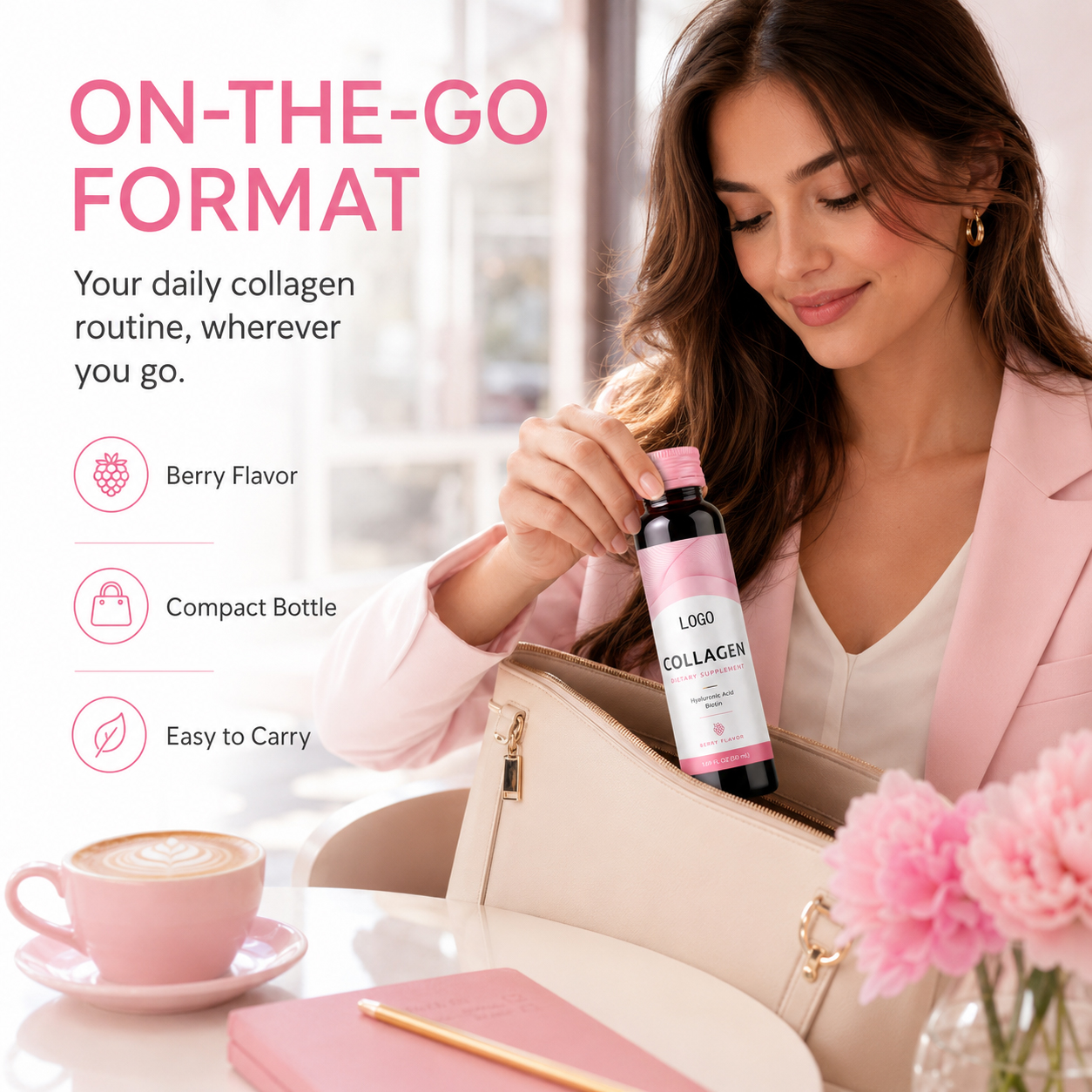
What the beauty shopper is buying, in practice, is a routine with a visible promise attached. That is why the category tolerates premium formats no multivitamin could justify: a 50 mL glass bottle of collagen drink, a stick pack in a matte pink laminate, a dropper in amber glass. The formats are not vanity. In a beauty range the pack carries a large share of the perceived efficacy, and the same 5 g of peptides sells at three different prices depending on the ritual it arrives in. The planning consequence is real: a beauty line needs a packaging decision as early as a formula decision, and the two have to be costed together.
The biotin number is a marketing decision, not a formulation one
The adult adequate intake for biotin is 30 mcg a day, yet panels on shelf run from 1,000 to 10,000 mcg. The gap is not formulation science. Biotin is supplied as a 2% tracer on a carrier, another 9,000 mcg per serving costs a fraction of a cent at production volumes, and the biggest number on the shelf wins the comparison click. The dose escalation is a label war, and it is cheap to fight on any beauty shelf.
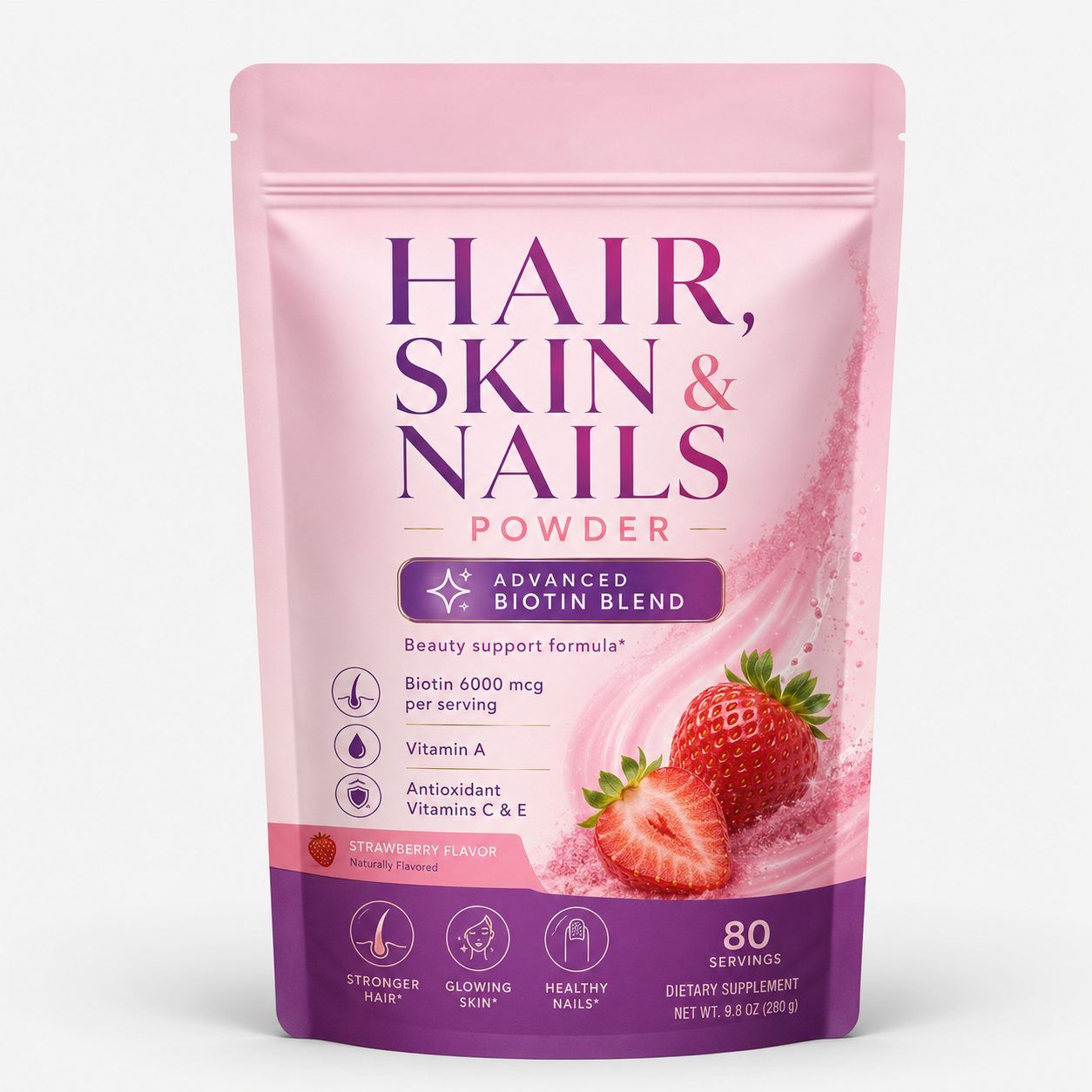
What does cost money in a beauty formula is everything around the biotin: the flavour system that hides 60 to 500 mg of acidic vitamin C, the colour that survives a transparent film, the packaging that keeps a berry powder from caking at 75% relative humidity. Three live panels make the point. Multi collagen capsules carry 1,000 mcg alongside their 1,500 mg collagen complex, the beauty powder below carries 6,000, and a biotin liquid drops SKU carries 10,000 mcg in 2 mL of water and glycerin. Same ingredient, three positionings, near-identical material cost.
| Panel | Biotin per serving | What the number signals | Cost impact |
|---|---|---|---|
| Multi collagen capsules, 3 capsules | 1,000 mcg | Complementary dose inside a collagen panel | Cents per bottle; not a cost driver |
| Hair, skin and nails powder, one scoop | 6,000 mcg | Flagship beauty positioning on a competitive shelf | None at run rate |
| Biotin liquid drops, 2 mL | 10,000 mcg | Single-ingredient dose leadership | None; the dropper format carries the cost |
The one real cost of a five-figure biotin number is regulatory, not financial. The FDA has warned that high chronic biotin intakes can interfere with clinical laboratory assays, and an increasing share of buyers now expect that risk acknowledged in the product file. The extra micrograms cost nothing to blend, but the conversation belongs in the dossier from day one.
Collagen arithmetic for a beauty range
Collagen is where a private label beauty supplements range makes or breaks its margin, because the dose the trials used is measured in grams and the formats shoppers prefer are measured in capsules. Human work on skin elasticity and hydration clusters at 2.5 to 10 g of hydrolysed peptides a day. A 6 g scoop delivering 3,000 mg sits at the low end and prices comfortably; 5,000 mg in a 50 mL drink reads premium; 1,500 mg across three capsules works as a complementary dose because the panel also carries hyaluronic acid and biotin. None of these is wrong. What is wrong is a panel that implies the 10 g trial dose and ships 1,500 mg in a two-capsule serving.
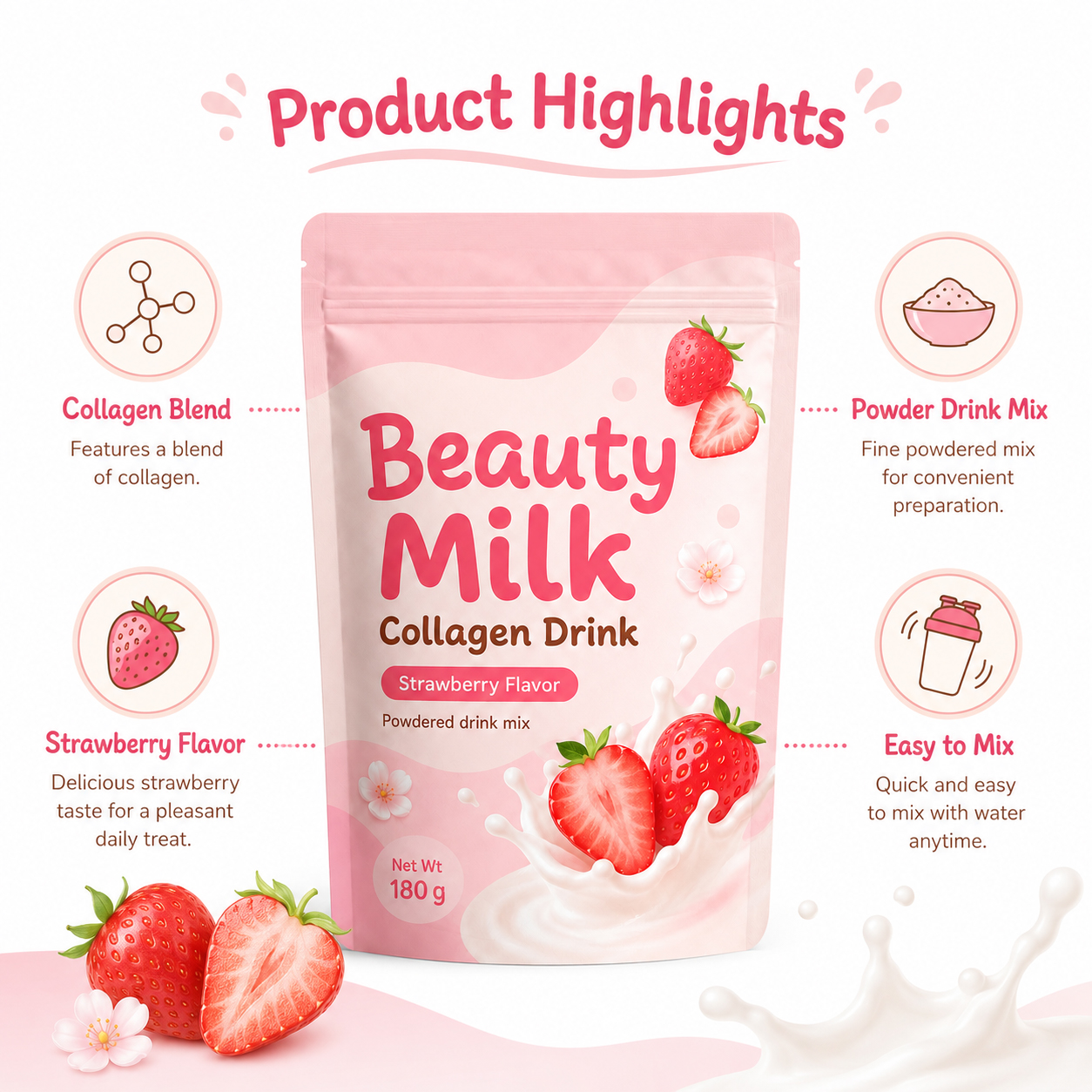
A live panel shows how the arithmetic lands. Our strawberry collagen drink mix weighs 6 g per scoop: 3,000 mg of hydrolysed collagen, 1,000 mg of strawberry fruit powder, 800 mg of milk powder and 60 mg of vitamin C, carried in erythritol with citric acid, beet juice powder and silicon dioxide. Read the panel honestly and half the scoop is carriers, fruit and flavour. That is not a scandal; it is how a drinkable beauty powder works. But it means the collagen dose, not the scoop weight, is the number to price, and a quote that prices 6 g of powder as if it were 6 g of peptide is quoting the wrong product.
| Format | Daily dose capacity | Units per day for 5 g collagen | MOQ | Where it wins |
|---|---|---|---|---|
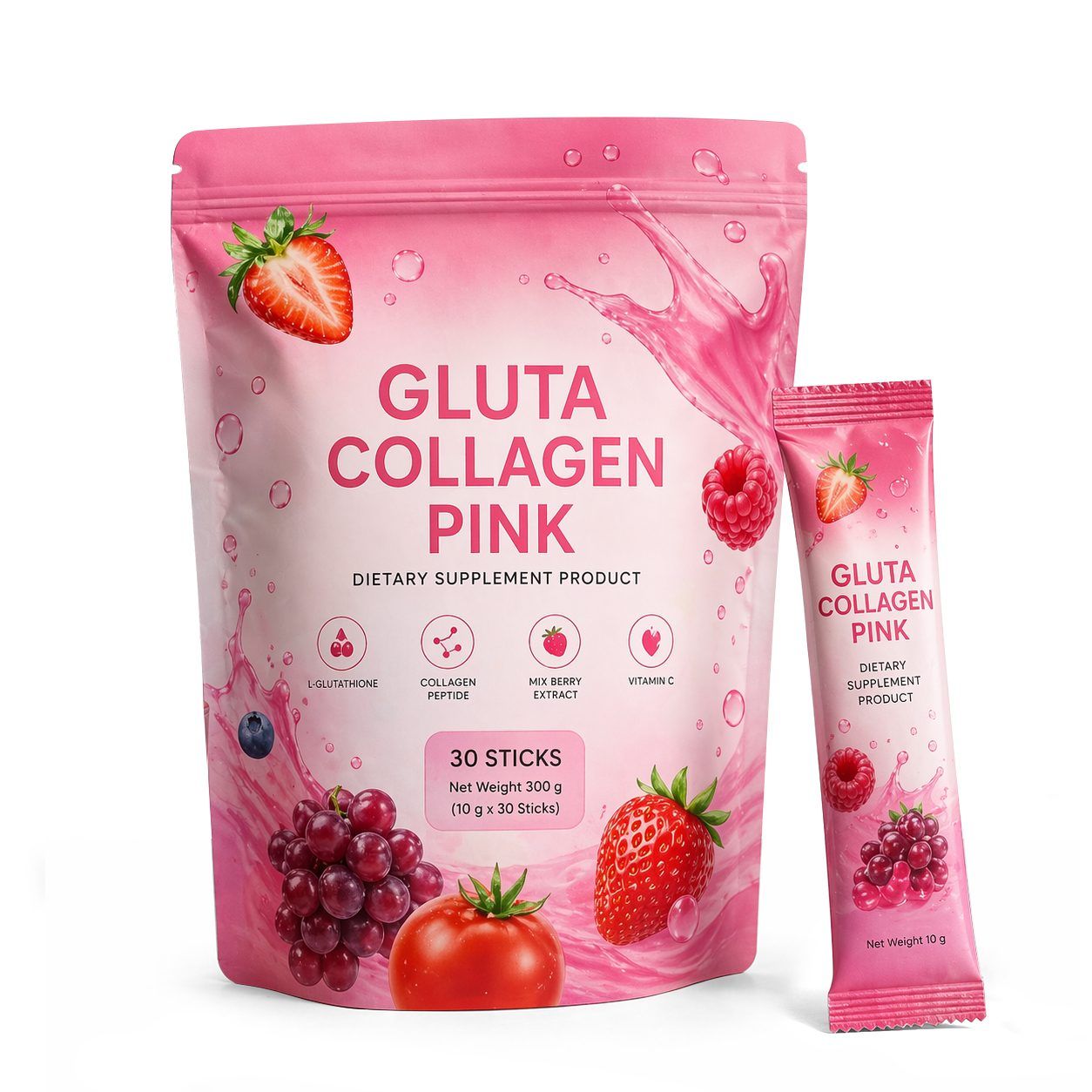
| Powder stick pack, 10 g | 5–10 g of actives | 1 stick | 1,000 | Glutathione, collagen and vitamin C in one sachet; travel retail |
| Powder tub with scoop | 5–20 g per scoop | 1 scoop | 1,000 | Lowest cost per gram; subscription e-commerce |
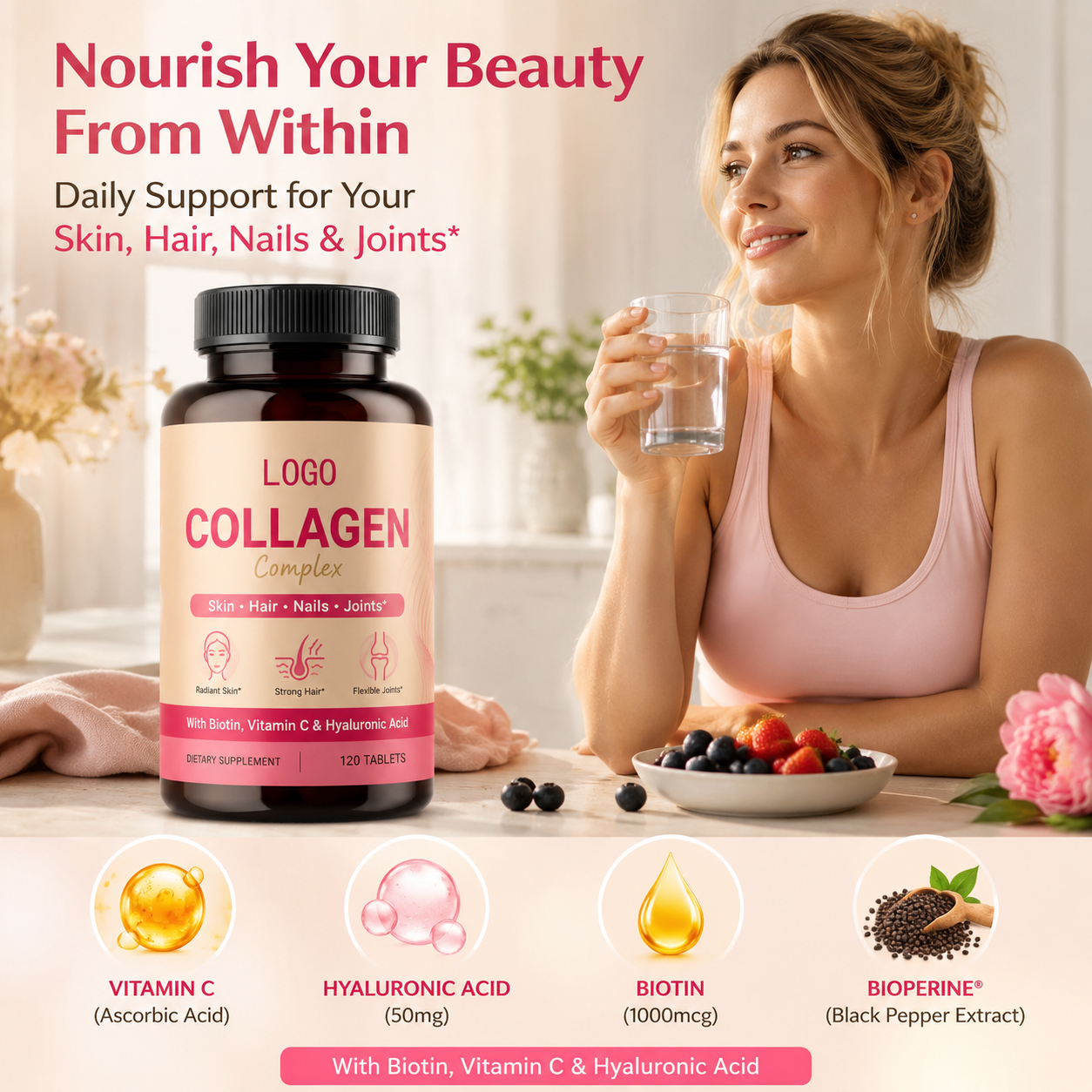
| Capsule, size 0 | 1,500 mg complex per 3 units | 10–20 capsules | 1,000 | Multi-active panels: collagen, hyaluronic acid, biotin, zinc |
| Gummy, 3 g | 150–500 mg | Not feasible | 3,000 | Flavour-led entry positioning, not dose |
| Ready-to-drink, 50 mL | 3–5 g per bottle | 1–2 bottles | 5,000 | Premium beauty drink; chilled and convenience retail |
Gummies deserve the honest note they always get in a beauty conversation. A 3 g gummy is roughly 70% glucose syrup solids, gelatin or pectin, acid and colour, which leaves 300 to 500 mg for everything active. Hyaluronic acid at 120 mg fits a two-gummy serving. A collagen dose that the skin literature actually used does not. Beauty gummies work as a flavour-led entry product and as an add-on to a powder or drink; they fail as the flagship of a dose-led range.
Read the chart before fixing the retail story on any beauty panel. The two ingredients every beauty buyer asks about first, biotin and vitamin C, are rounding errors; the two that actually set the bill are glutathione and the collagen dose. That inversion explains most of the strange panels on the beauty shelf: generous where the ingredient is cheap, thin where it is expensive.
Glutathione: the expensive line on a brightening panel
Reduced glutathione is the costliest active a private label beauty supplements panel usually carries and the easiest to get wrong in production. The molecule oxidises in water, so a ready-to-drink glutathione beverage is a stability project before it is a marketing one: the assay at release and the assay at the end of a 24-month shelf life will disagree unless the formula protects the reduced form. Dry formats sidestep the problem, which is why the glutathione projects that actually ship are 10 g stick packs and capsules, not bottled liquids.
The evidence deserves the same honesty as the cost. Oral glutathione has small human trials with heterogeneous designs and effect sizes, and its oral bioavailability is debated in the literature; 250 to 500 mg in a dry blend is a defensible beauty positioning, not a guaranteed outcome. The claim side is narrower still. The EU Register carries no authorised glutathione claim, several Southeast Asian and Middle Eastern registration regimes restrict whitening or brightening wording, and the phrasing that survives review in most markets is antioxidant support rather than a shade promise.
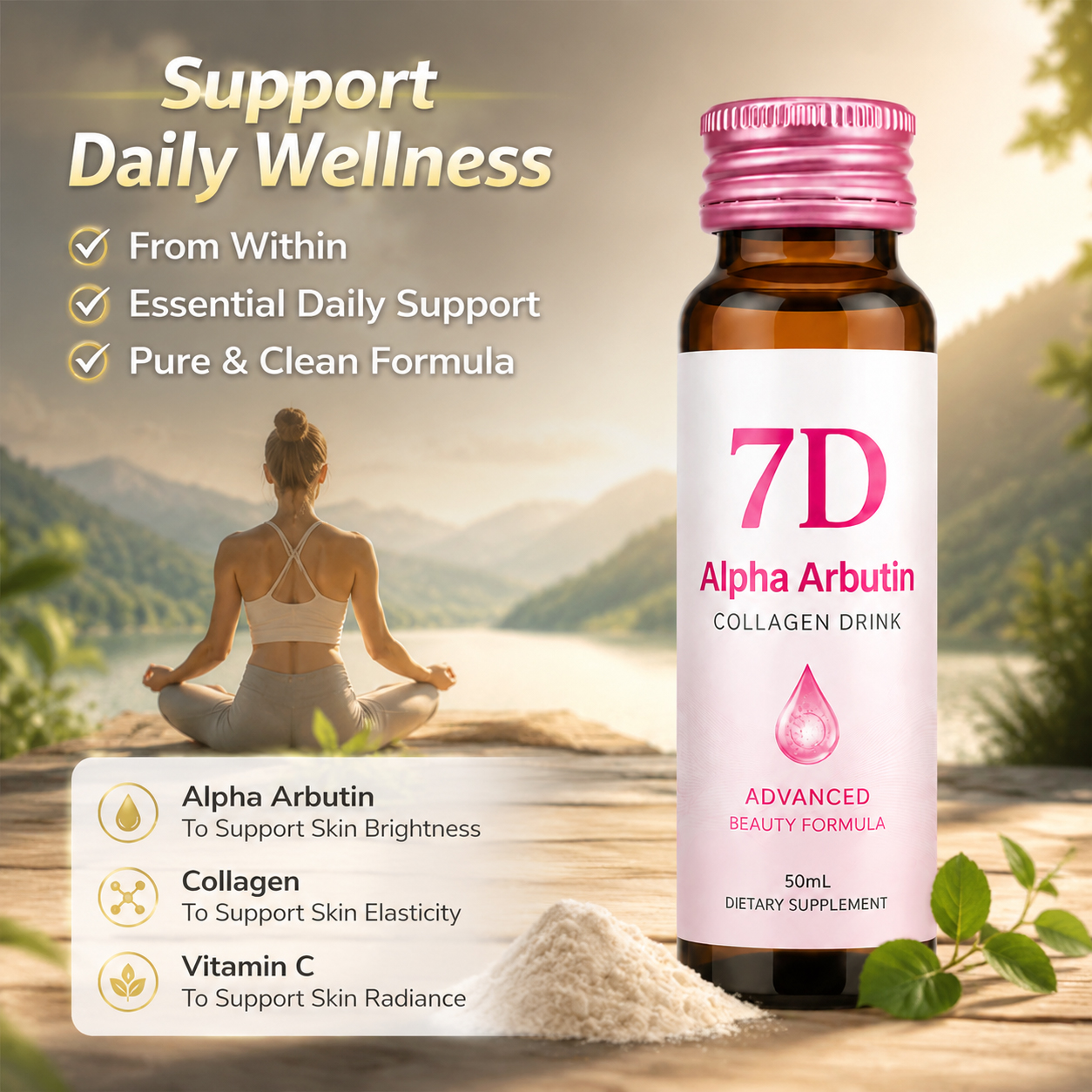
There is also a vocabulary trap. Alpha arbutin, niacinamide and other actives borrowed from skincare labels read beautifully on a beauty panel and review very differently as oral ingredients: alpha arbutin raises novel-food questions in Europe, and niacinamide doses need to be reconciled with the niacin ceilings some markets publish. Our 50 mL beauty drink carries 10 mg of niacinamide alongside 5,000 mg of collagen, which reviews cleanly at that level; the review itself is done ingredient by ingredient, market by market, before artwork, not after.
If glutathione is on a beauty panel, ask the lab for a reduced versus oxidised split (GSH to GSSG) at release and at the six-month stability pull. A total glutathione assay can read in specification while the reduced fraction the shopper is paying for has quietly oxidised.
Colour, flavour and what a beauty stick pack actually costs
The cost structure of a private label beauty supplements formula is mostly packaging and flavour, not actives. Vitamin C at 80 to 500 mg drives the acid load, the acid load drives the sweetener and flavour budget, and a berry system costs more than a citrus one at equal sweetness. Colour is the hidden line: beet and anthocyanin pinks fade noticeably in a transparent film within six to nine months of retail lighting, so a pink powder in a clear pouch either accepts the fade or pays for an opaque laminate and an overwrap. Iron oxide pinks are stable and read duller on shelf. That trade-off is a packaging decision made with the artwork, not a flavour-house problem. For the full bucket-by-bucket model, the unit price breakdown uses the same six buckets we apply to a beauty quote.
| Market | What the pack may say | What it may not say |
|---|---|---|
| United States | Structure and function wording: supports healthy hair, skin and nails; helps maintain skin hydration | Disease claims: treats acne, reverses wrinkles, cures hair loss |
| European Union | Authorised nutrient wordings for biotin, zinc, selenium and vitamin C | No claim for collagen, hyaluronic acid or glutathione; no brightening wording |
| Japan | FOSHU pathway for oral hyaluronic acid and collagen products backed by dossiers | Drug-like brightening or medical claims outside the approved system |
| Southeast Asia and the Gulf | Registration-dependent nutrient and antioxidant claims, generally accepted | Skin whitening wording restricted in several markets |
One market note that surprises beauty brands: the EU wording that does the work on a hair, skin and nails panel belongs to nutrients most brands treat as supporting cast. A European launch leads with biotin, zinc, selenium and vitamin C claims and lets the collagen story live in the name, the imagery and the format. Brands that insist on leading with the peptide claim lose the registration, and with it the market.
Two beauty panels that survive review on both sides of the Atlantic
The fastest way to see the rulebooks work is to draft the same range twice. A European-facing beauty powder leads with the nutrients: 80 mg of vitamin C for the collagen formation wording, 10 mg of zinc, 55 mcg of selenium and 2,500 mcg of biotin, with 5 g of collagen peptides in the name and the imagery rather than in the claim column. A United States-facing stick pack leads with the actives: 250 mg of reduced glutathione, 2.5 g of collagen peptides, 120 mg of hyaluronic acid and 5,000 mcg of biotin under structure and function wording. Same factory, same peptides, two different packs, and the difference is entirely regulatory.
Brands that try to run one artwork across both markets lose one of them. The economical route is a shared formula with two claim sets and two print files, which costs one extra plate and one extra proofing cycle, and saves a registration rejection that would otherwise cost a whole season on the beauty shelf.
A beauty launch checklist
Before a private label beauty supplements panel goes to a quote, most of these ten items are still open. Working through them in order saves a sample round and, more often than not, an artwork reprint.
- Lock the claim market before the formula: the EU wording, the US wording and the Gulf wording are three different beauty products.
- Set the collagen dose deliberately: 5 g for a skin-led claim, 10 g for a joint-plus-beauty panel, and never imply one while shipping the other.
- Treat the biotin number as a positioning decision; it is free to blend and expensive to explain late in a dossier.
- Put glutathione in a dry format and budget for the reduced-versus-oxidised assay at release and at six months.
- Reconcile every skincare-borrowed active, alpha arbutin and niacinamide included, against the destination market's oral rules.
- Choose the colour system with the packaging: transparent film fades beet and anthocyanin pinks inside a year of retail lighting.
- Budget the flavour against the vitamin C dose, not the active list; the acid load is the expensive part of a berry formula.
- Check the fish allergen story if marine collagen is in the brief; the pack needs the FALCPA declaration and the buyer needs it early.
- Model the bottle count against the serving: a 120-count capsule bottle is a 40-day supply at three capsules a day.
- Book the first run at 1,000 units to prove the flavour, the colour and the fill before committing to a premium retail format.
MOQ, lead time and the first production run
Standard terms for a beauty range match every other line we run: 1,000 units minimum for stock formulas, samples in 7 to 10 days, about 15 working days of production after material release, and a 24-month shelf life supported by accelerated stability at 40°C and 75% relative humidity. Gummy lines and ready-to-drink projects start at 3,000 to 5,000 units because the moulding and filling setups dominate the first run. Our guide to MOQ and lead times maps where the weeks go, and the packaging guide covers the print minimums that decide how small a first run can actually be.
Beauty projects add one item to the standard schedule that other categories do not: packaging development. A stick pack laminate in a custom pink, an 8-bottle carton for a 50 mL drink, or an amber dropper with a matched pipette each carry their own print and tooling clocks, and any of them can outrun the production slot if it starts late. In a beauty launch the packaging timeline is the critical path more often than the formula is, and the two calendars should be agreed on the same day.
Building a beauty range?
Send the panel, the destination market and the format you have in mind for your private label beauty supplements line. We will return a dose arithmetic check, a claim wording review and a landed cost estimate, usually within two working days.
What to lock before briefing a beauty manufacturer
- The claim market comes first: the EU lets biotin, zinc, selenium and vitamin C carry the wording, and leaves collagen and glutathione without one.
- Biotin dose escalation is a marketing decision that costs almost nothing to blend and belongs in the lab-assay conversation.
- Collagen doses the skin research used start at 2.5 g a day; capsules carry a complementary dose, powders and drinks carry the trial dose.
- Reduced glutathione oxidises in water, so the honest formats are dry sticks and capsules with a GSH to GSSG assay on file.
- Colour and flavour, not actives, set the packaging cost: beet pinks fade in clear film within six to nine months.
- MOQ 1,000 units, samples in 7 to 10 days, production around 15 working days, 24-month shelf life.
Key takeaways
- Beauty formulas are constrained by claims and dose honesty, not by ingredient cost: biotin and vitamin C are rounding errors, glutathione and collagen set the bill.
- The EU Register gives the authorised wording to biotin, zinc, selenium, copper and vitamin C; collagen and hyaluronic acid carry none.
- Biotin panels from 1,000 to 10,000 mcg are a label war that costs a fraction of a cent to fight; the real money is flavour, colour and packaging.
- Reduced glutathione oxidises in water, so dry stick packs and capsules are the stable home, with a GSH to GSSG assay at release and at six months.
- Collagen trial doses start at 2.5 g a day; a 1,500 mg capsule serving is a complementary dose, not the dose the research used.
- MOQ 1,000 units, samples in 7 to 10 days, production around 15 working days, 24-month shelf life with accelerated stability support.
Frequently asked questions
Can you manufacture a hair, skin and nails supplement with 5,000 mcg of biotin per serving?
Yes. Biotin blends without difficulty at any of the doses currently on the market; our live panels run 1,000 mcg in capsules, 6,000 mcg in a beauty powder and 10,000 mcg in liquid drops. The dose is a positioning choice, and we flag the FDA laboratory-assay interference guidance in the documentation so the file is complete before a buyer or a regulator asks.
What is the MOQ for private label beauty supplements?
1,000 units for stock powder, capsule and liquid lines, with samples in 7 to 10 days and production of about 15 working days after material release. Gummies start around 3,000 units and 50 mL ready-to-drink projects around 5,000, because moulding and bottle-filling setups dominate the first run. Shelf life is typically 24 months with accelerated stability support.
Can you combine collagen, glutathione and vitamin C in one stick pack?
Yes, and that is the format we recommend for glutathione. A 10 g stick carries 250 to 500 mg of reduced glutathione, 2.5 to 5 g of collagen peptides and 80 to 500 mg of vitamin C with a berry system. A dry blend protects the reduced form far better than a bottled liquid, and the single-serve sachet doubles as the sampling unit.
Which beauty ingredients can carry an authorised claim in the European Union?
The nutrients only. Biotin, zinc, selenium, copper and vitamin C all carry authorised wordings on the EU Register, including vitamin C's role in normal collagen formation for the normal function of skin. Collagen, hyaluronic acid and glutathione have no authorised claim, which is why European beauty products lead with vitamins and minerals.
Do you offer marine collagen, and how is the fish allergen handled?
Yes, marine and bovine sources are both available, and the source is declared on the specification sheet and the label. Marine collagen carries a fish declaration under FALCPA in the United States and the equivalent allergen listing in other markets, so the artwork needs the allergen statement from the first proof. Bovine peptides avoid the fish declaration entirely.
How long does a beauty supplement launch take from formula to shipment?
Plan eight to ten weeks. Formula and claim wording take one to two weeks, samples 7 to 10 days, artwork and label proofing one to two weeks, and production about 15 working days after material release. A glutathione stability protocol or a new colour system adds time at the front, so both are worth deciding before the sample round.
Have a project in mind? We'll come back with MOQ, formula options and lead time within 24 hours.
Request a Quote