Why collagen is a specification problem before it is an ingredient
Almost every brand owner who approaches us about collagen arrives with the same instinct: choose a source, choose a flavour, choose a jar. The ingredient is the easy part. Collagen supplement manufacturing is really a specification game, and the four numbers that decide whether the project works commercially - peptide source, molecular weight, dose per serving and format - are usually left blank on the brief. Fill them in late and you pay for it twice: once in reformulation, and once in packaging you can no longer use.
There is a second reason these projects go sideways. Collagen is a protein, not a vitamin. It carries taste, it carries bulk, and its dose is measured in grams rather than milligrams. A 5,000 mg serving means five grams of material that has to disappear into a scoop, a stick pack or a bottle without turning into a gluey glass of broth. Formats that carry 500 mg of magnesium with no trouble are physically unable to carry that load. Knowing which format can carry which dose is the most useful thing a brand owner can learn before asking for a quote.
We run collagen across four of our six production formats - collagen powder, capsules, ready-to-drink liquids and gummies - which means the same peptide can be costed in more than one format so the decision is made on landed economics rather than brochure claims. The full range sits in our supplement product catalogue.
The four commercial collagen sources, and what each one costs you
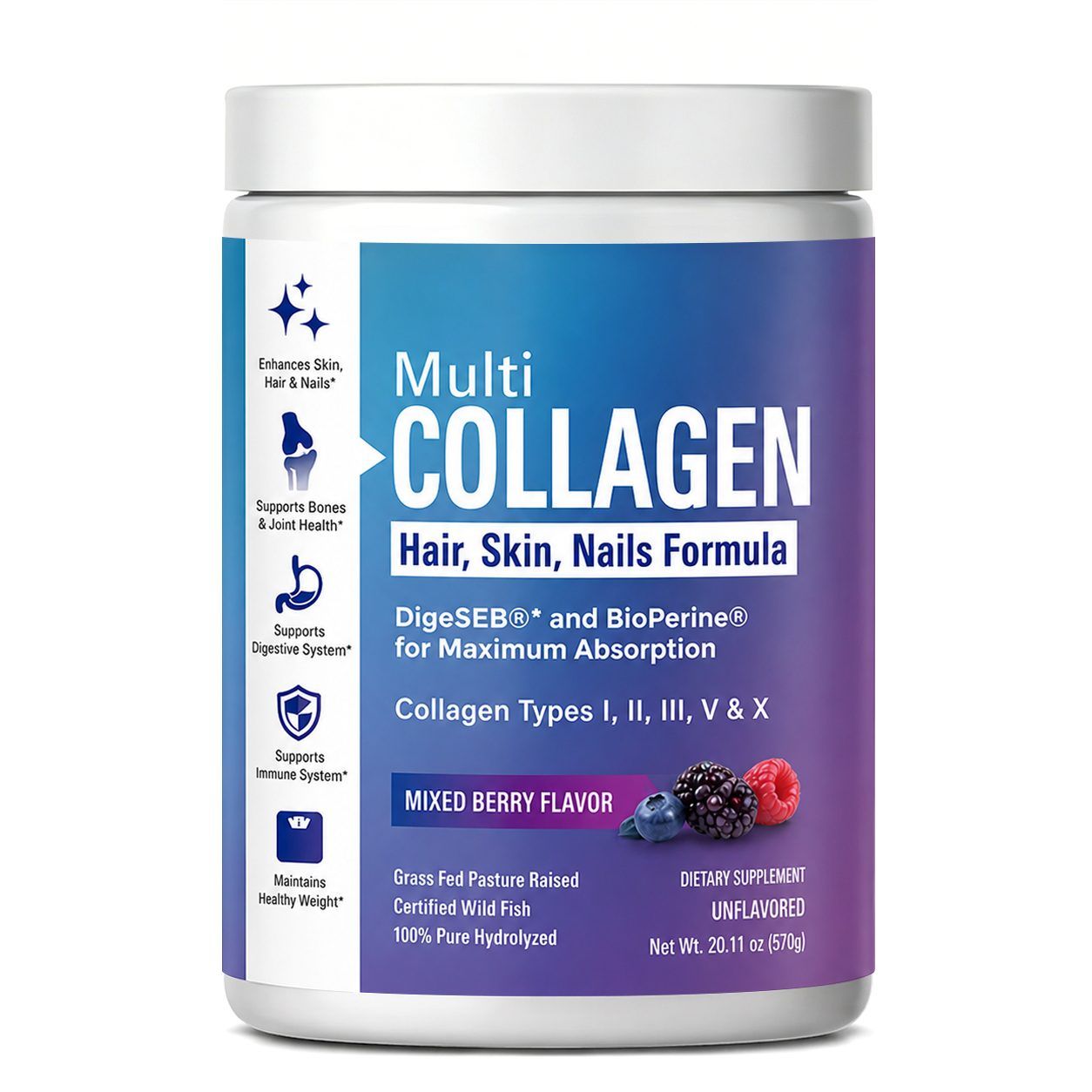
Nearly all collagen raw material comes from four sources, and the choice is commercial as much as technical. Bovine hide split is the volume workhorse: it yields types I and III, it is the cheapest per kilogram, and it is what a great many mass-market powders quietly use. Marine collagen from fish skin is higher in type I, carries a clean-label story that sells in beauty channels, and typically costs 25 to 60 percent more per kilogram for a comparable peptide profile. Porcine skin is technically excellent and commercially limited, because it cannot appear in a Halal or kosher-certified line. Eggshell membrane is the specialist: types I, V and X, used at milligram doses for joint positioning rather than gram doses for skin.
| Source | Collagen types | Typical cost vs bovine | Label appeal | Practical constraint |
|---|---|---|---|---|
| Bovine hide split | Type I and III | Baseline | Neutral, widely accepted | Halal or kosher claim needs certification |
| Marine (fish skin) | Mainly type I | 25-60% higher | Strong in beauty ranges | Heavier arsenic monitoring load |
| Porcine skin | Type I | Close to bovine | Rejected by many consumers | Not Halal or kosher compliant |
| Eggshell membrane | Type I, V and X | Highest per kilogram | Premium joint health story | Dosed in milligrams, not grams |
| Two or more blended | Multi-type | Weighted average | Supports a multi-type claim | Every stream needs its own documentation |
The practical point is this: there is no evidence that one source is intrinsically more effective than another once both are hydrolysed into peptides. What differs is peptide profile, cost, certification and the story you can legally tell. Marine collagen is not superior to bovine collagen - it is a positioning decision with a price attached. Anyone who tells you otherwise is selling a source, not a specification.
Molecular weight: the specification that decides your claim
Molecular weight is the number brand owners ask about least and claim reviewers care about most. Native collagen is a triple helix of roughly 300 kDa, far too large to cross the intestinal wall intact. Gelatin is the same protein partially hydrolysed, still near 100 kDa and still setting to a gel as it cools. Hydrolysed collagen, sold as collagen peptides, is broken down further into fragments averaging 2,000 to 5,000 Da, while low molecular weight and micro grades push below 1,000 Da, where much of the material exists as di- and tripeptides.
Those small peptides matter because they are absorbed intact through the intestinal peptide transporter and appear in blood within 30 to 60 minutes of ingestion. That pharmacokinetics is measured and replicated, not marketing. What is not established is that lower molecular weight automatically delivers a better clinical outcome: published skin and joint trials use peptides across a wide molecular weight range and still report effects. So specify molecular weight to control taste, solubility and mouthfeel, and stop there. Bitterness and the dry, broth-like off-note rise as the peptide gets smaller, and the lowest fractions are more hygroscopic. Treat absorption as mechanism, not as an outcome promise.
A supplier quoting 3,000 Da is quoting a mean. Two peptides with the same mean can differ by 20 percentage points in the share of material below 1,000 Da, and that fraction is what drives bitterness, hygroscopicity and how the powder behaves in a stick pack. Specifying the distribution curve costs nothing at quote stage and prevents a reformulation later.
Dose per serving: what each level is defensible for
Dose is where collagen products most often lose credibility. Published human trials on skin elasticity, hydration and joint comfort use daily intakes from roughly 2.5 g to 10 g over 8 to 12 weeks, with the bulk of the skincare literature sitting at 2.5 to 5 g. Sports and recovery positioning pushes higher, into the 10 to 20 g range, where collagen stops acting as a signalling peptide and starts acting as a protein source. Below 2.5 g there is little clinical reason to expect a measurable effect, which is what makes the 500 mg collagen capsule a marketing product rather than a functional one.
| Daily dose | Defensible positioning | Evidence position | Format reality |
|---|---|---|---|
| 500-1,000 mg | Support act in a beauty blend | Too low to stand alone | Capsule or gummy only |
| 2,500 mg | Skin hydration and elasticity | Well represented in trials | One stick pack or two scoops |
| 5,000 mg | Skin plus joint combination | Common in commercial products | One sachet, or ten capsules |
| 10,000 mg | Connective tissue and recovery | Used in joint comfort studies | Powder or ready-to-drink only |
| 15-20 g | Sports and protein substitution | A different mechanism entirely | Powder or liquid; flavour load dominates |
A trap worth naming: type II collagen for joint positioning is normally dosed at around 40 mg, not 5 g, because the undenatured form works through a different mechanism. Blending 40 mg of type II collagen and 5,000 mg of collagen peptides into one supplement facts panel is legal arithmetic, but it muddles two dose logics in a way that an informed buyer will notice.
Format economics: why collagen usually ships as a powder
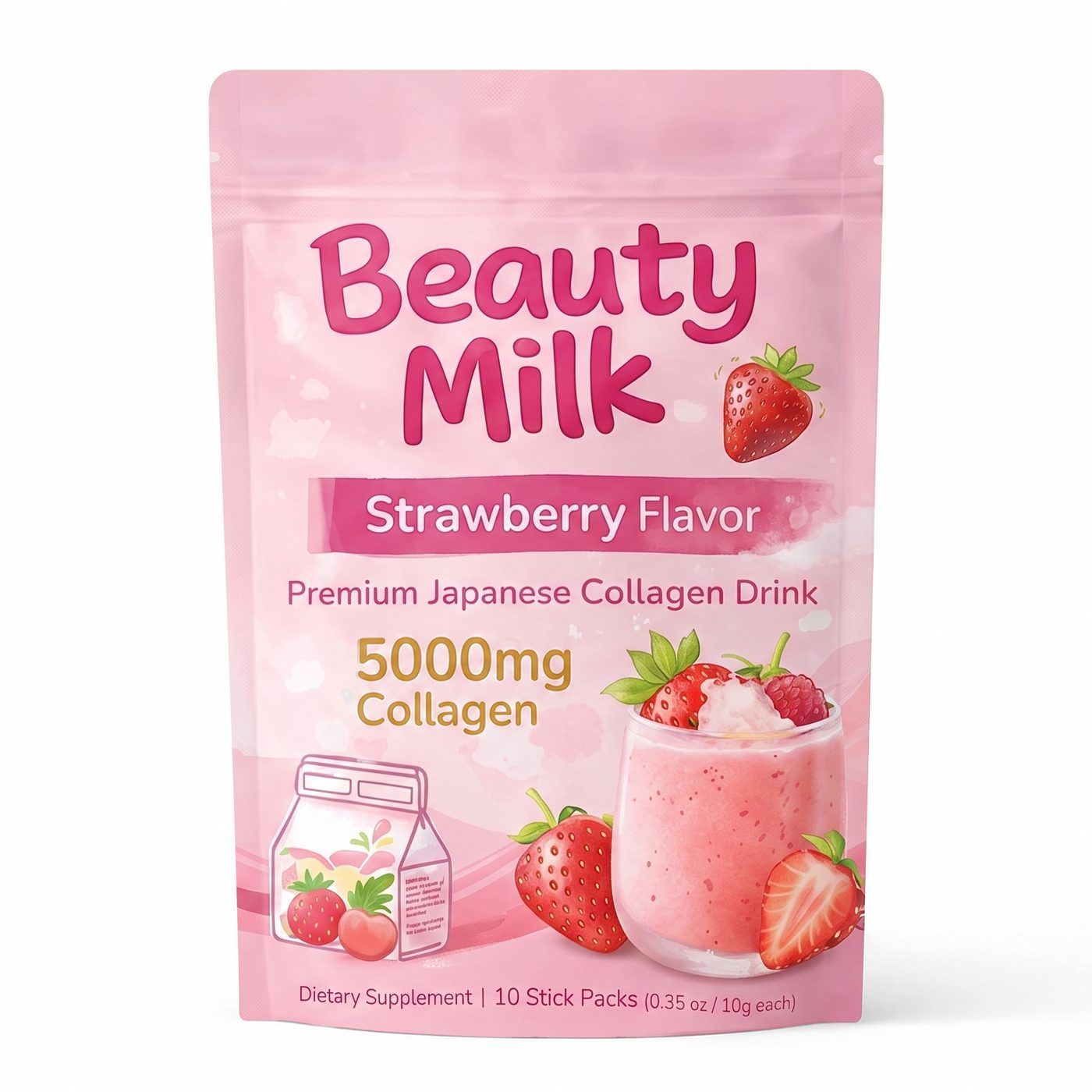
The dose decides the format, and the arithmetic is unforgiving. A standard size 0 hard capsule holds around 500 mg of powder. Delivering a 5,000 mg collagen serving in capsules therefore means ten capsules per serving, which no consumer will accept and no brand can price. That single constraint, more than anything else in collagen supplement manufacturing, explains why the category is overwhelmingly a powder one: powder is the only format that delivers grams per serving at a sane unit cost.
| Format | Practical dose per serving | Unit cost driver | Best channel |
|---|---|---|---|
| Bulk powder tub | 5-20 g | Container size and scoop; lowest per gram | Retail and e-commerce value tier |
| Stick pack | 2.5-10 g | Film, fill accuracy, carton count | Subscription and travel |
| Ready-to-drink | 2.5-5 g per 50-150 ml | Bottle, heat treatment, preservative system | Convenience and beauty retail |
| Capsule | Up to 1 g in two shells | Shell count per serving | Blend positioning only |
| Gummy | 1-1.5 g per piece | Piece weight, gel system, curing time | Impulse and gifting |
Two production facts sit behind that table. First, a collagen drink is a live protein system: heat treatment, pH and preservative choice all affect haze and mouthfeel, which is why a ready-to-drink carries an 18 to 24 month shelf life where a dry powder carries 24 to 36 months. Second, a gummy cannot swallow a 5 g collagen dose - a 2.5 g piece tops out around 1 to 1.5 g of collagen load before the texture collapses, so a 5,000 mg collagen gummy is either a two-piece serving or a smaller active load described generously.
Ready-to-drink examples already running on our lines include a collagen beauty drink at 5,000 mg per bottle with vitamin C, vitamin E and niacinamide, and a 50 ml collagen drink built around hyaluronic acid and biotin. For lower-dose blend positioning, the capsule route is a multi collagen complex carrying types I, II, III, V and X alongside vitamin C, biotin and hyaluronic acid - an honest illustration of what capsules can and cannot carry. The ready-to-drink end of the category has its own engineering decisions - dose versus viscosity, flavor masking, preservation and bottle barrier - which we cover end to end in our private label collagen drink manufacturing guide.
Flavour, taste masking and the off-note nobody warns you about
Hydrolysed collagen has a distinctive profile: a faint broth note, a drying mouthfeel, and in the lowest molecular weight fractions a bitterness that sharpens as the peptide gets smaller. In an unflavoured powder this is manageable, and many consumers happily stir a neutral collagen into coffee. In a ready-to-drink it is not manageable, because acid, heat and time all amplify it.
In practice the flavour system, not the peptide, is where a collagen project consumes its development budget. A fruit-flavoured drink needs acidulants, a buffering system to stop the protein curdling at low pH, a sweetener blend that does not leave a drying aftertaste, and usually a clouding agent so the product looks like juice rather than cloudy water. Budget the flavour and masking system at 15 to 30 percent of unit cost in a ready-to-drink, against under 5 percent in a plain bulk powder. Same peptide, several-fold difference in cost - which is why we ask which channel a product is built for before quoting anything.
Heavy metals, testing and what a real certificate of analysis covers
Protein ingredients concentrate whatever the raw material carried, and marine collagen is the one that draws the most scrutiny. Fish skin from larger species can carry arsenic, and both marine and bovine peptides are routinely screened for lead, cadmium and mercury. A collagen supplier that cannot produce per-lot heavy metals, microbiological and identity results from an accredited laboratory is a risk you are inheriting rather than a partner you are hiring.
Ask for one certificate of analysis from a completed production lot, not a generic specification sheet. A real certificate names the lot, the test method, the specification limit and the result, and it is signed. If a supplier sends a blank template, you have learned something important before paying a deposit.
For every collagen lot we ship we retain a sample for the shelf life being claimed and release against microbiological testing plus a heavy metals panel from an accredited laboratory. We also test the three things most briefs forget: moisture, bulk density and particle size. A powder that flows badly on the filling line produces fill-weight variance you will never see on a label, and that variance is what generates consumer complaints about a pouch that seemed half empty.
Where the money goes in a collagen project
Collagen supplement manufacturing inverts the usual cost structure of a supplement project. In a capsule product the active is typically 40 to 55 percent of unit cost; in a collagen powder it is often the majority. That has a direct consequence: shopping the peptide on price is your single largest lever, and it is also the quickest way to destroy the product.
| Cost component | Bulk powder | Stick pack | Ready-to-drink |
|---|---|---|---|
| Collagen peptide | 55-70% | 45-60% | 30-45% |
| Flavour and masking system | 3-8% | 10-20% | 15-30% |
| Processing and filling | 8-15% | 12-20% | 15-25% |
| Primary packaging | 10-20% | 15-25% | 15-25% |
| Testing and release | 2-4% | 2-4% | 3-6% |
Read the flavour row and the ready-to-drink column together and the strategy becomes obvious. If you are launching a collagen drink, the peptide choice and the flavour system are the two decisions that determine whether the project makes money. Everything else is rounding.
MOQ, tooling and lead times
Minimum order quantity is one place where collagen supplement manufacturing is simpler than most categories, because the peptide needs no tooling at all. There is no punch die, no mould and no custom shell, so the same peptide can run in a stock tub, a stock stick pack or a stock bottle. Our standard minimum is 500 units per product, and on a collagen powder the binding constraint is usually packaging rather than the ingredient: a new printed tub, a new film structure or a bespoke scoop adds setup cost and weeks, while a stock container lets you start at the floor.
We set out the full arithmetic, including how artwork and packaging move the number, in our guide to MOQ and lead times in supplement manufacturing. On an established format a standard production run completes in about 15 days, with expedited processing down to 10 days.
Claims and labelling: keeping beauty language on the right side of the line
Collagen sits in an awkward regulatory position. In the United States it can be sold as a dietary supplement with a structure-function claim and the standard disclaimer, and it cannot claim to treat or prevent anything. In the European Union no health claim for collagen itself has been authorised, so a label that promises firmer skin or fewer wrinkles is exposed; the defensible route is to describe the product and the ingredient without asserting an outcome. The same formula can therefore be compliant in one market and not another, which makes artwork timing a compliance decision rather than a design decision. Client feedback and consumer perception studies commonly report subjective improvement after about four weeks of daily use, and it is worth keeping that framing subjective: perception is not a validated endpoint, and no collagen label should imply one.
The framework we work to with clients across the United States, the European Union and Southeast Asia is set out in our overview of FDA, cGMP and HALAL requirements. If your collagen project also carries a Halal or vegan claim, raise it before the formula is fixed: porcine material is out, and gelatin gummies become pectin gummies, which changes texture, cost and curing time.
A pre-brief checklist for a collagen project
- Write the dose first: 2.5 g for skin positioning, 5 g for skin plus joint, 10 g and above for recovery. The dose decides the format, not the other way round.
- Name the source in the brief - bovine, marine, porcine or eggshell - and say whether a Halal, kosher or vegan claim has to survive it.
- Ask for a molecular weight distribution curve, not a single average, and set a target for the share below 1,000 Da if taste matters.
- Decide the channel before the flavour: a subscription stick pack and a retail tub justify very different flavour budgets.
- Get the peptide, the flavour system and the packaging costed on separate lines in the quote so you can see which one you are actually negotiating.
- Request one certificate of analysis from a completed lot, with lot number, method, limit and result, before paying any deposit.
- Confirm the shelf life you intend to claim and the stability protocol behind it: accelerated plus real-time, at named conditions and timepoints.
- Check fill-weight tolerance on the filling line and what it does to your declared servings per container.
- Ask what the powder does in hot water, cold water and a shaker bottle - solubility problems surface in consumer reviews, not in a sample box.
- Lock label claims per market before commissioning artwork, because a claim change is an artwork change and an artwork change resets your production slot.
Planning a private label collagen product?
Send us your target dose, format, flavour direction and destination market. You will get an itemised factory quotation with the peptide, the flavour system and the packaging costed separately, plus a sample plan and a free formulation consultation - NDA protected.
What to carry into your collagen project
- Dose decides format. Above 2.5 g per serving, powder or liquid wins; capsules only work for low-dose blends.
- Source is a positioning decision, not an efficacy one. Marine costs 25 to 60 percent more than bovine and buys story, not performance.
- Specify molecular weight by distribution, not by average - the share below 1,000 Da drives taste and powder behaviour.
- In a collagen powder the peptide is 55 to 70 percent of unit cost; in a ready-to-drink the flavour system becomes the second largest line.
- Ask for a signed certificate of analysis from a real lot, with heavy metals, microbiology and identity testing, before you commit.
Sources
- EFSA - EU Register of authorised health claims (no authorised claim for collagen)
- US FDA - structure-function claims and the DSHEA disclaimer for dietary supplements
- US Pharmacopeia - USP <2232> elemental contaminants in dietary supplements
- Yukang Medicine internal formulation and quotation records, collagen projects
Key takeaways
- Write the dose before choosing the format - it is the constraint that decides everything downstream.
- Bovine, marine, porcine and eggshell collagen differ in cost, certification and story, not in proven efficacy once hydrolysed.
- Molecular weight should be specified as a distribution; the share below 1,000 Da governs bitterness and powder behaviour.
- A 5,000 mg collagen serving cannot fit in capsules - ten size 0 shells - so powder and liquids carry the category.
- Ask for a signed per-lot certificate of analysis with heavy metals and microbiology before paying a deposit.
Frequently asked questions
Do you handle collagen supplement manufacturing for private label brands?
Yes. Collagen supplement manufacturing is one of our highest-volume categories, covering bovine, marine, porcine and chicken sources across powder, capsule, tablet, gummy and liquid formats. Most private label projects start from our existing peptide library and adjust source, molecular weight, dose and flavour, rather than developing a formula from zero.
What is the minimum order quantity for private label collagen powder?
Our standard minimum is 500 units per product, and collagen needs no tooling, so it is one of the easier categories to start small in. On a powder the real constraint is packaging: a stock tub or stock stick-pack film lets you start at the floor, while a new printed container, a new film structure or a bespoke scoop adds setup cost and weeks. We confirm the exact figure against your packaging choice in the quote.
Is marine collagen better than bovine collagen?
There is no evidence that one is more effective than the other once both are hydrolysed into peptides. Marine collagen is higher in type I and carries a stronger clean-label story, and it typically costs 25 to 60 percent more per kilogram. Bovine hide split gives you types I and III at the lowest cost. Choose on positioning, certification and budget, not on an absorption claim nobody has demonstrated.
How much collagen should a serving contain?
Published skin hydration and elasticity trials use roughly 2.5 to 5 g per day over 8 to 12 weeks, and joint comfort studies use about 10 g. Below 2.5 g there is little clinical basis for expecting a measurable effect. For commercial products, 5,000 mg per stick pack is the most common specification, and it is also close to the practical limit for a single-serve sachet.
Why can I not put 5,000 mg of collagen into a capsule?
Because a standard size 0 capsule holds around 500 mg of powder, so a 5,000 mg serving would need ten capsules. That is a packaging and swallowing problem, not a formulation one. Capsules work well for lower-dose collagen blends where the collagen supports other actives, and we usually quote capsule projects at 500 mg to 1 g of collagen per serving.
How long does a private label collagen project take?
On an established format and stock packaging, a standard production run completes in about 15 days, with expedited processing down to 10 days. Add time before that for flavour development, which typically runs three to five weeks for a new ready-to-drink, and for sample approval and stability timepoints. Ready-to-drink collagen takes longest overall because every batch needs full microbiological release testing.
Do you test collagen for heavy metals and identity?
Yes. Every lot is released against microbiological testing plus a heavy metals panel covering arsenic, lead, cadmium and mercury from an accredited laboratory, and we retain a sample for the shelf life being claimed. We also test moisture, bulk density and particle size, because those three determine whether the powder fills accurately and dissolves cleanly in the consumer's shaker.
Have a project in mind? We'll come back with MOQ, formula options and lead time within 24 hours.
Request a Quote