Why a joint line is a dosing problem before it is a marketing problem
Joint supplements look simple from the outside: a collagen powder, a glucosamine tablet, a turmeric capsule. Inside a factory they are the most awkward category to fit into a unit, because the daily dose the literature supports is usually larger than the unit a shopper will swallow. Ten grams of collagen peptides is thirteen to twenty capsules at 500 to 750 mg fill, or a single 12 g scoop. Fifteen hundred milligrams of glucosamine sulfate arrives as roughly 1,880 mg of the potassium chloride complex before a milligram of chondroitin is added. The molecule is rarely the problem. The arithmetic is.
That arithmetic is also where private label joint supplements quietly fail. A brand copies a competitor panel, matches the numbers, and then discovers the panel only fits a four-tablet serving at 22 mm tooling, which pushes the bottle to 240 counts and the retail price out of its bracket. By the time the artwork is approved, the format decision has already set the unit cost, the shelf presence and the daily serving count.
The workable sequence is to choose the format first and let the formula follow, the same order we use in our dosage form selection guide. Decide how many units per day the buyer will accept, then work out how much active can physically sit inside each unit. For a joint line there are two realistic answers: a powder carrying 5 to 20 g per serving, or a pressed tablet at 1,200 to 1,500 mg per unit for the glucosamine and mineral side of the formula.
The ingredient families that carry most joint launches
Almost every joint formula on shelf is built from six or seven actives, and each one behaves differently in a unit. The table below compares them on the three things a brand owner actually has to decide in a joint line: the dose that trials used, how strong the evidence really is, and which format can carry it without turning the serving into a handful.
| Active | Daily dose used in trials | Evidence position | Practical format | Indicative active cost per serving (USD) |
|---|---|---|---|---|
| Hydrolysed collagen peptides | 5–10 g | Several small trials on knee comfort; effect modest and dose-dependent | Powder, stick pack, ready-to-drink | 0.30–0.55 |
| Undenatured type II collagen | 40 mg | Small trials against placebo; low dose, high material price | Capsule, small tablet | 0.25–0.40 |
| Glucosamine sulfate | 1,500 mg | Mixed; the large US trial found no overall benefit, European sulfate trials were positive | Tablet, two units per serving | 0.12–0.20 |
| Chondroitin sulfate | 800–1,200 mg | Mixed; usually paired with glucosamine rather than sold alone | Tablet, two to three units | 0.18–0.30 |
| MSM | 1,500–3,000 mg | Small comfort trials; bitter and needs masking above 1.5 g | Tablet, powder | 0.05–0.12 |
| Curcumin, 95% curcuminoids | 500–1,000 mg | Absorption-limited unless paired with piperine or a phytosome | Capsule, coated tablet | 0.20–0.45 |
| Boswellia serrata extract | 100–300 mg | Small trials; specify 30% AKBA so the dose means something | Capsule | 0.15–0.30 |
| Omega-3, EPA plus DHA | 1,000–2,000 mg | General inflammatory support rather than a joint-specific effect | Softgel, two to three units | 0.12–0.25 |
The evidence deserves an honest reading, because buyers increasingly ask for it. The Glucosamine and Chondroitin Arthritis Intervention Trial randomised 1,583 people for 24 weeks and found no overall difference from placebo in knee pain, although the subgroup with moderate to severe pain did respond to the combination. European trials of glucosamine sulfate 1,500 mg were more favourable, which is why the same molecule carries a different reputation in Germany and in the United States. Collagen peptides have several small randomised trials in the 5 to 10 g range with modest improvements in comfort scores, not the dramatic rebuild that marketing copy implies.
That gap matters commercially in a joint category where buyers compare panels side by side. A private label joint supplements range can be built on a defensible dose and still be sold with restraint, and buyers who understand the difference tend to stay longer than buyers who were promised cartilage regeneration. Our position is simple: dose to the trial, then write claims the regulator will accept, and let the pack do the rest.
Format by format: how much joint active a unit can carry
For private label joint supplements, format sets the ceiling on the daily dose, and that ceiling is lower than most briefs assume. The comparison below is the one we send back with a first quote, because it usually changes the brief before a formula is written.
| Format | Active load per unit | Units per day for 10 g collagen | MOQ | Where it wins |
|---|---|---|---|---|
| Powder, stick pack | 5–10 g | 1–2 sticks | 1,000 | Collagen plus MSM plus vitamin C in one sachet |
| Powder, tub | 5–20 g per scoop | 1 scoop | 1,000 | Best cost per gram; pharmacy and e-commerce |
| Tablet, 20 mm | 1,200–1,500 mg | 14–20 tablets | 3,000 with tooling | Glucosamine, chondroitin, calcium, MSM |
| Capsule, size 0 | 500–750 mg | 13–20 capsules | 1,000 | Type II collagen, curcumin, hyaluronic acid |
| Softgel | 500–1,000 mg fill | 10–20 softgels | 3,000 | Omega-3 and oil-dispersed curcumin |
| Gummy | 150–500 mg | Not feasible | 3,000 | Turmeric and vitamin D positioning, not dose |
| Ready-to-drink | 3–5 g per 50 mL | 2–3 bottles | 5,000 | Collagen drinks for chilled retail |
Gummies are the format buyers ask about most and the one that flatters a joint formula least. A 3 g gummy is roughly 70% syrup solids once pectin or gelatin, glucose syrup and acid are counted, which leaves 300 to 500 mg for everything active. A 500 mg dose of 95% curcumin extract in that matrix tastes of bitter earth and stains the mould; a 10 g collagen dose is simply impossible. Joint gummies work as an entry product with turmeric, vitamin D or a small collagen dose, and they work badly as the flagship of a serious joint range.
Read that joint cost chart twice before fixing a retail price. Collagen at a real 10 g dose is the most expensive line in a joint range by a wide margin, while MSM is cheap enough to add gram weight and label appeal at very little cost. Most joint formulas that look generous on the panel are generous with MSM and thin on collagen, and the cost chart shows exactly why.
Collagen peptides: six specifications that decide the formula
Collagen is the joint ingredient most likely to be bought on price and specified too loosely. Six parameters decide whether the powder behaves on the line and on the shelf.
- Molecular weight: ask for a size-exclusion or gel-permeation distribution rather than the word hydrolysed. Most joint-grade peptides sit between 2 and 5 kDa; material above 10 kDa foams harder and feels gritty in a 200 mL serve.
- Raw material source: bovine hide, fish skin and eggshell membrane behave differently. Fish collagen foams more and carries a stronger odour at 10 g, which changes the masking budget before it changes the taste.
- Dose: the joint position needs 5 to 10 g per day. A 2.5 g beauty sachet copied into a joint range is under-dosed by three quarters, and no amount of packaging fixes that arithmetic.
- Vitamin C: 60 mg per serving is the cofactor the research uses, and it is also the only ingredient in a typical joint stack with an authorised cartilage claim in Europe.
- Sensory load: at 10 g in 200 mL, a masking system of 0.3 to 0.6% is normally required. Citric acid at 0.15% helps hide the broth note but pushes pH below 4, which then constrains the preservative system in a ready-to-drink.
- Analytical package: hydroxyproline content, nitrogen, molecular weight distribution, heavy metals and a microbial panel per lot. Collagen is a protein, so a total plate count and a coliform result belong on the certificate of analysis.
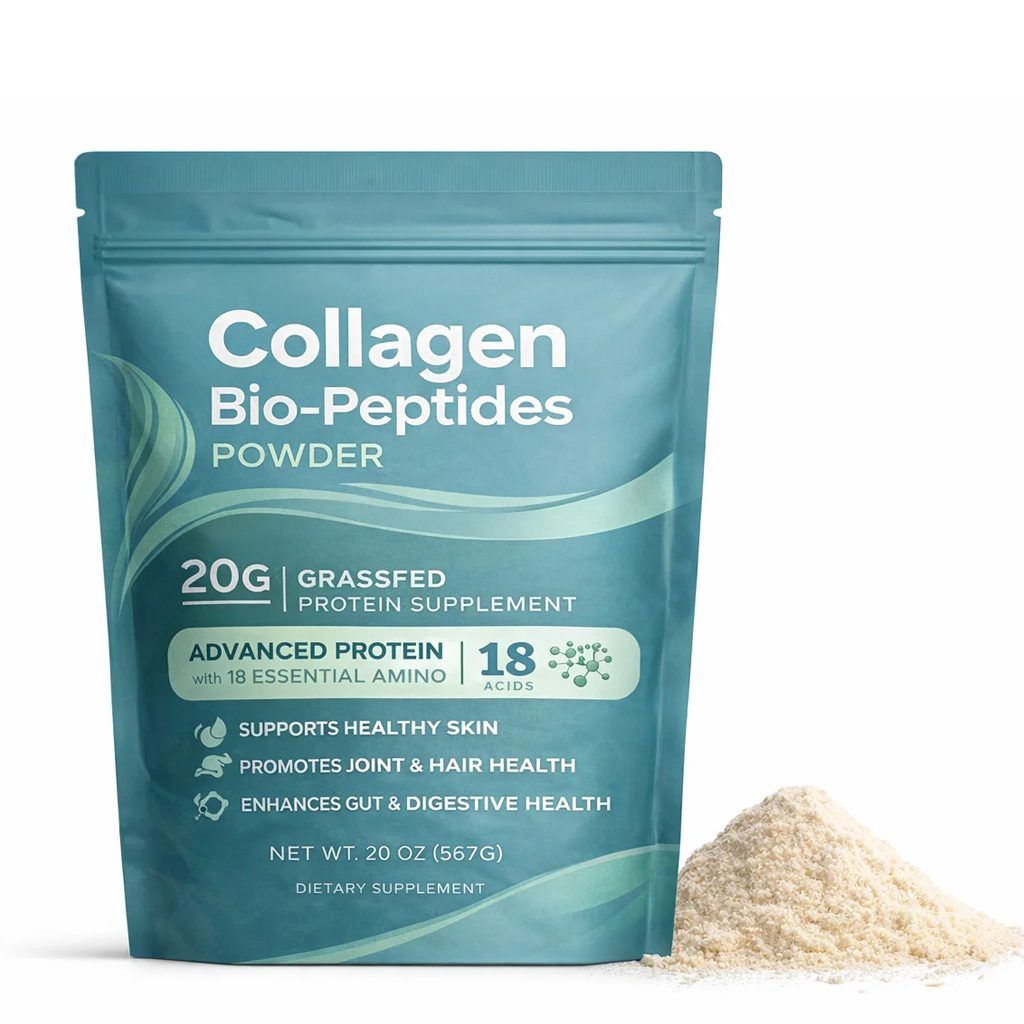
For a powder-led joint range, the reference format is a 6 g scoop carrying 3,000 mg of hydrolysed collagen with vitamin C, the shape used in our collagen powder line that runs at 1,000 units with samples in 7 to 10 days. For capsule-led ranges, a multi-collagen complex at 1,500 mg per three capsules with vitamin C, biotin and hyaluronic acid, as in our multi collagen capsules, is the honest way to sell collagen in a bottle: the dose is stated per serving, not implied per capsule.
Curcumin: the bioavailability tax and the staining problem
Curcumin is the ingredient that teaches a new brand owner how much of supplement pricing is absorption rather than raw material. Standard 95% curcuminoid extract is poorly absorbed on its own; adding 10 to 20 mg of black pepper extract raises plasma levels roughly twenty-fold, which is why the piperine line appears on so many joint panels. Phytosome and micellar versions solve the same problem with lipids and cost three to four times as much per kilogram.
A real client formula from our joint work shows how the numbers stack. The turmeric tablet in our curcumin tablet range carries 1,200 mg of turmeric root powder, 400 mg of extract standardised to 95% curcuminoids, 300 mg of ginger root extract and 10 mg of black pepper extract across two tablets, at 180 tablets and 90 servings per bottle. The root powder is there for label weight and cost balance; the 380 mg of actual curcuminoids is the part that does the work.
| Curcumin form | Curcuminoid load per serving | Absorption strategy | Relative material cost |
|---|---|---|---|
| 95% extract powder | 400–500 mg | None; poor absorption on its own | 1.0 |
| 95% extract with piperine | 400–500 mg | Black pepper extract at 10–20 mg | 1.1 |
| Phytosome complex | 200–500 mg | Phospholipid dispersion | 3.5 |
| Micellar or water-dispersible | 100–250 mg | Micelles; suits liquids and shots | 4.0 |
| Whole root powder | 15–25 mg | Label weight rather than dose | 0.2 |
Two production details only show up after the first run. Curcumin stains stainless tooling, capsule shells and the inside of a blender, so a joint line that alternates between turmeric and a white tablet needs a dedicated cleaning cycle between batches, and capsules need an opaque shell or a film coat if the brand does not want speckled product. It also carries a strong earthy taste at 1.2 g, which is one reason the pressed tablet wins over the gummy in this category.
The bone half of the category: elemental mineral arithmetic
Most joint ranges extend into bone, and bone is where label arithmetic goes wrong most often. The number on the panel is elemental mineral; the number on the weighing sheet is salt. The gap between them is 20% to 87% depending on which salt is chosen, and it decides whether a 600 mg claim fits in two softgels or needs three tablets.
| Mineral salt | Elemental share | Salt weight for a 500 mg elemental claim | Why it matters in a joint or bone formula |
|---|---|---|---|
| Calcium carbonate | 40% | 1,250 mg | The only practical salt for a 600 mg calcium claim in two softgels |
| Calcium citrate | 21% | 2,380 mg | Gentler on digestion, but forces smaller claims or extra units |
| Magnesium oxide | 60% | 833 mg | Cheap and compact; laxative effect rises with dose |
| Magnesium citrate | 16% | 3,125 mg | Better tolerated, but bulky in a tablet |
| Magnesium glycinate | 14% | 3,570 mg | Gentle, and the reason chelated minerals cap out at low elemental doses |
| Zinc oxide | 80% | 625 mg | Compact; the usual choice in calcium-magnesium-zinc |
| Zinc gluconate | 13% | 3,850 mg | Chosen for tolerance and taste, never for compactness |
Our calcium plus vitamin D3 softgel, 600 mg of calcium from carbonate with 25 mcg of cholecalciferol across two softgels at 90 counts, is a useful worked example. Six hundred milligrams of elemental calcium means 1,500 mg of carbonate, plus the vitamin D3 and the oil carrier, inside a two-softgel serving. Switch that claim to citrate and the salt weight nearly doubles, which is why citrate calcium usually ships as a three-unit serving or a tablet. The calcium-magnesium-zinc softgel at 600 mg calcium, 250 mg magnesium and 15 mg zinc per two softgels reaches the same conclusion from the other direction: the mineral load is only possible because the formula uses compact oxide and carbonate sources.
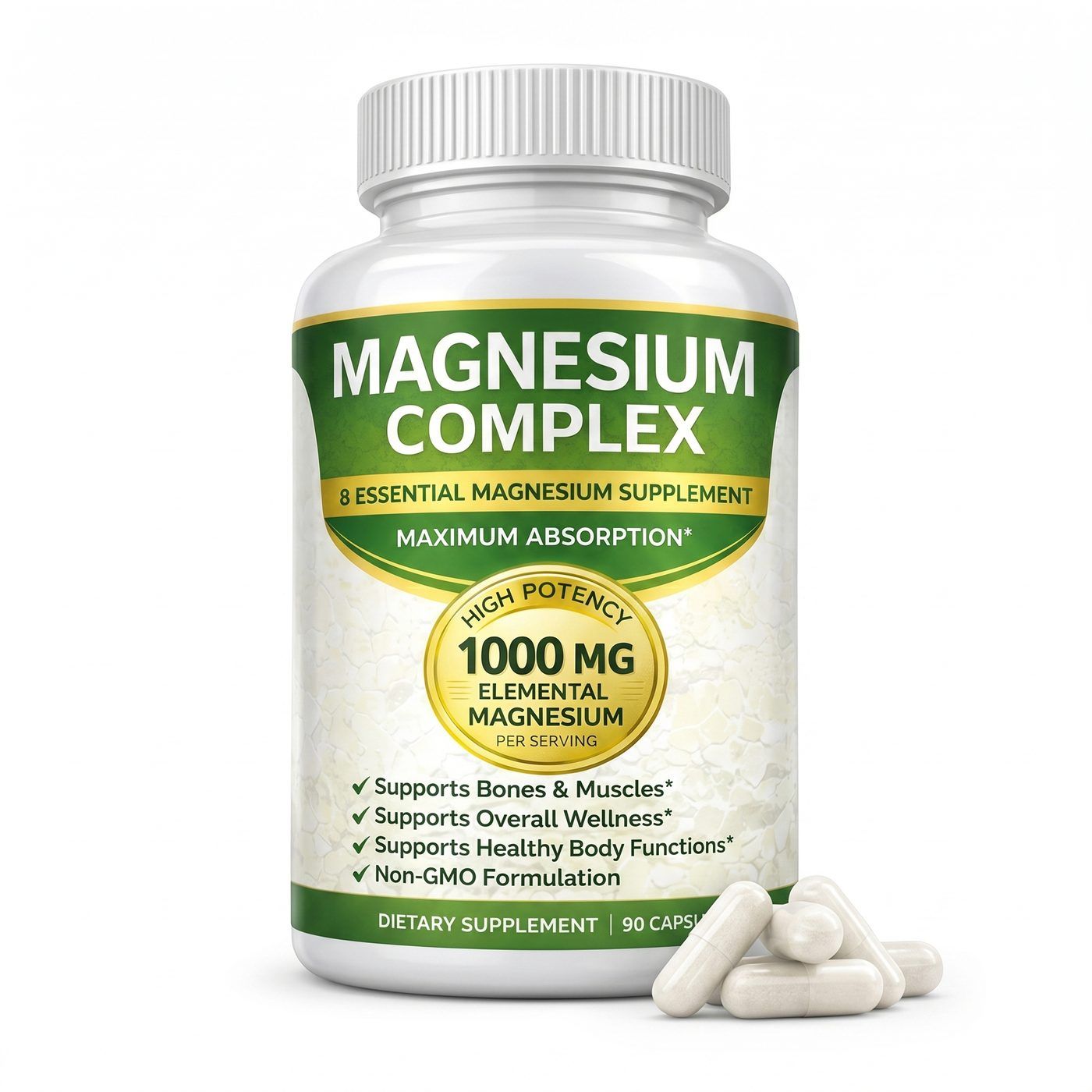
A panel that reads 1,000 mg magnesium complex is not 1,000 mg of magnesium. Ask for the elemental contribution per serving on every raw material specification, then compare it with the tolerable upper intake for supplemental magnesium, which is 350 mg per day for adults in the United States. The same check applies to calcium, where a single dose above roughly 500 mg elemental is absorbed less efficiently and is better split across the day.
Claims: what the artwork can and cannot say
Private label joint supplements sit in a strange position: the ingredients with the best commercial recognition have the weakest claim position. Europe has authorised claims for the nutrients around a joint formula, not for the joint ingredients themselves, and the United States allows structure and function language while treating disease language as an unapproved drug claim. The table below is the short version we send to buyers before artwork is signed off.
| Market | Claim route | What is allowed around joint health | What turns into a problem |
|---|---|---|---|
| United States | DSHEA structure and function | Supports joint comfort and mobility; supports collagen formation | Arthritis, osteoarthritis, pain relief, cartilage repair |
| European Union | Register of authorised claims | Vitamin C, vitamin D, vitamin K, calcium and magnesium claims only | Glucosamine, chondroitin, MSM, collagen and curcumin have no authorised claim |
| Canada | Monograph plus NPN | Glucosamine monograph claims once a product number is issued | Selling before the NPN is granted |
| United Kingdom | Retained EU Register | The same nutrient claims as the EU | Disease claims and implied treatment |
| Australia | TGA listed medicines | Permitted indications for listed medicines | Ingredients outside the permitted list |
The most useful line in that table is the vitamin C claim, because it is the one joint-adjacent statement a European label can legally make: vitamin C contributes to normal collagen formation for the normal function of cartilage. Vitamin D and calcium carry bone claims, vitamin K carries a bone claim, and magnesium carries muscle and bone claims. Collagen peptides, glucosamine, chondroitin, MSM and curcumin carry none, which is why serious European joint brands lead with the nutrients and describe the actives as the formula story rather than the claim.
Get this wrong and the cost is not a warning letter but a relabelling run plus the freight on returned stock. Our guide to FDA, cGMP and HALAL requirements covers the paperwork side in more depth, and we check every joint claim against the destination register before artwork goes to print.
Which market to open first with a joint line
For private label joint supplements, public marketplace and trend summaries point to three regions where joint and bone is already a high-priority category rather than an emerging one. These are listing, ranking and supplier-display signals, not transaction data, so treat them as a direction of travel rather than a market size.
- Germany, France and the Netherlands: glucosamine, chondroitin, MSM, calcium with vitamins D3 and K2, and undenatured type II collagen, mostly in tablets and capsules for pharmacy and 50-plus shoppers, positioned as joint comfort and bone health support.
- Australia and New Zealand: collagen powder paired with fish oil softgels and glucosamine, sold through pharmacy and natural health channels to an older, brand-loyal buyer who reads the panel closely and expects a 10 g collagen dose.
- India: vitamin D3 with K2 and calcium-magnesium-zinc tablets for family and pharmacy channels, where bone health carries the joint story and price per tablet matters more than premium collagen positioning.
A brand entering two of those joint markets with one formula usually loses money on one of them. The German buyer wants a 1,500 mg glucosamine tablet with a clean claim, the Australian buyer wants a 10 g collagen powder, and the Indian buyer wants a low-cost mineral tablet. Those are three different formulas, three different bottles and three different freight profiles.
MOQ, lead time and the real cost of a first joint run
Private label joint supplements carry a wider spread of unit costs than most categories because the actives range from nine cents to forty cents a serving. The fixed costs behave the same way as anywhere else: they amortise across the run, so the first order is always the most expensive unit you will ever buy.
- Actives typically take 30% to 45% of unit cost in a joint formula, and collagen at a real dose pushes that share toward the top of the range.
- Packaging, including bottle, closure, label and carton, usually lands between 15% and 25%, with a 240-count bottle costing roughly twice a 90-count bottle before freight.
- Labour, energy and line time account for 20% to 25%, and a coated tablet or an opaque capsule shell adds a pass on the line.
- Testing and quality documentation sit near 5%: raw material identity, assay, heavy metals, microbial panel, plus stability pulls at zero, one, three and six months.
- Freight is the wildcard at 8% to 15% of landed cost, and a powder tub ships far more air per unit than a capsule bottle.
Standard terms for a joint line are 1,000 units minimum for stock formulas, samples in 7 to 10 days, and about 15 working days of production after material release, with a 24-month shelf life supported by accelerated stability at 40°C and 75% relative humidity. Custom tablet tooling and counts above 3,000 units change the schedule, and our guide to MOQ and lead times explains where the weeks actually go. For a line-by-line cost model, the unit price breakdown uses the same buckets as the list above.
A joint launch checklist
Before a private label joint supplements formula goes to a quote, six of these ten items are usually still open. Working through them in order saves a sample round and, often, a tooling deposit.
- Fix the units per day first: two tablets, two capsules, one scoop or one stick, and check that the shopper will accept that count for 30 days.
- Convert every label claim into salt weight before pricing, and confirm the elemental share on the specification sheet rather than the marketing sheet.
- Choose the collagen dose deliberately: 10 g for a joint position, 2.5 to 5 g for a beauty position, and never mix the two on one pack.
- Decide how curcumin is absorbed, then budget accordingly: piperine at 10 to 20 mg is the cheapest route, phytosome the most expensive.
- Check the claim register for the destination market before artwork, including whether the word arthritis appears anywhere in the copy.
- Confirm the capsule shell or tablet coat is opaque if curcumin is in the formula, and schedule a cleaning cycle between coloured and white batches.
- Ask for a molecular weight distribution and a hydroxyproline result on the collagen lot, not just a certificate of analysis with a specification range.
- Plan stability pulls at zero, one, three and six months, especially for a powder with vitamin C and a softgel with omega-3.
- Model the bottle count against the serving size: a 90-count bottle of a three-capsule serving lasts 30 days, not 90.
- Book the first run at 1,000 units to prove the fill, the flavour and the label before committing to a 240-count retail format.
Building a joint range?
Send the ingredient panel and the unit count you have in mind for your joint line. We will return a format recommendation, an elemental arithmetic check and a landed cost estimate, usually within two working days.
What to lock before briefing a joint manufacturer
- Daily dose and units per day come before the ingredient story, because they set format, count and price.
- A 10 g collagen dose cannot live in a capsule or a gummy; it belongs in a powder or a drink.
- Elemental mineral claims need salt-weight arithmetic, and the salt choice decides how many units a serving needs.
- Curcumin needs an absorption strategy and an opaque shell, and it stains tooling between batches.
- In Europe the claim belongs to vitamin C, D, K, calcium and magnesium, not to collagen or glucosamine.
- MOQ 1,000 units, samples in 7 to 10 days, production around 15 working days, 24-month shelf life.
Key takeaways
- Joint formulas are constrained by daily dose, not by the molecule: 10 g of collagen peptides needs 13 to 20 capsules or one scoop.
- Pick the format first, then the formula, then the bottle count, and price the three together rather than in sequence.
- Glucosamine at 1,500 mg arrives as roughly 1,880 mg of salt, so a two-tablet serving is arithmetic rather than marketing.
- Curcumin needs piperine, a phytosome or micelles to absorb, and it stains tooling and capsule shells between batches.
- Elemental mineral claims require salt-weight arithmetic; calcium carbonate at 40% is the only practical route to 600 mg in two softgels.
- In the EU the authorised claims belong to vitamins C, D, K, calcium and magnesium, not to collagen, glucosamine or curcumin.
Frequently asked questions
Can you manufacture a joint supplement with 10 g of collagen per serving?
Yes, in powder or ready-to-drink format. A 10 g dose needs 13 to 20 capsules, which no shopper accepts, so the practical routes are a 12 g scoop in a tub, a 10 g stick pack, or a 50 mL drink with 5 g per bottle and two bottles a day. We confirm the dose on a trial fill before the artwork is printed.
What is the MOQ for private label joint supplements?
1,000 units for stock formulas across powder, capsule and tablet lines. Custom tablet tooling and counts above 3,000 units carry a higher floor. Samples take 7 to 10 days, production runs about 15 working days after material release, and shelf life is typically 24 months with accelerated stability support.
Can you combine collagen, curcumin and minerals in one joint formula?
Yes, in a powder. Collagen at 8 to 10 g, curcumin extract at 400 to 500 mg with piperine, and a calcium or magnesium blend all fit in a 14 to 16 g scoop, though the earthy notes need masking. In a tablet the same combination needs four to six units per serving, which usually pushes the bottle past 200 counts.
Which joint ingredients can carry an authorised claim in the European Union?
Only the nutrients, not the named joint actives. Vitamin C can claim a role in normal collagen formation for the normal function of cartilage, vitamin D, vitamin K and calcium carry bone claims, and magnesium carries muscle and bone claims. Glucosamine, chondroitin, MSM, collagen peptides and curcumin have no authorised claim in the EU Register.
Do you provide stability data and a certificate of analysis for joint products?
Every lot ships with a certificate of analysis covering identity, assay, heavy metals and a microbial panel. Stability runs at zero, one, three and six months, with accelerated conditions at 40°C and 75% relative humidity, and the protocol is agreed before the first batch so the shelf life claim is supported by data rather than assumption.
How long does a joint supplement launch take from formula to shipment?
Plan eight to ten weeks. Formula and format approval takes one to two weeks, samples 7 to 10 days, artwork and label proofing one to two weeks, and production about 15 working days after material release. A first order that needs custom tooling or a new flavour system adds two to three weeks.
Have a project in mind? We'll come back with MOQ, formula options and lead time within 24 hours.
Request a Quote