Private label tablet manufacturing looks like the least glamorous line on a supplement catalogue, and it is frequently the most profitable one per tablet shipped. A compressed tablet is dense, chemically stable, cheap to pack and easy to count into a 90, 120 or 180 count bottle. Public TikTok Shop US category data puts pressed and chewable tablets together at roughly 1.2 percent of tablets sold, far behind powders at 25.7 percent - but that number measures novelty, not volume. Multivitamins, minerals, enzymes and botanical extracts, the workhorses that reorder every quarter, are overwhelmingly supplied as tablets.
The catch is that a tablet is a compression problem before it is a formulation problem. The blend has to flow, compress, stay hard enough to survive a bottle and a three-week ocean freight, and still break down inside the body inside a defined window. When it does not, brand owners discover too late that a formula which works beautifully in a two-piece shell refuses to press into anything a consumer will swallow. Still choosing between formats? Our supplement dosage form selection guide compares all seven on cost, MOQ and shelf life. If you have already settled on a tablet format, the tablet and chewable manufacturing range lists the formulas we run most often.
This guide walks through the decisions that actually define a private label tablet manufacturing project: the weight budget, the compression route, coating, the chewable problem, tooling and release testing. Every number below is one we work with on live production, not a marketing figure.
Weight is the real budget, not milligrams of active
Every project starts with a number that never appears on the label: target weight. A 6 mm round tablet carries roughly 100 mg of compressed mass. At 8 mm you are near 200 mg, at 10 mm about 400 mg, and a 12 mm round or small oval reaches 500 to 700 mg. A 13 mm caplet comfortably reaches 1,000 mg and a large 19 mm caplet about 1,400 mg. The practical ceiling for something a consumer will swallow whole sits around 1,300 to 1,500 mg, and past that you are asking a buyer to choke down a chalky brick twice a day.
This is where most first private label tablet manufacturing briefs go wrong. A brand specifies 1,000 mg of a 4:1 botanical powder because that is what the marketing plan promises, and the result is a 1,900 mg oval nobody wants to take twice daily. The professional answer is not a bigger punch. It is a more concentrated extract: moving from a 4:1 to a 10:1 or 20:1 standardized extract can cut the mass requirement by more than half, or you split the dose across two smaller tablets and let the label read two per serving, which is what most of our clients do. As a rule of thumb, keep the active and its extract carrier below 40 percent of the target compressed weight; above that, flow and capping problems start appearing on the press.
What the dose looks like across real tablet specifications
Concrete numbers make the trade-off easier to see. The table below lists representative tablet specifications we run and the load each one carries per serving, using the same figures that ship on our own product pages.
| Specification | Dose per serving | Count per pack | Serving size |
|---|---|---|---|
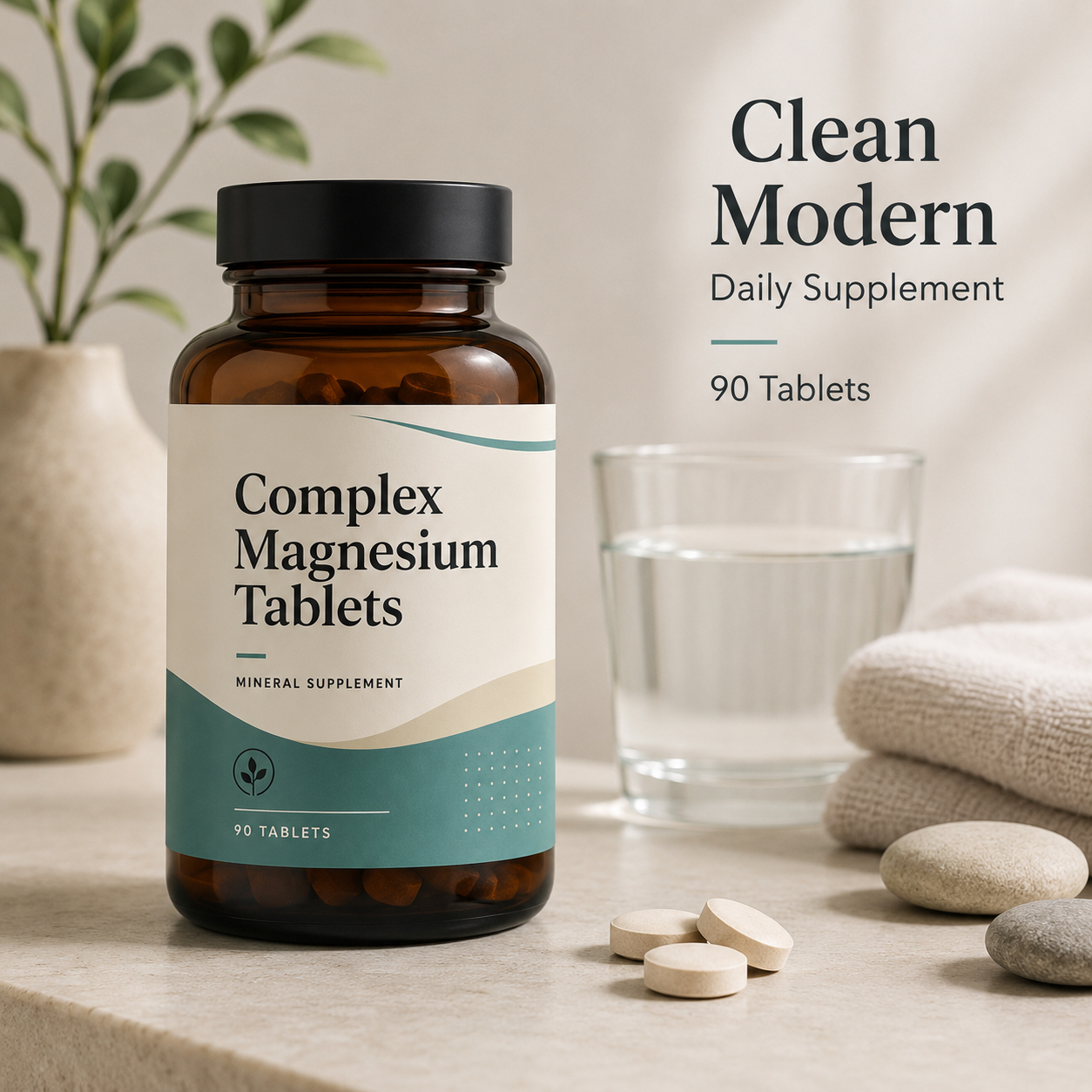
| Magnesium complex (YP426) | 300 mg magnesium from citrate, glycinate and oxide | 90 | 2 tablets |
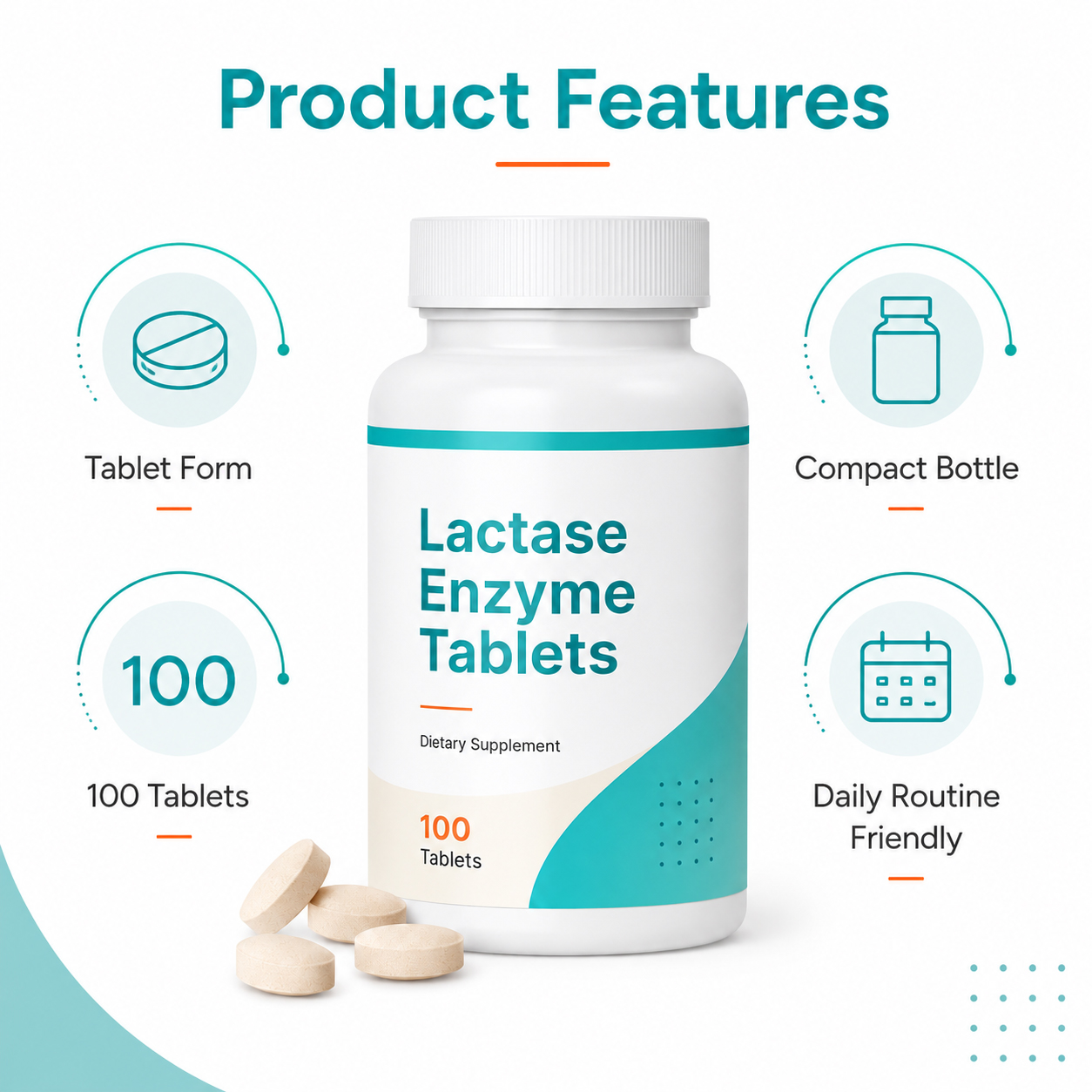
| Lactase enzyme (YP436) | 9,000 FCC ALU lactase | 100 | 1 tablet |
| Ashwagandha (YP288) | 600 mg root extract standardized to 5% withanolides | 60 | 2 tablets, pouch |
| Turmeric complex (YP014) | 1,200 mg root powder + 400 mg extract + 300 mg ginger extract | 180 | 2 tablets |
| Panax ginseng (YP272) | 500 mg root extract + 200 mg root powder | 90 | 2 tablets |
| Men's multivitamin (YP268) | Vitamins A, C, D3, E, B complex plus calcium, magnesium, zinc and selenium | 120 | 2 tablets |
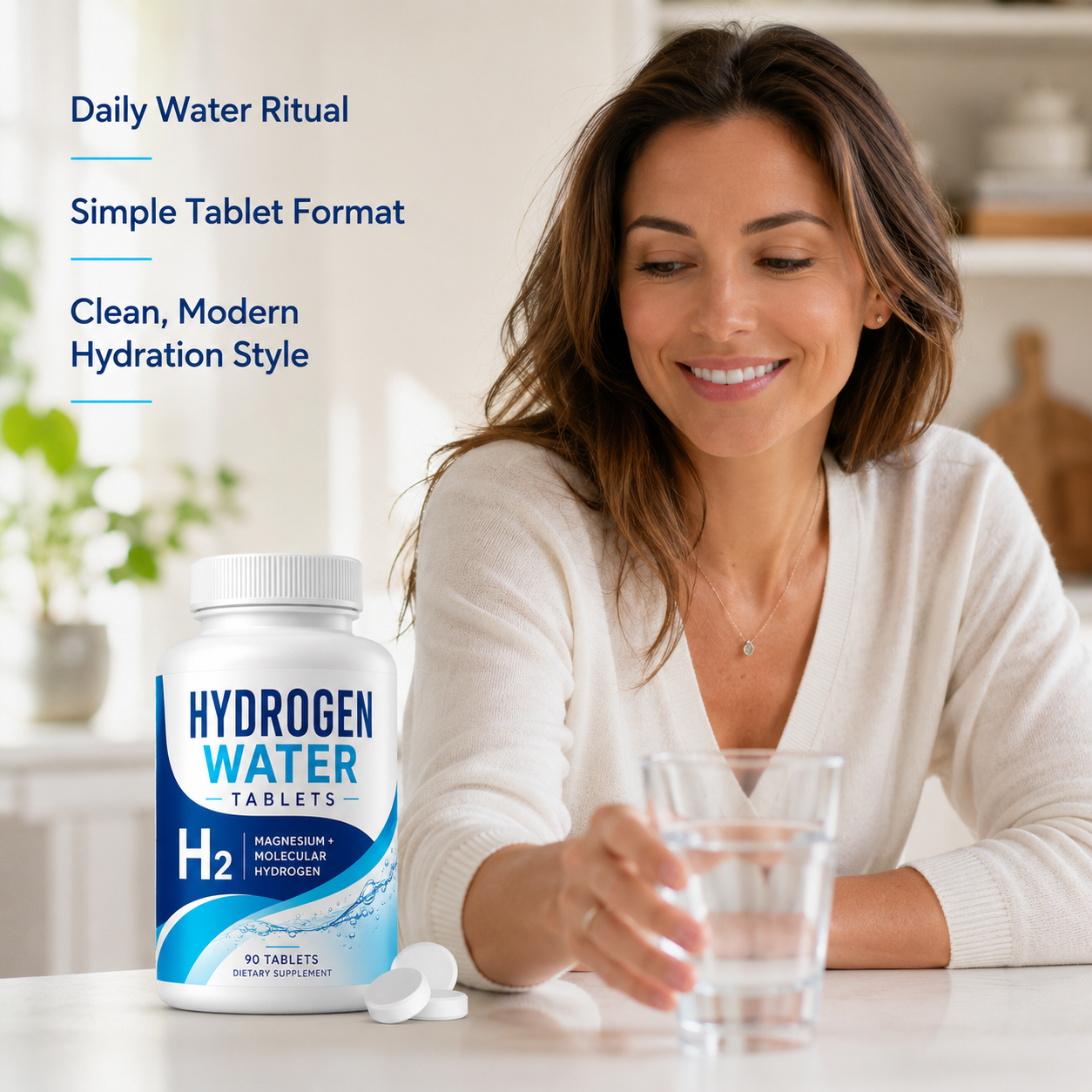
| Hydrogen water (YP433) | 100 mg magnesium from magnesium citrate | 90 | 3 tablets |
| Children's multivitamin (YP270) | Vitamins A, C, D3 and B12, chewable | 60 | 2 chewable tablets |
Read the magnesium row closely and you see the constraint in practice. Delivering 300 mg of elemental magnesium across three salts is a genuinely bulky load, and the salts behave differently under pressure: magnesium oxide is dense and compresses cleanly, while magnesium glycinate is light, bulky and mildly sticky. Fitting all three into a two-unit serving means choosing tooling size, granulation route and excipient levels around the minerals rather than around the headline claim. Details are on the magnesium complex tablet specification. The same logic shows up in single-ingredient products such as our lactase enzyme tablets at 9,000 FCC ALU, where the dose is tiny and the challenge shifts entirely to protecting enzyme activity through shelf life.
Direct compression or wet granulation: the choice that sets your cost
There are two main routes from powder to a finished tablet. Direct compression blends the active with excipients and presses it immediately. Wet granulation first binds the powder into granules, dries them and then presses. Direct compression is faster, cheaper and involves fewer unit operations, which also means fewer places for something to go wrong. Granulation costs a day or more of processing and needs drying capacity, but it solves flow, segregation and compressibility problems that blending alone cannot.
When direct compression is the honest answer
Direct compression suits crystalline, free-flowing, dense actives with a tight particle size distribution, where the dose is low enough to leave room for filler, binder, disintegrant and lubricant. Mineral salts behave well, and many standardized extracts at low dose press into tablets without complaint. If a supplier offers to direct-compress everything, that is a warning sign rather than a selling point, because the route should follow the powder.
When you have to granulate
Granulation earns its cost when the powder is fluffy, hygroscopic, sticky or prone to static. High-dose botanical powders, extracts with a high raw-material-to-extract ratio, hygroscopic salts and anything destined for a coating pan usually granulate better. The tell is in the blend, not the brochure: if the powder bridges in the hopper or the tablets arrive with weight variation above about 3 percent, the process is telling you it needs granules.
- The blend segregates in the hopper and tablet weight varies by more than 3 percent.
- Tablets cap or laminate, splitting horizontally as they leave the press.
- Friability climbs above 1.0 percent in the USP test, or edges chip after a short tumble.
- The active and its carrier exceed about 40 percent of the target tablet weight.
- Flow is poor: the blend needs tamping to move through the feed frame.
- Static makes the powder cling to the feed frame and the punch faces.
- The formula contains a heat-sensitive active that cannot survive a drying step - in which case check granulation feasibility before assuming it is available.
- A coloured or branded appearance is planned on a soft, dusty core that will not hold a film.
- The customer wants an unusually large tablet because the extract is not standardized.
One excipient decision quietly causes more batch failures than any other. Magnesium stearate is the standard lubricant, and it works by forming a hydrophobic film between the powder and the tooling. Over-blend it - above roughly 0.5 percent of the blend, or longer than about five minutes of mixing - and the same film that stops the tablet sticking to the punch also slows water penetration and stretches disintegration time. Formula ranges of 0.25 to 1.0 percent with a short, controlled mix are the difference between a product that passes its disintegration spec on the first run and one that needs a reformulation.
Film coating: what it buys and what it costs
A compressed core is not a finished tablet. A standard film coat adds about 2 to 4 percent to tablet weight and takes 45 to 90 minutes of pan time per batch, depending on load and equipment. In exchange you get moisture protection, taste and odour masking, batch-to-batch colour consistency and an easier swallow because surface friction drops.
Enteric coating is a different proposition. It is engineered to survive the stomach and release in the intestine, which means a methacrylic acid copolymer load of roughly 5 to 8 percent weight gain plus a dissolution method that tests two pH stages, typically 1.2 and 6.8. That is real cost and real risk: enteric films fail visibly through premature release or seam cracking, and they pull the product into a modified-release regulatory conversation the moment you claim delayed release. Use them when the active genuinely needs gastric protection, not as a premium-looking default.
Round white units all look alike, and a shelf holds forty competitors that look identical. A two-tone film coat, a debossed logo or a printed band is what makes a private label product read as a brand rather than a commodity. Both cost far less than cutting a custom tooling silhouette, and neither adds a week of tooling lead time.
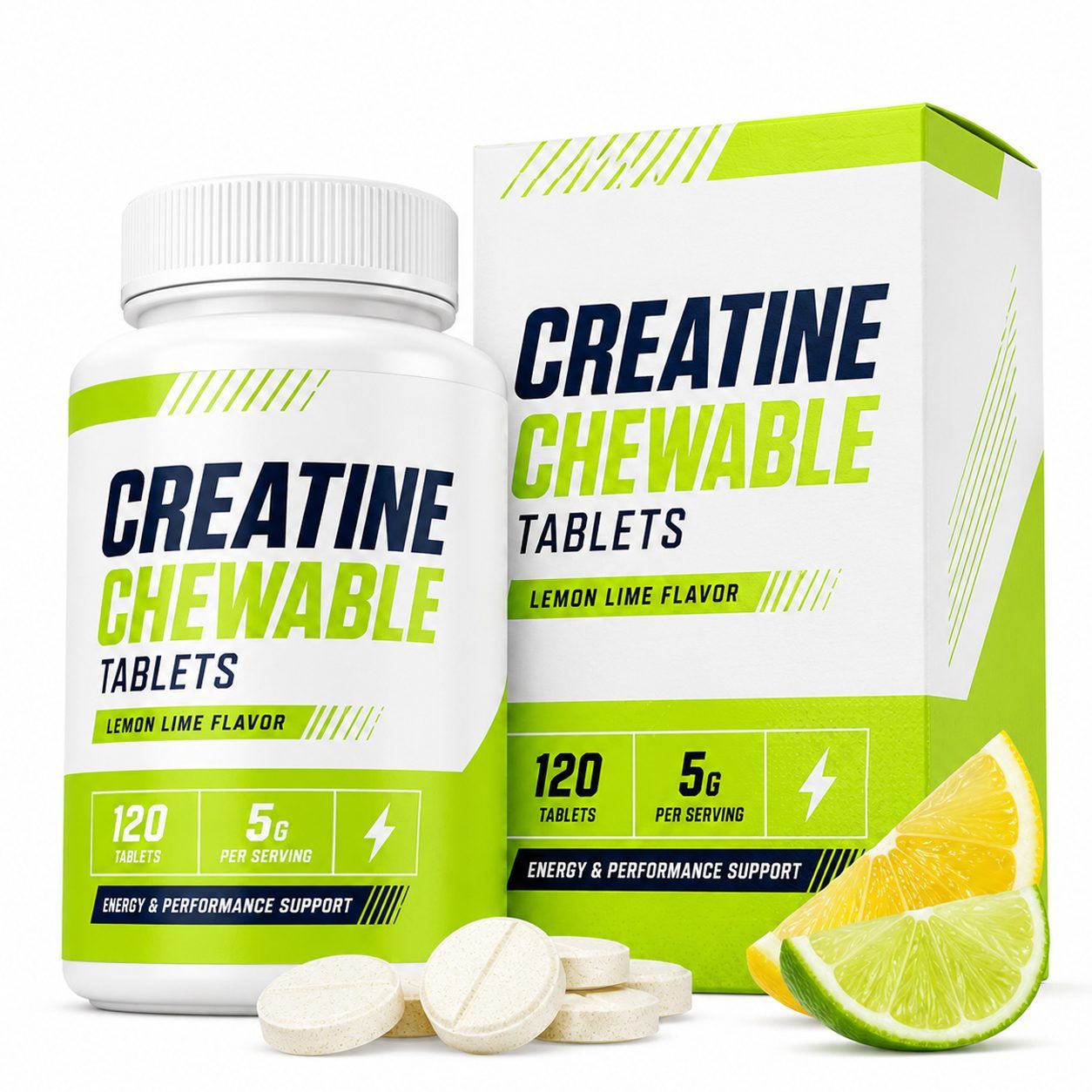
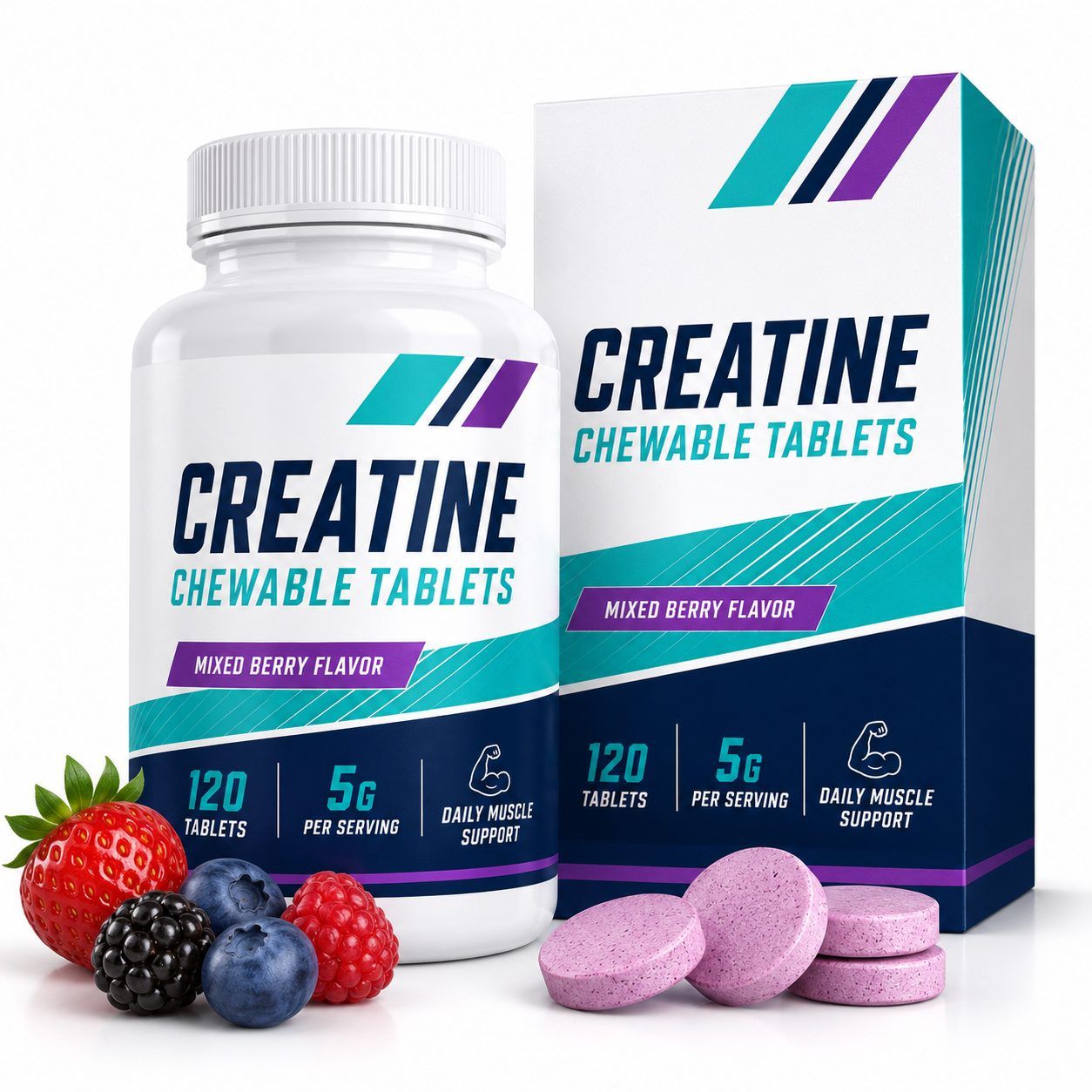
Chewables are a confectionery problem wearing a supplement label
Chewable formats live or die on taste, texture and mouthfeel, and none of those appear in a supplement specification sheet. The base is the first decision. Mannitol is the standard compressible sweetener for a chewable: it is non-hygroscopic, dissolves with a cooling sensation and carries roughly half the sweetness of sucrose, so it can be used at high levels without the product turning cloying. Sorbitol and xylitol cost less but absorb moisture more readily and, at high daily doses, can cause gastrointestinal discomfort - a genuine compliance concern when the serving is two tablets a day, every day. Most commercial chewables run 40 to 70 percent of total weight as a compressible base, then add the active, a superdisintegrant, a lubricant, flavour and colour.
Hardness is the second decision and it is counter-intuitive. A chewable pressed to the hardness of a swallow tablet, often 6 to 10 kiloponds, produces jaw fatigue, and that complaint is loudest in children's products. So chewables are usually pressed softer - which makes friability and edge chipping a real shipping risk rather than a theoretical one. The fix is often packaging rather than process: a tighter bottle, a blister or a pouch instead of a loosely filled high-density polyethylene bottle, plus a friability check that runs on the packed product rather than on loose units straight off the press.
Children's chewable production is where this matters most, and it is also where age and dose rules bite hardest. Our children's multivitamin chewable tablets are built around a two-tablet serving for ages four and up, with the flavour, shape and colour all left open for the brand. If your concept is a chewable with a botanical load rather than a vitamin blend, the taste-masking budget changes completely - plan for it in the brief, not after the first sample.
Flavour and sweetness can cost more than the active
Brand owners routinely budget the active and underestimate the flavour system. In a chewable, the flavour blend, sweetener system, acidulant and colour can add more to the per-tablet cost than a mid-dose botanical extract does. This is why we push clients to lock the flavour platform early. Changing a flavour after stability testing starts means restarting the stability clock on what is legally a new formula, and that is a month of calendar nobody plans for.
The tooling decision nobody budgets for
A rotary press pushes powder between two punches inside a die. Standard round, oval and caplet tools sit on a shelf; a bespoke silhouette, a corporate logo or an unusual radius is cut to order. In the market we work in, a custom punch typically runs about $1,500 to $4,000 per station with four to six weeks of lead time, and a press needs one punch set per station. A 35-station rotary press is not the place to experiment with an unproven shape.
Tooling is also the real driver of minimum order quantity in private label tablet manufacturing. Off-the-shelf tools let a brand start at 1,000 units. A custom silhouette has to be amortized across the run, which is why a bespoke shape commonly pushes a first order into the 3,000 to 5,000 unit range. If you are paying for tooling, pay for the shape you plan to keep for three years rather than the shape that suits the launch week.
The wider economics of batch size, and how MOQ and lead time move against each other, are covered in our guide to MOQ and lead times in supplement manufacturing. For tablets specifically, the raw material is usually the long pole, not the press.
Carbonate and hydrogen tablets need a different brief
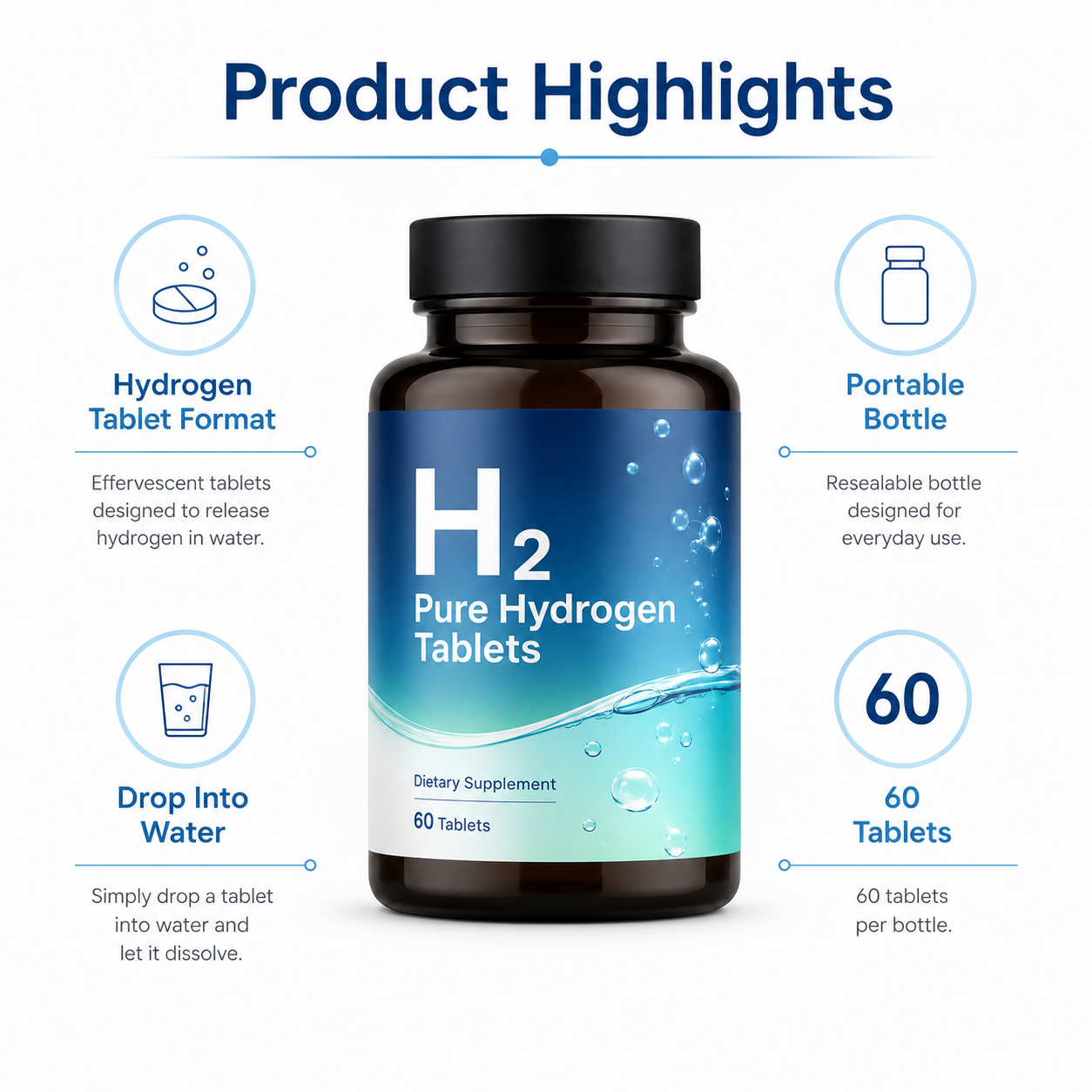
Tab-style products that fizz or release hydrogen gas behave differently from a plain compressed tablet. A carbonate-based tablet relies on a reaction between an acid source and a carbonate when it hits water, which means the press room has to keep humidity low enough that the reaction does not start in the hopper, and the packaging has to keep moisture out for the full shelf life. Sealed tubes and aluminium blisters are standard for a reason, and a loose bottle with a desiccant is not an acceptable substitute.
We run this family on the same line as our other tablet formats, and the specification detail sits on the hydrogen water tablet specification, where the magnesium citrate carrier is doing double duty as both reactant and mineral source. If you are developing in this space, expect the moisture specification to drive more of your cost than the active does.
Release testing: what a tablet batch should ship with
A tablet carries a longer release panel than a two-piece shell, because hardness, friability and disintegration are all process variables that a capsule simply does not have. The list below is the release panel we work to, and it is also the list a buyer should ask any supplier to commit to in writing.
- Description and identity of the active, plus assay against the label claim.
- Weight variation across the batch, typically within plus or minus 5 percent of target weight.
- Hardness in kiloponds, managed with a lower control limit rather than a single target number.
- Friability, normally under 1.0 percent after 100 rotations in the USP apparatus.
- Disintegration time, matched to the window for the specific format and claim.
- Moisture content or water activity, which drives both microbial risk and long-term hardness drift.
- Microbial limits, heavy metals, and allergen documentation where the formula requires it.
- Uniformity of dosage units when the active is low-dose and high-potency.
- Coating appearance, weight gain and adhesion for any coated product.
- Dissolution profile for anything making a modified-release, delayed-release or enteric claim.
- Stability data: accelerated results plus real-time data supporting the 24-month shelf-life statement.
- A certificate of analysis that lists the specification limit, the result and the method for every test.
The documentation side - cGMP expectations, FDA facility registration and Halal certification that names a specific formula rather than only a factory - is covered in our <a href="/blog/navigating-global-supplement-regulations-fda-cgmp-and-halal-explained/">FDA, cGMP and HALAL requirements guide</a>. Brands new to tablet formats are most often caught out by documentation, not by the powder.
Indicative cost structure for a high-count bottle
Where the money actually goes surprises most first-time buyers. The active is the largest single block, but the packaging, tooling amortization and release testing together rival it in a high-count private label program. The shares below are indicative for a 90 count bottle at a mid-range MOQ and will move with dose, count, tooling and destination.
| Cost block | Share of landed cost | What moves it |
|---|---|---|
| Active ingredient or standardized extract | 30 - 40 percent | Extract ratio, standardization, vendor certification |
| Excipients (filler, binder, disintegrant, lubricant) | 6 - 9 percent | Compression route; granulation needs more binder |
| Coating, debossing or print | 3 - 6 percent | Film type, colour match, enteric versus standard film |
| Tooling amortization | 2 - 5 percent | Custom shape spreads over the first run only |
| Primary packaging (bottle, closure, seal, label) | 12 - 18 percent | Count, closure type, label finish, child-resistant option |
| Carton and leaflet | 4 - 7 percent | Board weight, print colours, folding complexity |
| Labour, quality control and release testing | 8 - 12 percent | Panel depth, stability programme, batch size |
| Freight and DDP delivery | 8 - 12 percent | Volume, destination, warehouse versus direct delivery |
MOQ, samples and lead time for private label tablet manufacturing
For private label tablet manufacturing, pilot batches run from 300 to 800 units and exist for product-market testing rather than general distribution. Standard production starts at 1,000 units per SKU with off-the-shelf tooling, and moves to 3,000 to 5,000 units if you want a custom shape. Samples take 7 to 10 days after the formula is confirmed, and a standard production run takes roughly 15 working days once artwork and packaging are approved. Raw material sourcing is usually the long pole: standard vitamins and minerals arrive in two to three weeks while a branded or clinically studied extract can take six to eight weeks.
If the formula is still open, our magnesium form comparison is a useful worked example of how salt choice changes both dose and compressibility. Brands converting an existing capsule line should also read the capsule sizing and fill weight guide, because the fill-weight logic that governs a shell transfers almost directly to the weight budget for a pressed unit.
Planning your first private label tablet manufacturing project?
Send us the active, the target dose per serving, your pack count and your destination market. We will come back with a compressibility assessment, tooling options with pricing, a weight budget and an MOQ - under NDA.
What to carry into a pressed product project
- The weight budget comes first: a 10 mm round carries about 400 mg and a swallowable tablet tops out near 1,300 to 1,500 mg.
- Keep the active and its carrier below roughly 40 percent of target weight, or standardize the extract harder.
- Direct compression is cheaper; granulation is the answer when flow, weight variation or capping appear.
- Over-blending magnesium stearate past about 0.5 percent or five minutes slows disintegration - a common batch failure.
- Film coating adds 2 to 4 percent weight; enteric coating adds 5 to 8 percent plus a two-stage dissolution method.
- Chewables are pressed softer than swallow tablets, so friability risk moves from the press to the packaging.
- A custom punch runs about $1,500 to $4,000 per station and four to six weeks, and lifts MOQ to 3,000 to 5,000 units.
- Packaging, tooling and testing together can rival the active as a share of landed cost.
Sources
- TikTok Shop US category data - Top 100 health products by dosage form (public ranking), 2026
- U.S. FDA - Guidance for Industry: Questions and Answers on Dietary Supplements
- USP General Chapter <701> Disintegration and <1216> Tablet Friability
- Yukang Medicine internal tablet specifications for SKUs YP014, YP268, YP270, YP272, YP288, YP426, YP433 and YP436
Key takeaways
- A swallowable tablet tops out near 1,300 to 1,500 mg, so dose mass is decided by tooling size before it is decided by marketing.
- Keep the active and its extract carrier under about 40 percent of target weight, or standardize the extract further.
- Direct compression is faster and cheaper; granulation is what you buy when flow, weight variation or capping appear.
- Over-blending magnesium stearate above roughly 0.5 percent or five minutes slows disintegration and is a frequent cause of batch failure.
- Chewables are pressed softer than swallow tablets, which shifts friability risk from the press to the packaging choice.
- Custom tooling costs about $1,500 to $4,000 per station, takes four to six weeks and raises MOQ to 3,000 to 5,000 units.
Frequently asked questions
Can you run private label tablets at 1,000 units?
Yes, if you stay on off-the-shelf round, oval or caplet tooling. Our pilot batches run from 300 to 800 units, standard production starts at 1,000 units per SKU, and a custom silhouette lifts the floor to 3,000 to 5,000 units because the punch cost has to be amortized across the run.
How do I know whether my formula can be pressed into tablets at all?
We assess three things first: dose mass against target weight, flow behaviour of the blend, and compressibility of the active. If the active and its carrier exceed roughly 40 percent of the target weight, or the powder bridges in the hopper, the answer is either a more concentrated extract, a granulation step, or a different format.
Do chewable tablets need a coating?
Usually not for moisture reasons, because chewables are pressed softer and are meant to be chewed rather than swallowed. A light film or a polished surface is sometimes added for appearance and to reduce stickiness in the bottle. If taste masking is the real problem, the fix belongs in the base and flavour system, not in the coating pan.
Can you make a smaller tablet so it is easier to swallow?
Yes, within limits. The tools are a higher-ratio standardized extract, a lower daily dose per unit with a higher count per serving, or a switch to a caplet shape that is easier to swallow at the same weight. What we cannot do is compress the same mass into a smaller volume; that is a physics limit, not an equipment choice.
What does custom tablet tooling cost, and how long does it take?
A bespoke punch typically runs about $1,500 to $4,000 per station with four to six weeks of lead time, and a rotary press needs one punch set per station. Off-the-shelf round and oval tooling carries no tooling charge, which is why most first orders launch on a standard shape and move to a custom silhouette on the second or third run.
What documents ship with a tablet order?
A certificate of analysis covering identity, assay, weight variation, hardness, friability, disintegration, moisture and microbial limits; the finished product specification; heavy-metal and allergen documentation where applicable; and stability data supporting the shelf-life statement. Halal certification can be issued against a specific formula rather than the facility, which is what most export buyers actually need.
Have a project in mind? We'll come back with MOQ, formula options and lead time within 24 hours.
Request a Quote