Why probiotics are the hardest category to outsource
Most supplement categories forgive a handling mistake. A vitamin batch that sits an extra week in a warm warehouse loses nothing a label would care about. Probiotics are different: the active ingredient is a living population of bacteria, and every step from the raw material cold chain to the humidity on the filling line decides how many of them are still alive when the consumer opens the bottle. This is why private label probiotics reward brands that specify numbers and punish brands that specify adjectives.
The category is also where marketing pressure and manufacturing reality collide hardest. A brief that asks for 100 billion CFU in a strawberry gummy sounds reasonable until you learn what heat and moisture do to vegetative cells. In this guide we work through the decisions that actually determine whether a probiotic project succeeds: how a CFU claim is really built, how strains are chosen and documented, which formats can carry which organisms, and what packaging and testing have to do behind the label.
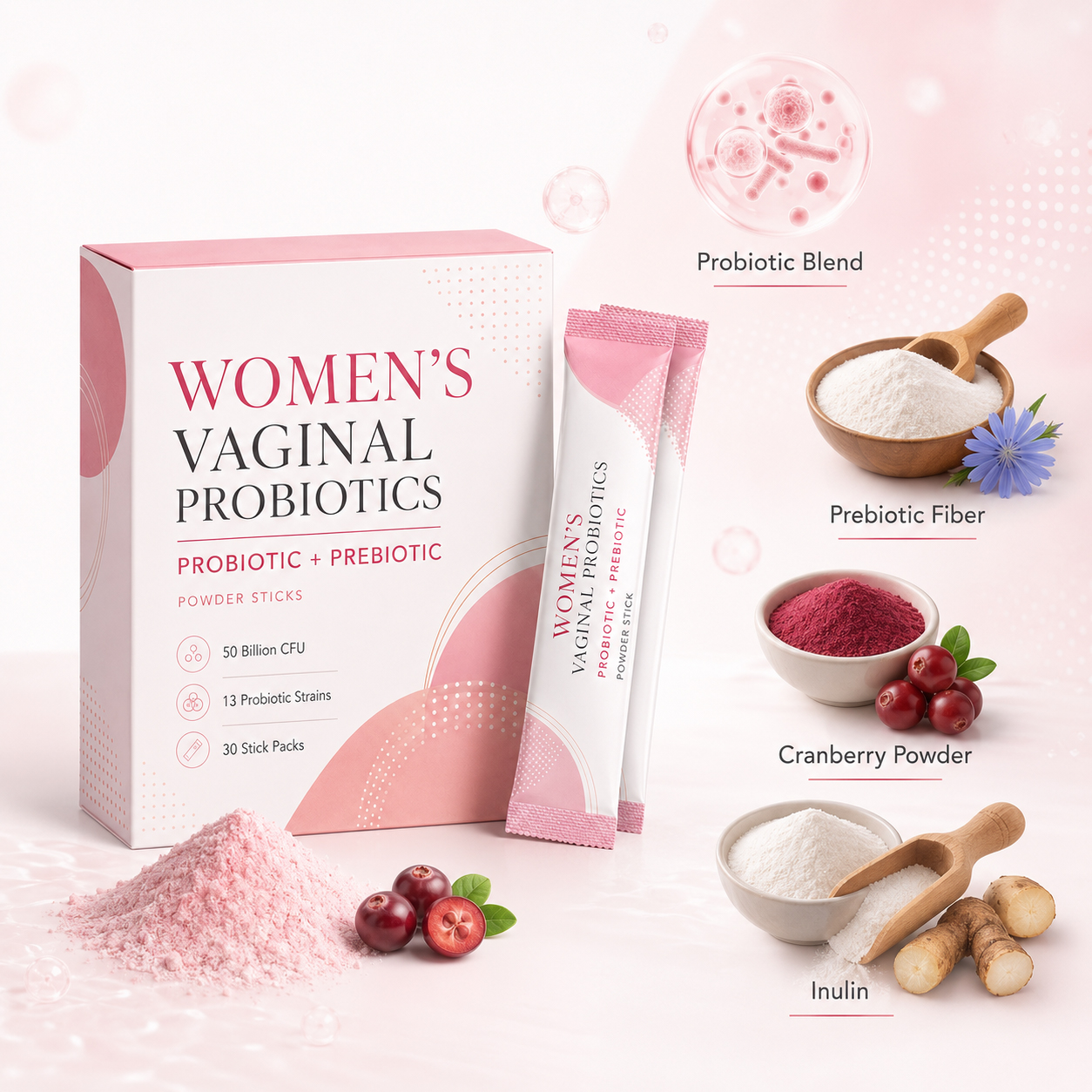
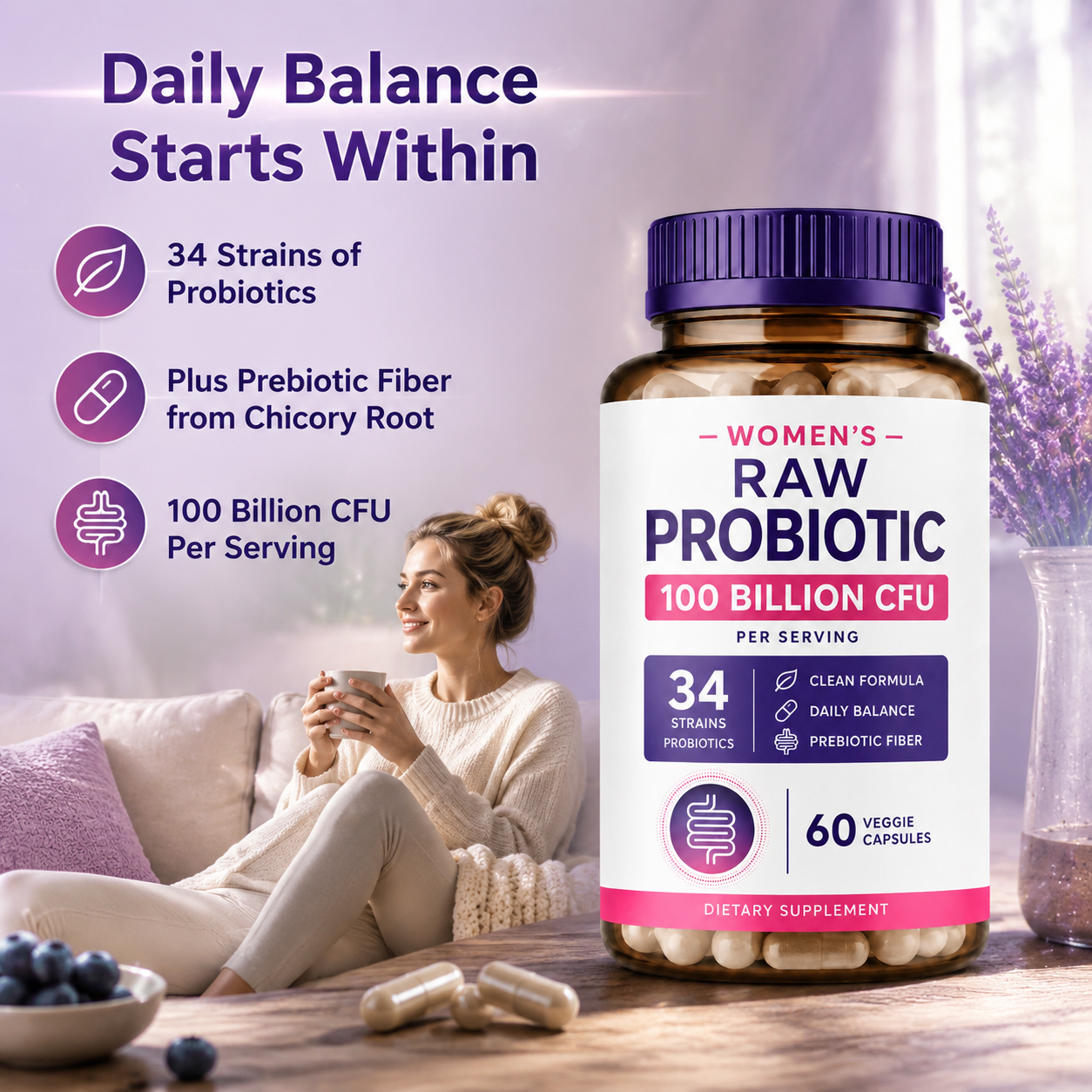
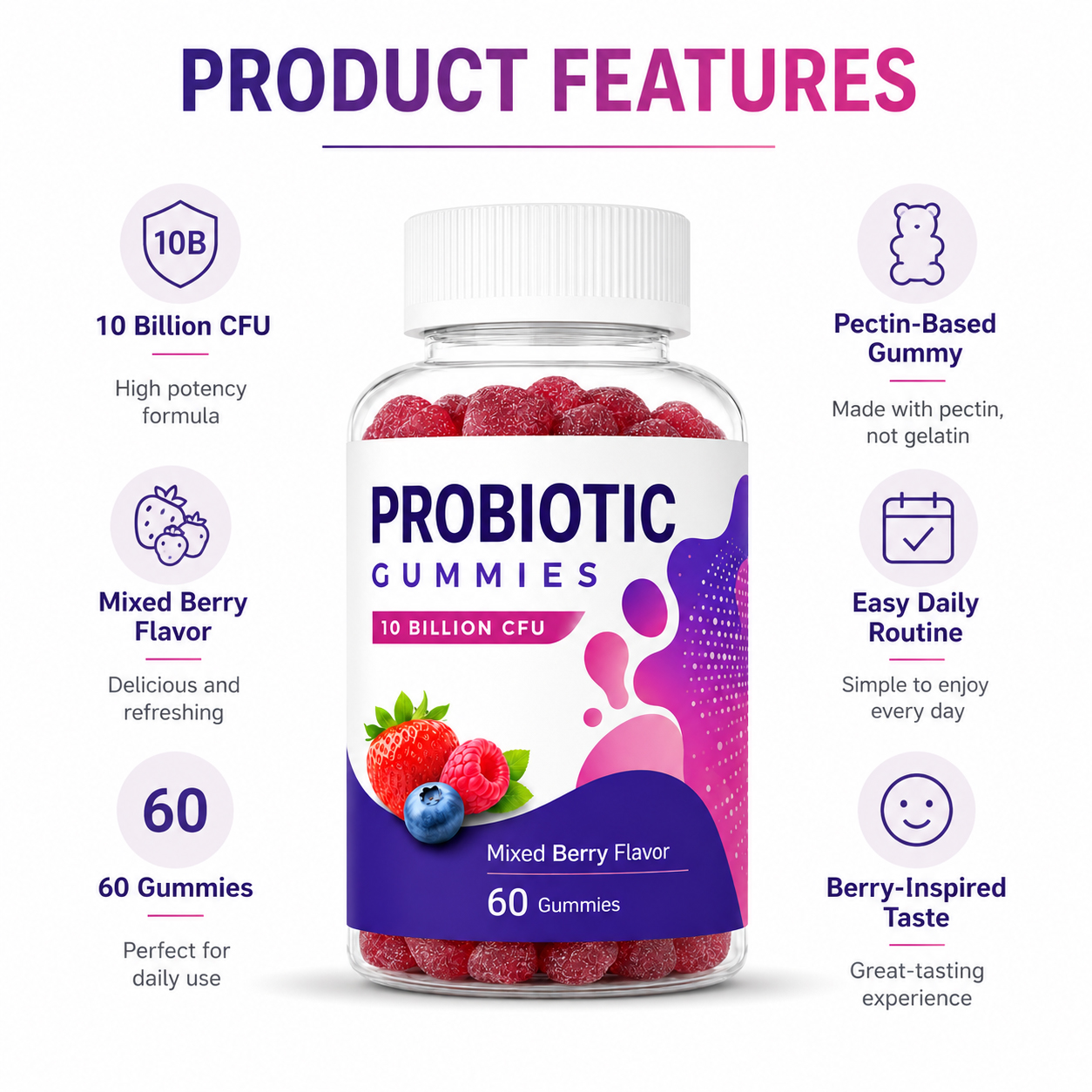
We manufacture probiotics in high-CFU hard capsules, stick-pack powders and pectin-based gummies, alongside the rest of the supplement product catalogue - so the same strain blend can be costed across formats before you commit to one.
CFU on the label is not CFU in the bottle
The single most misunderstood number in the category is the CFU claim. Colony-forming units are counted at a moment in time, and a responsible manufacturer counts them against the end of the claimed shelf life, not against the day of production. Vegetative organisms die gradually even in perfect packaging, so a product that must still show 50 billion CFU on its final day is packed with substantially more than 50 billion on its first day. That difference is called overage, and it is pure cost that never appears on any label.
Read that chart as a budget line, not a technicality. On a 100 billion CFU capsule you may be manufacturing 130 billion CFU of raw material per serving and paying for every unit of it. When a quotation looks unusually cheap, the most likely place the money was saved is the overage - invisible on day one and missing on the last day of shelf life.
Two suppliers can quote the same 50 billion CFU product months apart in price because one costs the label claim at manufacture and the other costs it at end of shelf life. Ask the question in exactly those words - is this costed to the label claim at production or at end of shelf life - and watch how long the answer takes.
Three working formulas show the whole design space
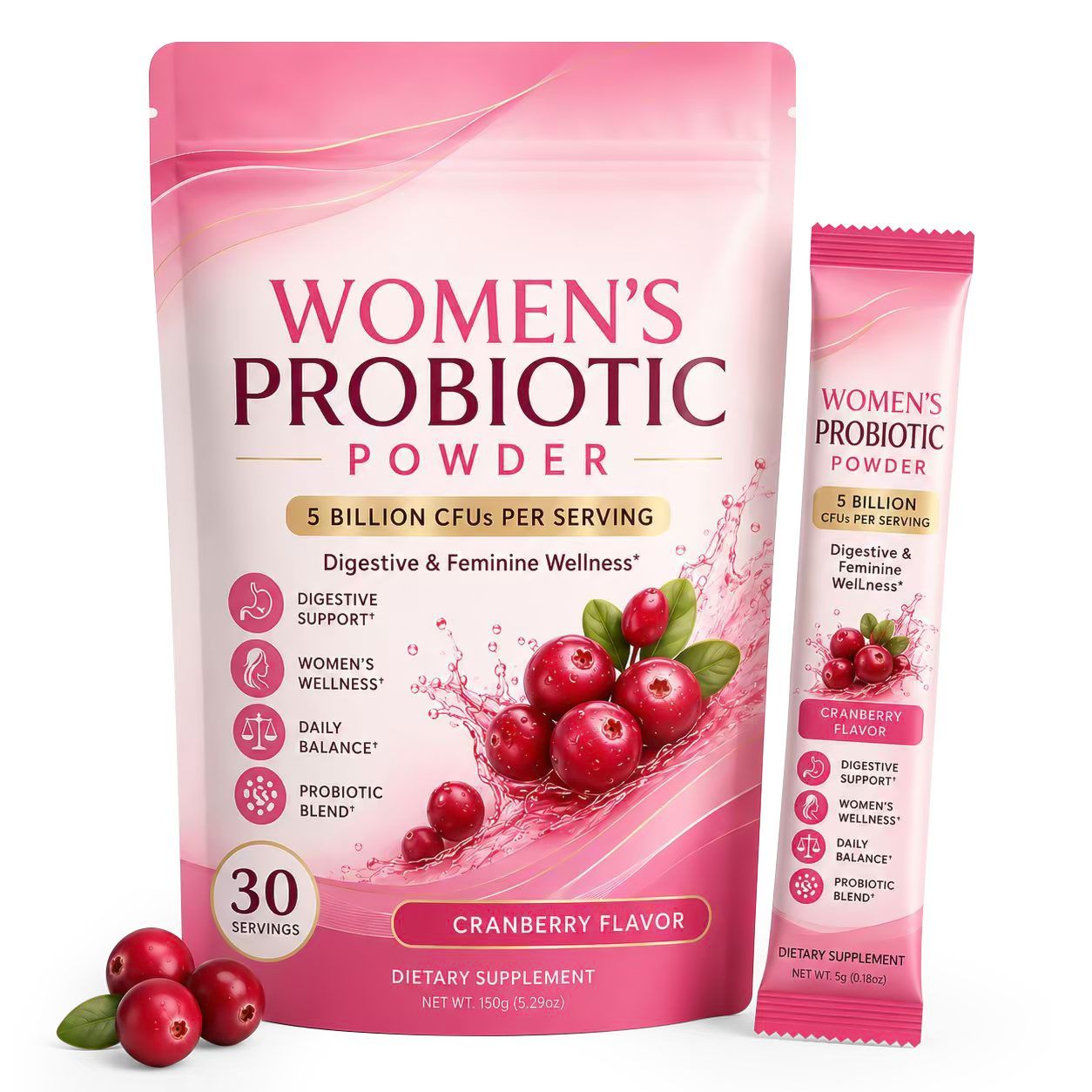
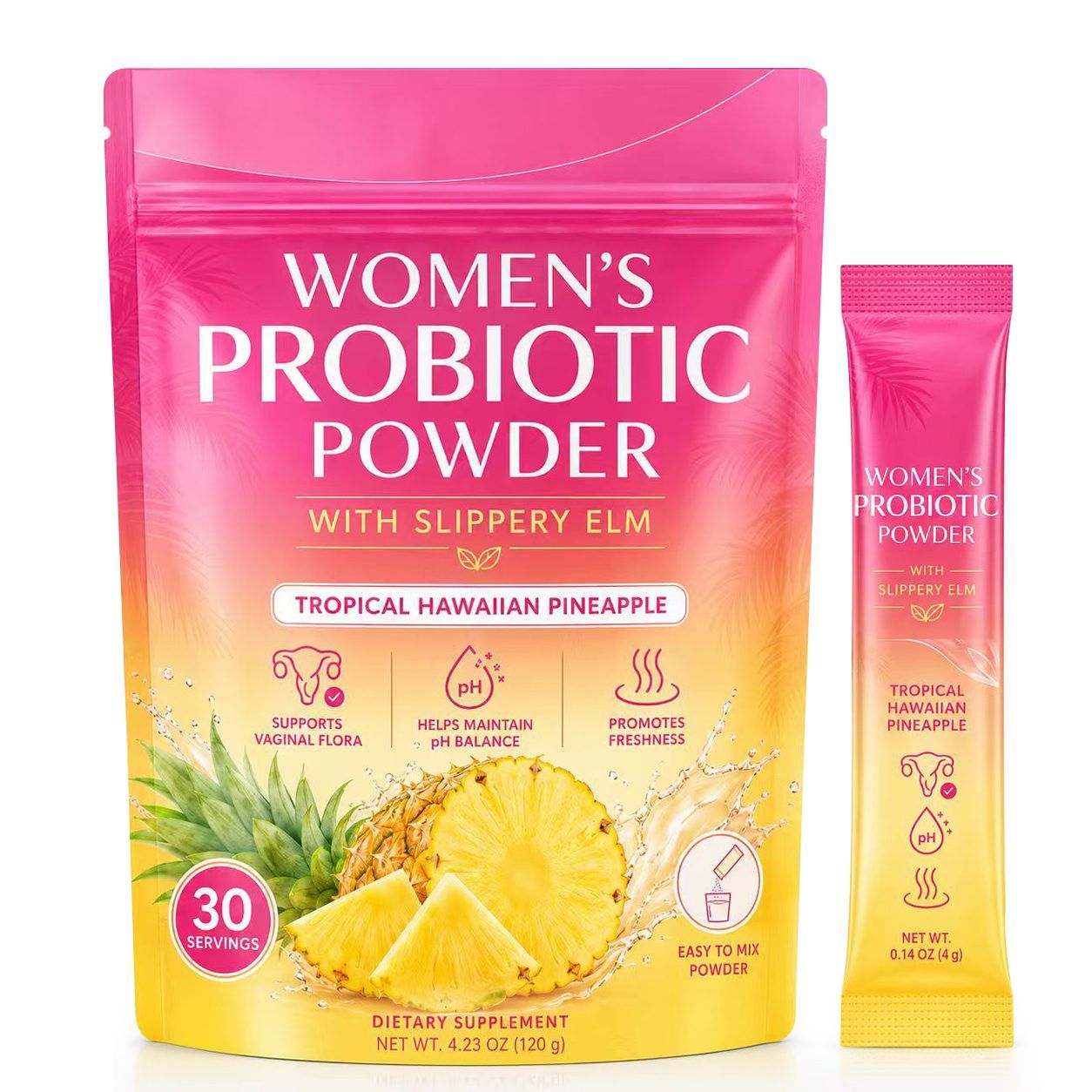
Rather than abstract ranges, it helps to look at three real formulas that occupy the three corners of probiotic design: a high-potency capsule, a women's stick-pack powder and a pectin gummy. For a private label probiotic range, these three corners cover most probiotic briefs, and every difference in the table below is driven by the biology of the organisms each format can carry.
| Attribute | High-potency capsule | Women's powder stick | Pectin gummy |
|---|---|---|---|
| CFU per serving | 100 billion | 50 billion | 10 billion |
| Strains | 34-strain blend | 13 strains, Lactobacillus and Bifidobacterium | Single species, Bacillus coagulans |
| Supporting actives | 200 mg chicory root inulin prebiotic | 1 g prebiotic fibre, 100 mg cranberry, 100 mg D-mannose, vitamin C and zinc | Flavour-led, mixed berry |
| Serving | 1 veggie capsule | 2 g stick | 2 gummies |
| Packaging | 60-count bottle | 30 stick packs in a retail carton | 60-count bottle |
| Positioning | Maximum potency daily | Feminine wellness, travel | Taste-first, casual users |
The pattern is not accidental. CFU falls as the format gets friendlier to humans and harsher to bacteria: a dry capsule is the most benign environment a culture can sleep in, a flavoured powder with fruit powder and acidulants is moderately hostile, and a gummy - wet, sweet and warm during manufacture - is hostile enough that only a spore-forming organism survives it comfortably.
Strain selection beats strain count
Consumer marketing rewards the biggest number, but the science is strain-specific: documented effects belong to particular strains of particular species, not to genus totals. The NIH Office of Dietary Supplements makes the same point - probiotic characteristics depend on the strains used and their CFU quantity, and a higher CFU count alone does not mean a stronger effect. A 34-strain blend and a single well-documented Bacillus coagulans are answering different briefs, not sitting on one ladder of quality.
Strain count also compounds cost in a place buyers rarely look: documentation. Every strain in a blend needs identity verification, typically by PCR or whole-genome methods, plus its own raw material dossier and its own stability behaviour inside the finished blend. Moving from 4 strains to 34 does not multiply the raw material cost by eight; it multiplies the paperwork, the QC load and the surface area for a supplier mistake.
| Property | Vegetative (Lactobacillus, Bifidobacterium) | Spore-forming (Bacillus coagulans) |
|---|---|---|
| Heat tolerance | Damaged above roughly 40 C; no hot processing | Survives well above 80 C |
| Acid and bile tolerance | Strain-dependent; enteric protection sometimes needed | Naturally robust through gastric acid |
| Gummy compatibility | Poor; curing heat and water activity destroy counts | Good; the standard choice in gummies |
| Typical CFU per serving | 5-100 billion | 1-10 billion |
| Documentation load | Per-strain identity and stability data | Single-species dossier |
| Best formats | Capsules, dry powders, drops | Gummies, shots, heat-processed formats |
One honest caveat belongs here. Combination probiotic products are rarely tested as whole formulas in published trials, so a 34-strain label is a positioning statement as much as a functional one. If your brand story depends on a documented effect, identify the strain that carries the claim and build the formula around it, instead of hoping the total does the work.
The gummy problem: water activity and heat
Gummy manufacturing is hostile to probiotics in two ways at once. The base is cooked and deposited hot, and conventional gummies then cure for 24 to 48 hours at 38 to 50 C to set the texture - conditions that wipe out vegetative Lactobacillus and Bifidobacterium cultures long before packaging. Finished gummies sit at a water activity around 0.55 to 0.65, far above the roughly 0.2 ceiling that a dry probiotic powder targets. This is why the probiotic gummies on retail shelves are overwhelmingly made with Bacillus coagulans: it is a spore former, and it is close to the only organism that survives the process honestly.
The standard accelerated protocol for supplements runs at 40 C and 75 percent relative humidity. For vegetative probiotic strains that protocol is not an acceleration, it is a kill step - the cultures are gone in weeks. When a supplier quotes a 24-month shelf life on a live-culture product, ask whether it is supported by real-time data at 25 C on the actual finished formula, and which timepoint the CFU claim was counted at.
Packaging is part of the formula
In private label probiotics, moisture - not time - is what kills the product, so the packaging functions as part of the formulation. Dried cultures want the water activity of the finished product held near or below 0.2, and the packaging decides how long that holds. A single-piece HDPE bottle with a desiccant is the baseline. A blister in alu-alu foil or a multilayer stick-pack film with an aluminium barrier performs better, because each dose stays sealed until it is used. Nitrogen flushing at filling buys additional months. The differences are not subtle: two identical formulas can lose a full log of CFU within six months in a poor barrier and hold for two years in a good one - which makes the barrier the single largest lever on probiotic shelf life.
Testing and documentation: what a real probiotic certificate looks like
A serious probiotic release package has three layers. First, CFU enumeration on the finished lot at release, by a method that can actually recover the organisms from the matrix. Second, strain identity confirmation - each strain named to its species and, ideally, to a documented designation, verified by PCR or genome sequencing rather than by trust in the raw material certificate. Third, stability data at real-time conditions on the finished formula, with CFU counted at defined timepoints. Ask to see the probiotic certificate from a completed lot and read whether it names methods, limits and results, not just pass marks.
Claims: keeping probiotic language on the right side of the line
In the United States a probiotic can carry a structure-function claim with the standard disclaimer, and it cannot claim to treat, cure or prevent disease - a line that phrase-led marketing crosses more often in this category than in almost any other. Structure-function language should stay tied to the strain or blend actually in the bottle, because the strain-specificity of the evidence is exactly what a regulator or a competitor will test. In markets with authorised-claim regimes, most probiotic claims are restricted further, so lock the claim list per market before artwork.
The framework we work to with clients across the United States, the European Union and Southeast Asia is set out in our guide to FDA, cGMP and HALAL requirements. If a Halal claim matters to your market, raise it before the strain blend is fixed, because capsule shells, gelling agents and culture media all have to comply.
MOQ, lead times and what a realistic schedule looks like
Our standard minimum is 500 units per product, and probiotics add one planning wrinkle most categories do not have: the live raw material. Multi-strain blends are usually blended to order and can carry lead times of several weeks on their own, so the raw material schedule needs to be locked before packaging artwork goes to print.
A recent custom probiotic powder project we ran for a first-time founder shows the realistic shape of a timeline: roughly six months from first conversation to approved sample, including several rounds of formula and taste revision, then about 20 days for the custom packaging and about 25 days for production once the order was placed. Custom packaging, not manufacturing, is the step that most often moves a launch date.
The full arithmetic, including how artwork and packaging choices move the minimum, is set out in our guide to MOQ and lead times in supplement manufacturing. On an established format with stock packaging, a standard production run completes in about 15 days, with expedited processing down to 10 days.
A pre-brief checklist for a probiotic project
- Decide the format from the strain, not the reverse: vegetative blends belong in capsules and dry powders, and spore formers are what make a gummy honest.
- Ask whether the CFU claim is costed and labelled at manufacture or at end of shelf life, and request the overage in writing.
- Name the strains that carry your claim and ask for their documented designations, not just species names.
- Request strain identity methods - PCR or genome sequencing - for every strain in the blend.
- Set a water activity target for the finished product and ask which packaging barrier holds it for the full claimed shelf life.
- Ask for real-time stability data at 25 C on the finished formula, with CFU counted at named timepoints.
- Budget the overage: on a 100 billion CFU capsule, expect to pay for roughly 130 billion of raw material per serving.
- Confirm structure-function claim wording per market before commissioning artwork, because a claim change is an artwork change.
- If a Halal or vegan claim applies, fix it before the blend is final - it touches shells, gelling agents and culture media.
- Plan the raw material schedule before the packaging print run, because live blends are blended to order.
Planning a private label probiotic product?
Send us your target format, CFU level, strain direction and destination market. You will get an itemised factory quotation with the raw material, the overage and the packaging costed separately, plus a sample plan and a free formulation consultation - NDA protected.
What to carry into your probiotic project
- A CFU label claim is an end-of-shelf-life promise; the overage packed at production is a real cost line you should see in the quote.
- Format follows biology: capsules and dry powders carry vegetative multi-strain blends, gummies realistically carry spore-forming Bacillus coagulans.
- Effects are strain-specific. Identify the strain that carries the claim instead of leaning on the total CFU number.
- Moisture decides survival, so water activity targets and packaging barriers are formulation decisions, not procurement details.
- Insist on per-lot CFU enumeration, strain identity by PCR and real-time stability data before you pay a deposit.
Sources
- NIH Office of Dietary Supplements - probiotics fact sheet for health professionals (CFU and strain specificity)
- US FDA - structure-function claims and the DSHEA disclaimer for dietary supplements
- ISAPP - probiotic terminology and strain specificity consensus
- Yukang Medicine internal production records and a completed custom probiotic powder project
Key takeaways
- A CFU claim is an end-of-shelf-life promise - ask what overage was packed to hold it, and put the overage in the quote.
- Format follows biology: vegetative multi-strain blends live in capsules and dry powders, gummies realistically carry spore-forming Bacillus coagulans.
- Probiotic effects are strain-specific; a higher CFU number alone is not a stronger product.
- Moisture decides survival, so packaging barriers and water activity targets belong in the formulation brief.
- Require per-lot CFU enumeration, PCR strain identity and real-time stability data before paying a deposit.
Frequently asked questions
What CFU count should a first probiotic product target?
Most first products launch between 5 and 50 billion CFU per serving, and the number should follow the strains and the format rather than a marketing ladder. A single well-documented strain at 10 billion can be a better product than an undocumented blend at 100 billion, and higher CFU means proportionally more raw material and overage cost. Our stock formulas cover the 5 to 100 billion range, and the right starting point depends on positioning, not on the biggest number on the shelf.
Can probiotics survive in gummies?
Only certain organisms do. Conventional gummies are cooked hot and cured for 24 to 48 hours at 38 to 50 C, with a finished water activity around 0.55 to 0.65 - conditions that destroy vegetative Lactobacillus and Bifidobacterium cultures. Spore-forming Bacillus coagulans survives the process, which is why it is the standard probiotic in gummies. Treat a gummy claiming a vegetative multi-strain blend with scepticism unless the supplier explains the process or encapsulation behind it.
Does the difference between CFU at time of manufacture and at expiry matter?
It matters more than almost any other line on the label. CFU declines gradually during storage, so a product labelled at time of manufacture may deliver far less than the printed number by its final day. Ask for the claim to be set at end of shelf life, supported by real-time stability data at 25 C, and ask what overage was packed to hold it. A supplier who cannot answer that in one sentence is reselling someone else's blend.
What is the MOQ for private label probiotics?
Our standard minimum is 500 units per product. The live raw material adds one constraint other categories do not have: multi-strain blends are typically blended to order, so their lead time must be planned before packaging production. Stock packaging starts at the floor, while new printed bottles, cartons or stick-pack film add setup cost and weeks. We confirm the exact figure against your packaging choices in the quotation.
How do I verify the strains in my product are real?
Ask for strain identity confirmation by PCR or genome sequencing for each strain, with documented strain designations where the effect you claim depends on them. A per-lot certificate of analysis should name the enumeration method, the specification limit and the result. If the supplier cannot link the finished lot to strain-level identity data, you are relying on the raw material certificate alone - which is exactly the link that fails most often in this category.
How long does development take for a custom probiotic formula?
Plan in phases. Formula and flavour development with sample revisions typically runs from several weeks to a few months depending on how far the concept sits from stock; in one recent custom probiotic powder project, development and sampling took roughly six months, custom packaging about 20 days and production about 25 days after order confirmation. On an established format with stock packaging, production itself completes in about 15 days, or 10 days expedited.
Have a project in mind? We'll come back with MOQ, formula options and lead time within 24 hours.
Request a Quote