Why a multivitamin is harder to manufacture than a single-ingredient product
The multivitamin is the most familiar product on the supplement shelf and the one brand owners underestimate most often. A single serving carries a dozen or more actives that compete for absorption, degrade at different speeds, smell stronger than the flavour system and inflate each other's powder volume. Two multivitamin formulas with identical labels can behave nothing alike in production. This guide covers the four decisions that decide whether a private label multivitamin ships on time and stays within label for its whole shelf life: overages, mineral salt selection, nutrient interactions and format limits.
None of these decisions is exotic. Each one is arithmetic that a formulator runs before the first sample is pressed, and each one is cheap to fix on paper and expensive to fix after packaging. The brands that struggle are the ones that discover the arithmetic at the label-review stage, three weeks before a launch date.
Label claims, overages and the 24-month shelf life
A multivitamin label promises the nutrient amount per serving for the entire shelf life, not for the day the bottle was filled. Vitamin C, the B vitamins and vitamin A all fade measurably in a solid dose over 24 months, faster with heat, light and trace-metal contact. To keep the label claim true at month 24, formulators start with an overage at manufacture, then verify it in a stability study. The overage is not padding; it is the difference between a compliant label and a batch that drifts under claim before it sells through.
Treat the chart as the ranges formulators reach for on day one, not as a specification. The real number comes out of the stability protocol: accelerated storage at 40 degrees Celsius and 75 percent relative humidity for six months, backed by real-time pulls across the dating period. An overage that looks generous on paper can still land under claim if the mineral half of the multivitamin premix was blended in early, because the trace metals accelerate the very vitamins they sit next to. Every overage also costs money twice, once in raw material and once in the review that proves it was necessary.
| Mineral on the label | Economy salt and its elemental share | What the economy salt costs you | The premium alternative |
|---|---|---|---|
| Calcium | Carbonate, 40 percent elemental | Compact formulas, but it needs stomach acid and can upset sensitive users | Citrate, 21 percent elemental, gentler digestion but roughly twice the powder volume for the same claim |
| Magnesium | Oxide, about 60 percent elemental | Cheap and small, poorly absorbed and strongly laxative at higher doses | Glycinate, about 14 percent elemental, well tolerated but bulky and several times the price |
| Zinc | Oxide, about 80 percent elemental | The smallest possible tablet contribution, lower solubility | Picolinate or citrate, better solubility at a higher cost per kilogram |
| Iron | Ferrous fumarate, about 33 percent elemental | Economical but metallic-tasting and constipating for some users | Bisglycinate, about 26 percent elemental, gentler taste and tolerance |
| Selenium | Sodium selenite, inorganic form | Stable and cheap, narrower safety margin | Selenomethionine, the organic form used in most premium panels |
The elemental share is where serving-count arithmetic starts. A 500 mg calcium claim needs 1,250 mg of carbonate but about 2,380 mg of citrate, and that difference alone can push a formula from one tablet per serving to two. Two tablets per serving doubles the per-unit bulk cost, the bottle count and the shipping weight, so the salt decision is really a container decision made six months earlier.
Nutrient interactions that reshape the formula
Interactions are the reason a multivitamin cannot be formulated by adding up single-nutrient numbers. Some pairs fight for the same absorption pathways, some pairs help each other, and some merely fight for space in the tablet press. A formulator manages the harmful pairs with dose placement, salt choice or split servings, and exploits the helpful pairs where the label allows it.
| Pairing | What happens | Formulation response |
|---|---|---|
| Calcium and iron | Compete for absorption when taken together at high doses | Keep both claims moderate in a one-a-day, or split into an AM and PM serving |
| Zinc and copper | Long-term high-dose zinc depletes copper status | Add 1-2 mg of copper to any formula carrying 25 mg or more of zinc |
| Calcium and magnesium | Both are bulky divalent minerals competing for the same fill budget | Set the fill budget before choosing salts, or move magnesium to a separate evening SKU |
| Iron and vitamin C | Vitamin C improves iron uptake, the one pairing that helps | Keep them in the same serving when iron is part of the panel |
| Vitamins A, D, E and K | Fat-soluble vitamins absorb better with dietary fat | Direct use with a meal on the label, or move the oil-soluble actives into a softgel |
One compliance interaction is easy to miss entirely. In the United States, any supplement providing 30 mg or more of iron per serving must be packaged in unit-dose blister packs with a specific warning statement under FDA labelling rules. That single regulation is why most adult multivitamins keep iron at low levels or omit it, and why an iron-forward formula changes the packaging quote, not just the nutrient panel. Buyers who ask for a high-iron multivitamin in a bottle usually meet this rule for the first time during label review.
Format limits: how much formula actually fits in one serving
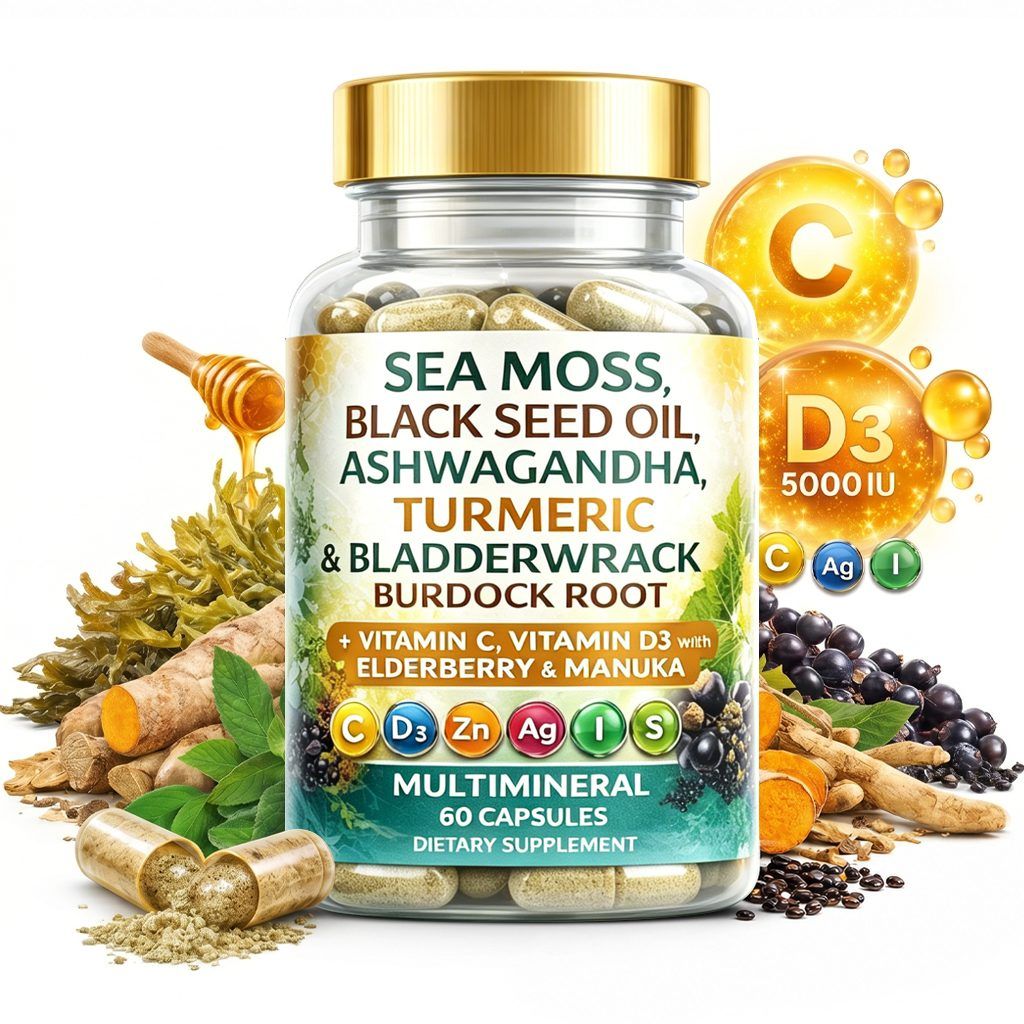
Format choice is a capacity decision before it is a marketing decision. Two size-0 vegetable capsules carry roughly 1.4 to 1.6 grams of powder, which covers a vitamin panel plus two or three small minerals but not a full calcium and magnesium claim. Two large tablets can carry twice that mass at the lowest unit cost, which is why value daily multis are almost always tablets. Gummies carry two to three grams per serving, most of which is the gel matrix itself, so the nutrient budget is the tightest of any format. Liquid multivitamins carry a moderate panel but need a preservative system and tight pH control, because a water-based multivitamin is a microbial growth medium first and a product second.
| Format | What one serving carries | Blend stability | Unit cost | Best fit |
|---|---|---|---|---|
| Two-piece capsules | A vitamin panel plus two or three small minerals, around 1.4-1.6 g across two size-0 units | Good, low moisture pickup | Mid | Adult formulas without heavy mineral claims; vegetarian positioning |
| Compressed tablets | The heaviest panel per serving, 2 g or more across two large units | Good with a film or enteric coat | Lowest | Value one-a-day multis and 120-count club formats |
| Chewable tablets | A moderate vitamin panel with taste as the binding constraint | Moderate, moisture sensitive | Mid | Children 4 and up and adults who avoid swallowing units |
| Gummies | The tightest nutrient budget, mostly gel or pectin matrix | Poorest for fat-soluble vitamins, vitamin C fades fastest | Highest | Taste-first shoppers and low-dose children's lines |
| Liquid | A moderate vitamin panel, minerals limited by taste and sediment | Needs preservative system and pH control | Highest | Swallow-averse users and absorption-led positioning |
The two live formulas on our site show the range. The men's multivitamin tablets carry a full vitamin panel including 25 mcg of vitamin D3 and 90 mg of vitamin C, plus eight minerals from calcium to molybdenum, in two tablets per serving across a 120-count, 60-serving bottle. The children's multivitamin chewables run a deliberately lighter panel of vitamins A, C, D3 and B12 in two chewables per serving for ages 4 and up, with the flavour and sweetener system customisable. Both are private label and OEM adaptable, from nutrient levels to bottle and label.
If the format is still open, compare the options in the dosage form selection guide before fixing the label, because the format decides the nutrient ceiling the label has to live inside.
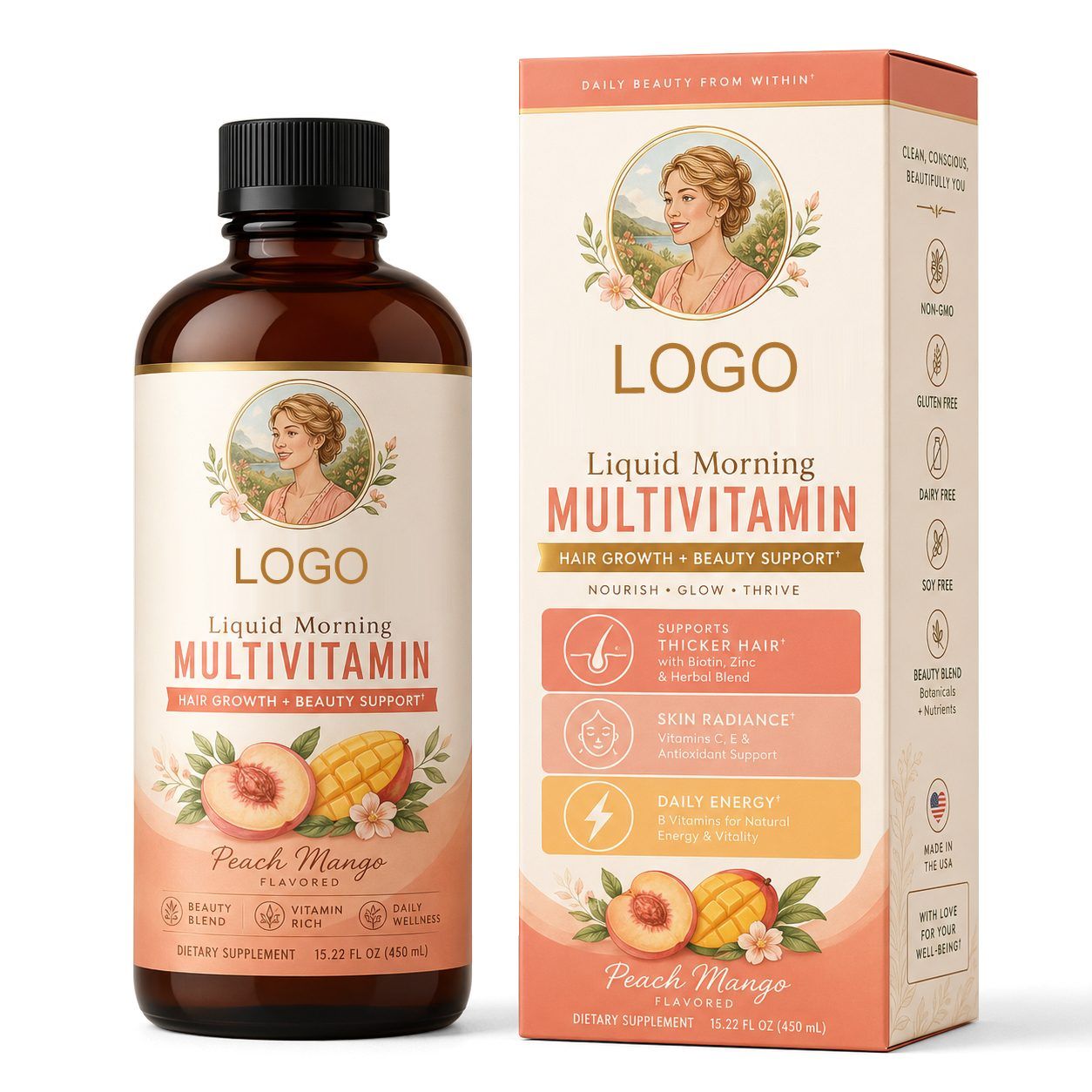
Gummy multivitamin matrices are cooked, water-based and slightly acidic, which is the worst environment for vitamins A, D, E, K and C. That is why many gummy multivitamins quietly omit vitamin K and run higher overages on everything else. If a buyer asks for a gummy multivitamin with the same panel as a tablet, the honest answer is a reformulated panel, not the same label in a cuter shape.
Where the money goes in a multivitamin quote
Raw material is the largest variable in a multivitamin quote, and inside that the multivitamin premix typically lands somewhere between 15 and 25 percent of the raw material cost for a full-panel adult formula, with the mineral salts doing most of the moving. Salt choice explains most of the spread: the oxide-and-carbonate version of the same label can cost a fraction of the citrate-and-glycinate version, and both are technically correct. The question to ask a manufacturer is not which is cheaper but which fits the digestion, tablet size and price point the brand is selling into.
There is also a sourcing question most buyers never see. A plant buying thirty single raw materials for one multivitamin SKU ties up minimum-order quantities it will not consume for years, because a 25 kg drum of a trace mineral outlives any single run. Established manufacturers buy vitamin and mineral premixes instead, and they keep the vitamin and mineral halves of that premix separate until the final blend, because trace metals catalyse the degradation of the vitamins they touch. Ask how the premix is handled and stored; the answer predicts how the label reads at month 20.
Compliance details buyers usually meet too late
Three labelling rules cover most multivitamin projects. First, the serving-count basis: in the United States, products for children 4 and older use the adult Daily Value table, so a children's multivitamin chewable for that age group is labelled against the same reference values as an adult formula, which surprises buyers who assumed a separate standard. Second, structure-function wording: supports, maintains and helps are the permitted register, and disease claims are not. Third, the European Union only permits vitamin and mineral forms from its regulated list under the food supplement framework, and each member state adds its own notification step, so an EU-bound label is a different document from the US version, not a translation of it.
Our regulations guide walks through FDA, cGMP and HALAL documentation in depth, and our team reviews label wording against the target market before printing as part of every multivitamin project.
A pre-production checklist for a private label multivitamin
- Fix the serving count first, because one serving versus two changes the container, the cost and the compliance review.
- Choose mineral salts against tablet mass and target price together, not against a raw-material price list.
- Ask for the multivitamin overage schedule in writing, with the stability protocol that justifies each number.
- Decide the iron policy early, because 30 mg or more per serving forces unit-dose blister packaging in the United States.
- Confirm the Daily Value basis for any children's multivitamin, and keep age labelling consistent with the reference table used.
- Specify the B12 form and expect its overage to be higher than the rest of the B complex.
- Keep vitamin and mineral premixes separate until the final blend and ask how each is stored.
- Set water-activity and moisture limits for chewables and gummies, where texture failures start.
- Plan two label texts from the start if the range sells in both the United States and the European Union.
- Taste the multivitamin sample at week one and again at week eight, because B vitamins announce themselves in a chewable long before the panel moves.
MOQ, lead times and starting the first run
Multivitamin projects on an existing formula start at around 500 units, and a custom formula typically starts near 1,000 units once the premix and tooling are specific to the brand. Samples take 7-10 days after the formula is confirmed and production runs about 15 working days, with DDP delivery into our United States warehouse for North American launches. Recent inquiries regularly ask us to quote multi-active combinations that pair oil-soluble vitamins with minerals in one serving, and the questions are always the same: MOQ per SKU, pricing at 1,000 and 3,000 units, lead time and sample availability. Send those four numbers and a quotation comes back with them.
A private label multivitamin is a category where the specification is the product. The overage schedule, the mineral salts and the serving count are decided months before the packaging photography, and they are the reasons one bottle repurchases while an identical-looking one drifts under claim. Bring the market, the price point and the claim, and the arithmetic follows.
Planning a private label multivitamin?
Send the multivitamin nutrient panel, the target markets and the preferred format. We will confirm what fits one serving, what the label can say in each market, and what the first run costs, with quotations returned within 24 hours.
Multivitamin essentials for brand owners
- The label promise runs to the end of shelf life, so overages are compliance tools, not padding.
- Mineral salt selection decides the serving count, and the serving count decides the container cost.
- Calcium and iron compete for absorption at high doses; zinc long-term needs copper back in the panel.
- 30 mg or more of iron per serving means unit-dose blister packaging under United States labelling rules.
- Gummy multivitamins carry the tightest nutrient budget and the weakest fat-soluble vitamin stability.
- Existing-formula multivitamins start at about 500 units, samples in 7-10 days, production in about 15 working days.
Sources
- US Food and Drug Administration - Dietary Supplements
- eCFR - 21 CFR 101.17, Warning statements on iron-containing supplements
- eCFR - 21 CFR 101.9, Nutrition labeling of food; Daily Values
- European Commission - Food supplements directive 2002/46/EC
- NIH Office of Dietary Supplements - Multivitamin/mineral supplements fact sheet
Key takeaways
- The label promise runs to the end of shelf life, so overages are compliance tools, not padding.
- Mineral salt selection decides the serving count, and the serving count decides the container cost.
- Calcium and iron compete for absorption at high doses; zinc long-term needs copper back in the panel.
- 30 mg or more of iron per serving means unit-dose blister packaging under United States labelling rules.
- Gummy multivitamins carry the tightest nutrient budget and the weakest fat-soluble vitamin stability.
- Existing-formula multivitamins start at about 500 units, samples in 7-10 days, production in about 15 working days.
Frequently asked questions
Can you manufacture a private label multivitamin to our own nutrient levels?
Yes. Send the nutrient panel per serving, the target markets and the preferred format, and we come back with a formula proposal that states which salt forms fit the dose, what fits one serving and what the label can say in each market. Stock formulas such as the men's tablet and the children's chewable can also be adjusted for nutrient levels, flavour and packaging, and quotations are returned within 24 hours.
What is the minimum order quantity for a multivitamin?
Around 500 units for an existing formula with your label, and typically 1,000 units for a custom formula, because the vitamin and mineral premix and any custom tooling are specific to your brand. Samples take 7-10 days after formula confirmation, bulk production runs about 15 working days, and North American orders can be delivered DDP through our United States warehouse.
Can you make a gummy multivitamin with the same panel as a tablet?
Not with the same numbers, and any manufacturer who promises otherwise is guessing. The gummy matrix is cooked and water-based, so fat-soluble vitamins A, D, E and K lose stability and vitamin C fades fastest, while the gel itself limits how much mineral fits per serving. We reformulate the panel to what a gummy can genuinely carry and hold for its shelf life, which usually means a lighter panel with adjusted overages.
How do you keep label claims true to the end of the shelf life?
The formula is built with overages sized for a 24-month dating period, then verified in a stability programme: accelerated storage at 40 degrees Celsius and 75 percent relative humidity for six months, plus real-time pulls across the dating. Finished batches are released against a certificate of analysis per lot, so the nutrient assay on your batch is documented, not assumed. If a pull shows drift, the overage schedule is revised before the next production run.
Can you produce sugar-free chewables for a children's multivitamin?
Yes. The chewable platform supports sugar-free sweetener systems, custom flavours, shapes and colours, and the children's formula on site carries vitamins A, C, D3 and B12 for ages 4 and up. Two things are fixed in advance: the label uses the Daily Value table for children 4 and older, and claim wording stays in the structure-function register, because children's products attract more scrutiny than adult lines, not less.
Do you review our label and claims before printing?
Yes, label review is part of every multivitamin project. We check the serving declaration against the reference values for the target market, keep structure-function wording inside permitted language, and flag market-specific rules such as the iron packaging requirement at 30 mg or more per serving in the United States and the permitted vitamin and mineral forms list in the European Union. Two label versions are planned from the start when the range sells into both markets.
Have a project in mind? We'll come back with MOQ, formula options and lead time within 24 hours.
Request a Quote