Why cleanse and detox leads the US functional category list
The commercial case for private label detox supplements is unusually simple. In a public ranking of the top 100 supplement listings on TikTok Shop United States in September 2026, weight management, metabolic and gut management products accounted for 30.9 percent of units sold. That is the largest functional group in the ranking, ahead of magnesium and sleep at 22.5 percent and sports nutrition at 17.9 percent, with every other category below 6 percent. The ranking is a public marketplace snapshot rather than internal sales data, and it groups listings broadly, so read it as the direction of demand rather than a market share. The direction is not subtle: cleanse, colon and gut products are a mainstream shelf category now, not a niche line.
The complication is that this category carries more regulatory risk per dollar of revenue than almost any other. Detox is not a recognised nutrient function, so there is no authorised claim to lean on, and regulators on both sides of the Atlantic have acted against cleanse products that promise to eliminate toxins, flush fat or treat constipation. A brand that treats the label with the same rigour as the formula can build a durable line here. A brand that copies the loudest competitor usually loses the marketplace listing, not just the argument.
| Format | Active load per serving | Detox concepts it suits | Manufacturing notes |
|---|---|---|---|
| Capsules | 400-1,600 mg across one to three capsules | Colon cleanse, liver support, seven-day kits | Two-piece shells hold standardised botanical extracts well; a stimulant laxative blend is easy to dose but hard to word on the label |
| Powders | 4,000-15,000 mg per scoop | Fibre colon cleanse, greens blends, 30-day programmes | The only format that carries a clinical dose of psyllium; the flavour and anti-caking system decides repeat purchase |
| Gummies | 600-1,200 mg per serving | Apple cider vinegar, beetroot, everyday positioning | The dose ceiling rules out real fibre; a pectin base suits acidic fruit concentrates without gelatin |
| Oral drops and liquids | 1,000-3,000 mg per 15-30 mL | Chlorophyll, aloe, low-dose herbal tonics | Preservative system and pH window must be validated for a water-based botanical |
| Tablets | 700-1,500 mg per serving | Greens tablets, herbal blends, 90-count bottles | Lowest unit cost at high counts, but compression pressure changes how fast a fibrous blend disintegrates |
The 30.9 percent figure matters for a second reason. It means the expensive part of a launch, creating category awareness, has already been paid for by someone else. What has not been paid for is differentiation. Most detox listings are assembled from the same four or five ingredients and decorated with fruit photography, so the products that hold their position are the ones with a better second-order rate. That is a manufacturing outcome before it is a marketing one: dose accuracy, taste, and whether the pack count matches the rhythm the consumer actually follows.
The ingredients that carry most detox formulas
Almost every detox product on the shelf is built from a small ingredient set. The table below lists what we see most often in a detox launch, the doses that appear in finished products, and the constraint that decides whether an ingredient can go into your chosen format at all. A working detox formula rarely uses more than six of them.
| Ingredient | Typical dose per serving | How the label can describe it | Formulation constraint |
|---|---|---|---|
| Psyllium husk | 3-6 g | Fibre contributes to digestive regularity and supports gut flora | Viscous and hygroscopic; needs five to six size 0 capsules for a real dose, so powders dominate |
| Senna leaf extract | 15-30 mg sennosides | Supports bowel regularity during a short programme | A stimulant laxative, not a fibre; standardise to sennosides or batch strength will drift |
| Cascara sagrada | 100-300 mg | A traditional botanical used in herbal detox blends | Withdrawn from the US over-the-counter laxative monograph in 2002; still sold as a supplement, so documentation matters |
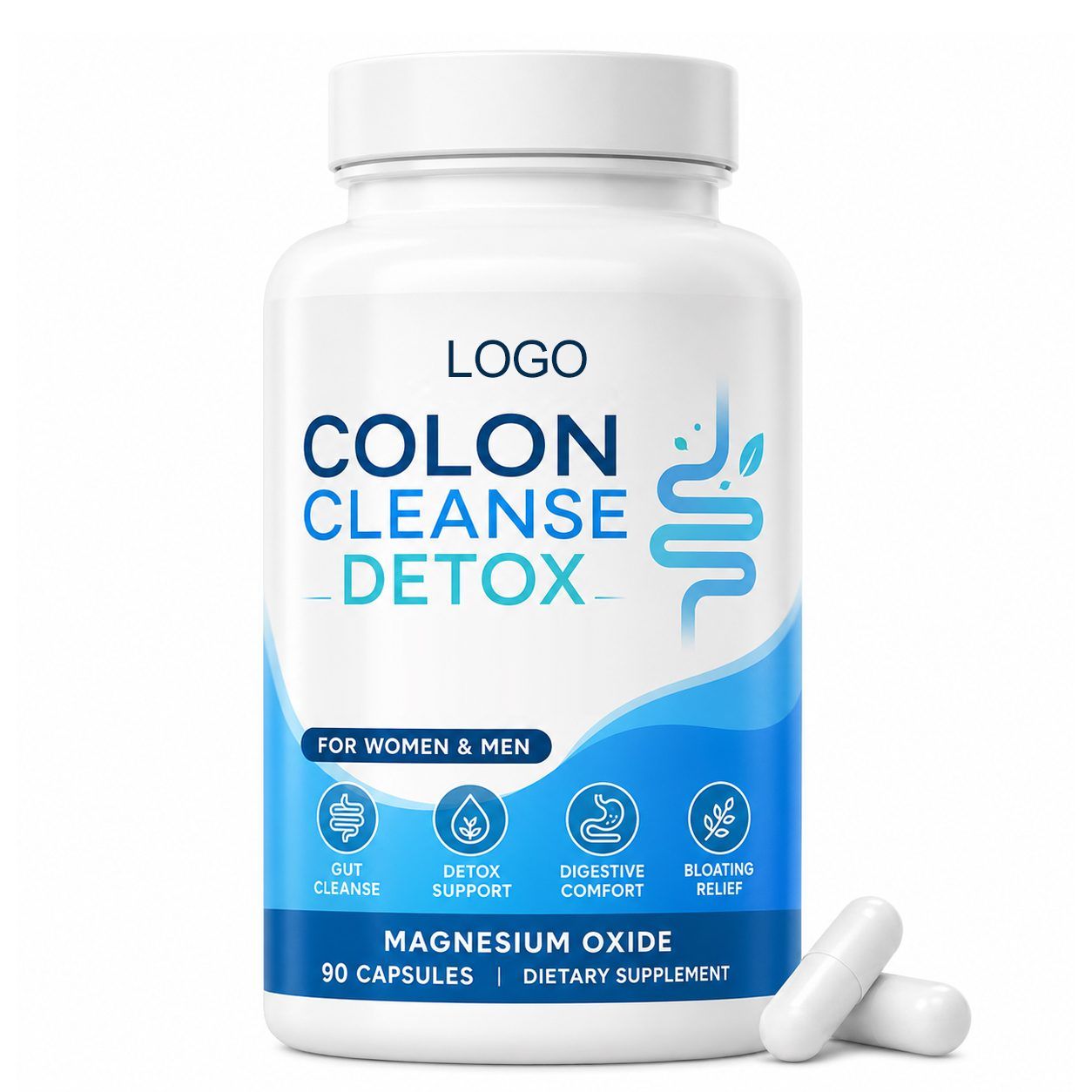
| Magnesium oxide | 300-500 mg elemental | Supports normal bowel function and muscle function | Deliberately poorly absorbed in this context; cheap and compact, which is why it anchors capsule SKUs |
| Apple cider vinegar powder | 500-1,000 mg | Contributes to a daily wellness routine | Acidic; a low pH accelerates degradation of other actives in the same blend |
| Milk thistle extract | 150-500 mg standardised to 70-80 percent silymarin | Supports liver health | Fits only a capsule, tablet or softgel; silymarin is not water soluble |
| Aloe vera extract | 50-200 mg | A traditional botanical for digestive comfort | Anthraquinone content must be controlled and documented, not assumed |
| Chlorophyll | 1,000-1,500 mg per 2 mL | Antioxidant support in a liquid format | Light sensitive; amber glass and a mint mask are standard |
| Probiotic blend | 1-10 billion CFU | Supports gut flora balance | Needs a water activity budget under 0.2 in powders and a CFU overage at end of shelf life |
| Greens blend | 2-4 g | Daily greens and nutrition support | Strong taste and colour; a 4 g blend will dominate a 14 oz tub |
Two points here come from running these formulas rather than reading about them. First, cascara sagrada is the ingredient buyers most often assume is prohibited. It is not banned as a dietary supplement ingredient in the United States, but it was withdrawn from the over-the-counter laxative monograph in 2002 because the safety evidence was judged inadequate for that use. If your detox blend contains it, expect documentation requests from any serious retailer before that ingredient appears on a retail detox label, and be ready to state your position in writing. Second, senna is a stimulant laxative, not a fibre. A seven-day detox kit that pairs 30 mg of sennosides with 3 g of psyllium is doing two very different things at once, and the authorised wording for each is different.
Format choice sets the dose ceiling, and most briefs get it backwards
The most common structural mistake in private label detox supplements is choosing a format first and then trying to squeeze a clinical dose into it. Fibre is the clearest illustration. Psyllium is used at 3-6 g per serving, and a size 0 capsule holds roughly 400-500 mg of milled husk, so a label-accurate 5 g dose needs eleven capsules a day. Nobody buys that. For a fibre-first detox, the realistic options are a powder, where 5 g is one scoop, or a reformulation around magnesium oxide and senna, which is a different product with different claim language and a different repeat-purchase pattern.
| Format and count | Powder fill per serving | Psyllium equivalent | What that means for the formula |
|---|---|---|---|
| 1 hard capsule | 400-500 mg | About 0.4 g of husk | Too small for fibre; suits magnesium oxide, senna extract or milk thistle |
| 3 hard capsules | 1.2-1.5 g | About 1.4 g | Enough for standardised botanicals, enzymes and a probiotic blend |
| 2 pectin gummies | 600-1,200 mg | Not achievable | Fibre breaks gummy texture; use this format for apple cider vinegar or beetroot instead |
| 1 scoop of powder | 4-7 g, up to 15 g for a fibre-first SKU | 5 g and above | The only format that reaches a fibre dose in normal use, and the cheapest per active gram |
| 15-30 mL of liquid | 1-3 g dissolved or suspended | Not practical | Suits chlorophyll, aloe and low-dose herbal extracts rather than bulk fibre |
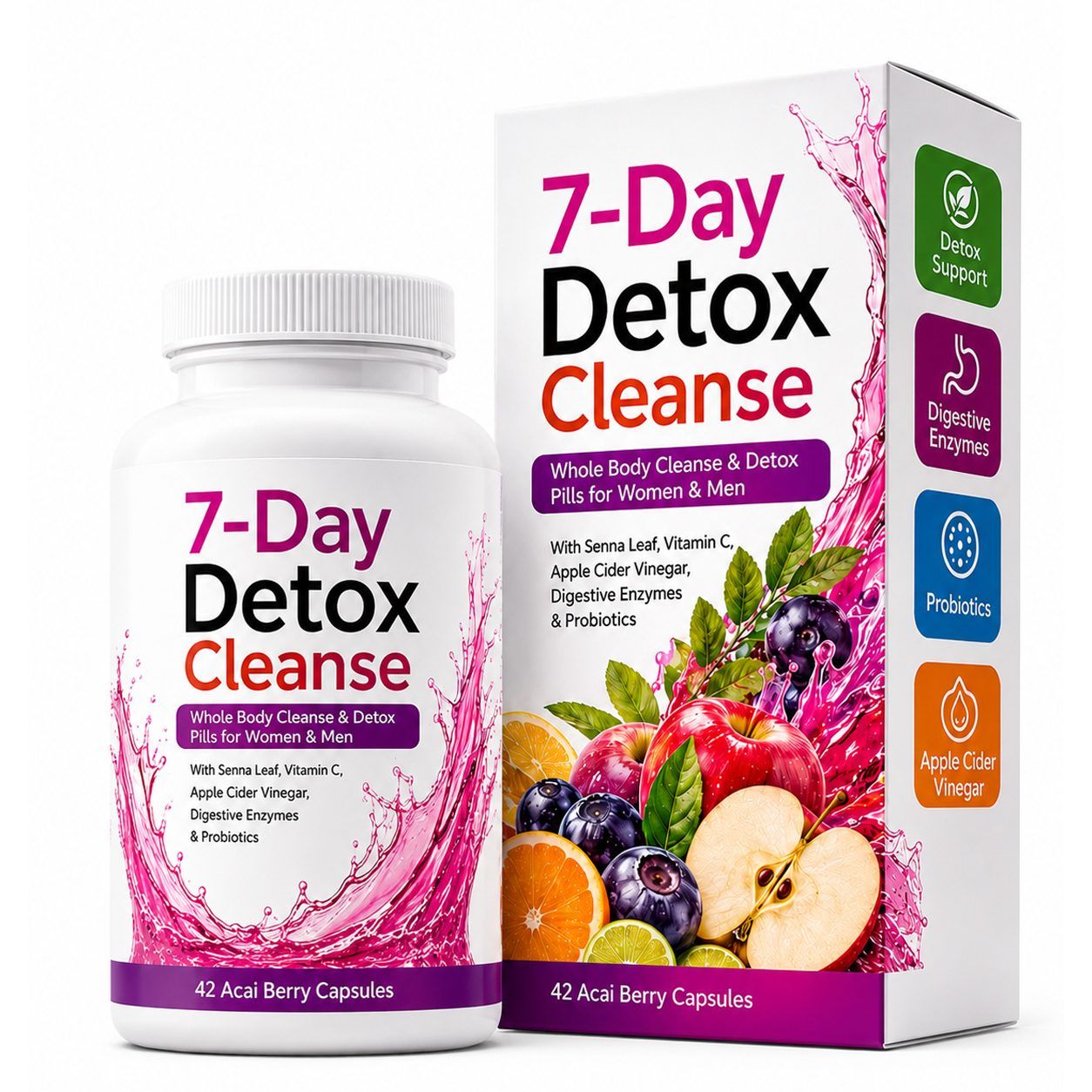
A second trap is the programme itself. Detox products sell as programmes: a seven-day kit, a 14-day kit, a 30-day bottle. Programme arithmetic is where cost and compliance collide. A seven-day detox kit at six capsules a day is 42 capsules, which is exactly the count on the reference product shown above. The same dose spread over 30 days needs 180 capsules, which triples freight weight and first-batch cost without changing a single milligram of active. Settle the programme before you specify the count, because count is the largest single driver of unit cost in a detox kit or bottle.
What a detox label can and cannot say
Claim discipline is the part of a detox project that brands under-resource. The word detox implies an outcome, the removal of something harmful, and no ingredient can substantiate that outcome. That is why enforcement notices in this category tend to target wording rather than safety. The workable approach is to name the mechanism instead of the outcome: fibre contributes to digestive regularity, magnesium supports normal bowel function, milk thistle is a standardised botanical with a long history of use. Each of those statements can be defended with a document. None of them promises a detox.
| Product concept | Usable United States wording | European Union position | Wording that invites enforcement |
|---|---|---|---|
| Colon cleanse | Supports digestive regularity and normal bowel function | No authorised claim for most botanicals; fibre claims exist only for defined fibre types at defined intakes | Flushes toxins, removes impacted waste, treats constipation |
| Liver support | Supports liver health | No authorised claim for milk thistle or silymarin; describe the botanical role only | Repairs the liver, reverses fatty liver, detoxifies alcohol |
| Weight and metabolism | Supports a weight management routine | Very few authorised claims; meal replacement wording applies only under specific conditions | Burns fat, blocks carbohydrates, guarantees weight loss |
| Gut flora | Supports gut flora balance | A specific strain claim needs a strain-specific dossier | Eliminates harmful bacteria, cures dysbiosis |
| Antioxidant | Antioxidant support | Vitamin and mineral antioxidant claims are listed; botanical ones are not | Neutralises all free radicals, anti-aging guarantee |
The document set behind those statements is the same one that supports any supplement launch in the United States, the European Union or a Halal market, and we break it down in our guide to FDA, cGMP and Halal requirements.
For every detox claim on the pack, hold one document that supports it: the ingredient specification, the assay method, the dose rationale and the market position paper. When a retailer or a marketplace asks for substantiation, the brand that answers within 24 hours keeps the listing. Unsupported claims on a detox label are the fastest route from a healthy margin to a removed product page.
Three formulation problems that show up on every detox project
Fibre powders are hygroscopic and they clog filling lines
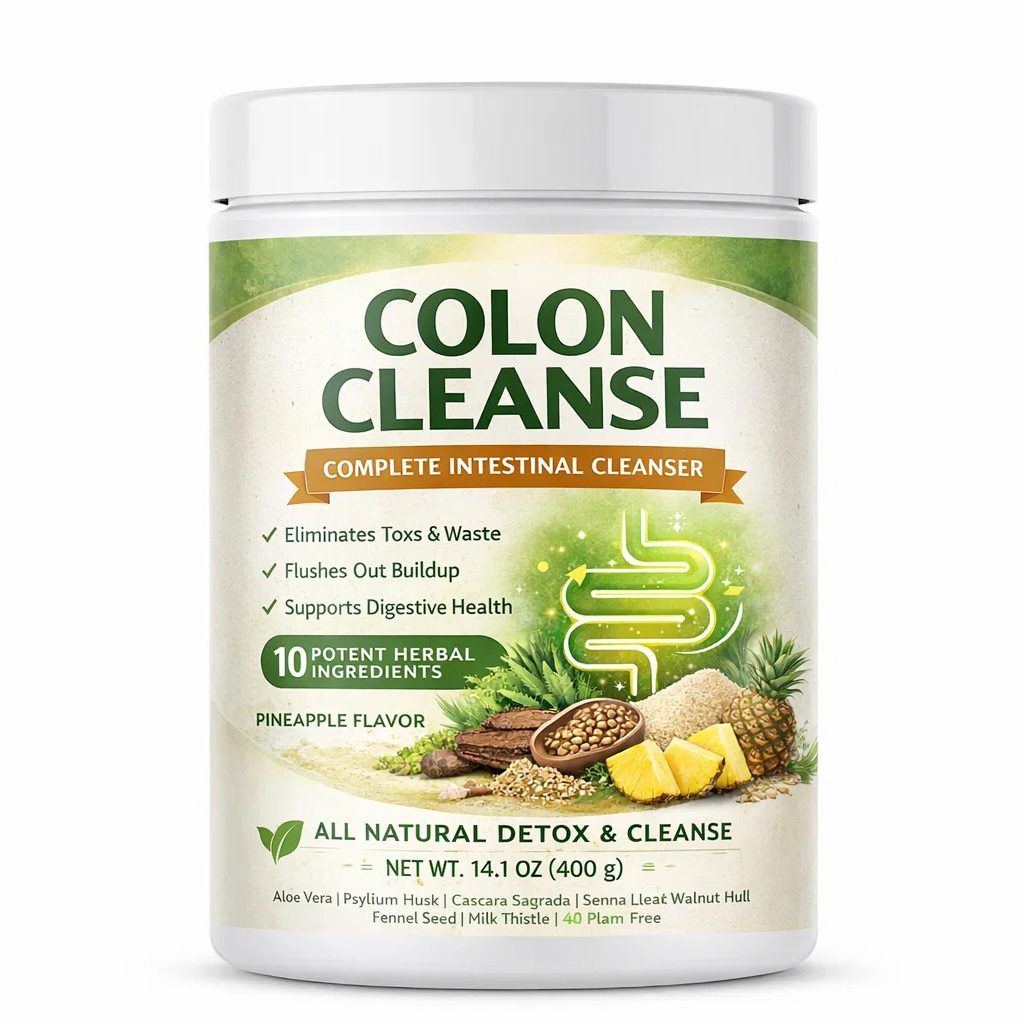
Psyllium husk absorbs several times its own weight in water, which is the mechanism that makes it work and also the reason it is difficult to run. In an open hopper it takes up atmospheric moisture within minutes, which changes scoop weight and can bridge the dosing auger. Production targets a water activity below 0.2 and seals the pack shortly after filling, with a desiccant where the format allows it. A 14 oz tub with a foil induction seal holds that specification far better than a resealable pouch with a wide opening, which is why the two are not interchangeable in a detox range at the same price.
Botanical powders carry a microbial load that has to be specified, not assumed
Psyllium and other milled botanicals have a documented history of Salmonella contamination and product recalls, so the release specification matters more here than in most categories. A workable incoming specification covers total plate count, yeast and mould, absence of Salmonella and E. coli, and heavy metals including lead, cadmium and arsenic. Where a lot fails, the decision to steam-treat, irradiate or reject is a commercial one that has to be taken before a detox batch is scheduled. Retesting a failed lot after the formula is locked is how launches slip by a month.
Taste is a formulation decision, not a marketing one
A 14 oz tub of detox powder at 5 g per scoop is a great deal of material to make drinkable. Psyllium is bland and faintly earthy, magnesium oxide is chalky, and senna extract is bitter in a way that carries through most sweeteners. The system that works in a detox powder is usually a fibre-appropriate acid, a flavour that reads as fruit rather than medicine, and a sweetener chosen for how it performs at low pH rather than how it looks on the label. The sweetener and acid pair is often a larger cost line than the actives in a greens-based detox powder, and it is the single best predictor of whether a consumer finishes the tub.
MOQ, lead time and what the first batch costs
First-batch economics for private label detox supplements are driven by count and packaging rather than by the actives. Magnesium oxide, psyllium and senna are inexpensive raw materials; the bottle, the tub and the number of servings inside them are not. That is why two detox formulas with nearly identical actives can differ by a factor of two in landed cost.
The sequence from brief to pallet is similar across formats. Sampling runs 7-10 days from formula confirmation, bulk production runs 15-25 working days depending on format and packaging, and ocean freight adds 18-25 days to North America. Our MOQ and lead time guide covers the full timeline and the documents needed at each stage.
| Format | Typical MOQ | Sample lead time | Bulk production | Why the range moves |
|---|---|---|---|---|
| Detox capsules | 1,000-3,000 units | 7-10 days | About 15 working days | Shell type and fill weight are the only real variables |
| Cleanse powders | 1,000-2,000 units | 7-10 days | 15-20 working days | A 14 oz tub costs less per unit than 30 stick packs of the same blend |
| Detox gummies | 3,000-5,000 units | 7-10 days | 15-25 working days | A custom shape, colour or sugar-free base raises tooling cost and minimum run length |
| Detox drops and liquids | 2,000-3,000 units | 7-10 days | 15-25 working days | Bottle, dropper assembly and fill overage dominate unit cost |
One number surprises brands new to the category. A 180-count bottle and a 42-count kit can deliver the same daily dose, but the 180-count version costs noticeably more to ship per unit sold, because you are moving four times the glass and closure weight. Short programmes exist for margin reasons as much as marketing reasons, and freight arithmetic is part of why they keep coming back.
A private label detox supplement launch checklist
Most delays on detox projects trace back to decisions left open in the brief. This checklist follows the points that have cost real launches time at the sample stage.
- Choose the mechanism first: fibre regularity, bowel function, liver support or gut flora balance.
- Write the intended detox claim before the formula is fixed, and test it against the target market.
- Set the daily dose in absolute milligrams and work out how many units per day it requires.
- Check that dose against the real fill ceiling of the chosen format before committing to it.
- Decide the detox programme length: seven-day kit, 14-day kit or 30-day bottle.
- Match the pack count to the programme and to the freight weight you are willing to pay for.
- Specify water activity, microbial limits and heavy-metal limits for every botanical in the detox blend.
- Agree whether senna, cascara sagrada or any stimulant laxative is in the formula, and document why.
- Confirm the probiotic strain list and the end-of-shelf-life CFU overage if a probiotic is included.
- Request a certificate of analysis template and a release specification before the first sample.
- Plan for two label texts if the product will sell in the United States and in Europe.
- Ask for the artwork dieline early; a 14 oz tub and a stick pack need different label geometry.
Formats we already run for detox and gut brands
Yukang manufactures private label detox supplements and adjacent gut-health lines across seven dosage forms. For liver and botanical support, our milk thistle extract capsules carry 200 mg per capsule in a 120-count vegetarian bottle, while the milk thistle softgels deliver 500 mg of seed extract standardised to 80 percent silymarin per two-softgel serving, suspended in sunflower oil. For greens-based and fibre concepts, the spirulina powder runs at 3,000 mg per 3 g scoop in a 250 g pouch, and the daily greens powder combines a 4.45 g greens blend with 500 mg of probiotics in a 7 g serving.
At the lighter end of the category, the apple cider vinegar gummies carry 1,000 mg of apple cider vinegar plus 50 mg of organic beet root juice powder per two-gummy serving in a pectin base, the super greens gummies combine spirulina, chlorella and spinach in the same format, and the liquid chlorophyll drops deliver 1,500 mg per 2 mL from a 60 mL amber dropper bottle. Turmeric and its curcuminoids round out the herbal side of the line, and we cover that ingredient in more detail on our powder specification guide.
If the format is still open, start with powders for any fibre-first concept and hard capsules for standardised botanical extracts. Concentrated formulas that need to stay small belong in oral drops, and trial-friendly, low-dose detox concepts work best in gummies.
Planning private label detox supplements?
Send the ingredient list, the target dose, the format and the markets you are selling into. We will confirm which dosage form fits your detox formula, what the label can say in each market, and what the first batch will cost, with quotations returned within 24 hours.
Private label detox supplement essentials
- Cleanse and gut management was the largest functional category in a public ranking of US supplement listings, at 30.9 percent of units sold, ahead of magnesium and sleep at 22.5 percent.
- Detox is not an authorised nutrient function, so a detox label has to name the mechanism instead of the outcome.
- Format sets the dose ceiling: 5 g of psyllium needs eleven size 0 capsules, so fibre-first products belong in a powder.
- Programme length and pack count are the largest drivers of unit cost in a detox line, and a 180-count bottle weighs four times a 42-count kit.
- Psyllium hygroscopicity, botanical microbial limits and pH-driven taste problems are the three formulation issues that decide whether a detox powder gets finished.
- First-batch MOQ ranges from 1,000 units for capsules and powders to 3,000-5,000 for gummies, with samples in 7-10 days and production in 15-25 working days.
Sources
- US Food and Drug Administration - Dietary Supplements
- eCFR - 21 CFR Part 111, Current Good Manufacturing Practice for Dietary Supplements
- European Commission - EU Register of authorised nutrition and health claims
- European Food Safety Authority - Health claims
- European Food Safety Authority - Dietary reference values
- PubMed - peer-reviewed literature on psyllium fibre and bowel function
Key takeaways
- Cleanse and gut management was the largest functional category in a public ranking of US supplement listings, at 30.9 percent of units sold, ahead of magnesium and sleep at 22.5 percent.
- Detox is not an authorised nutrient function, so a detox label has to name the mechanism instead of the outcome.
- Format sets the dose ceiling: 5 g of psyllium needs eleven size 0 capsules, so fibre-first products belong in a powder.
- Programme length and pack count are the largest drivers of unit cost in a detox line, and a 180-count bottle weighs four times a 42-count kit.
- Psyllium hygroscopicity, botanical microbial limits and pH-driven taste problems are the three formulation issues that decide whether a detox powder gets finished.
- First-batch MOQ ranges from 1,000 units for capsules and powders to 3,000-5,000 for gummies, with samples in 7-10 days and production in 15-25 working days.
Frequently asked questions
Can you manufacture a private label detox supplement with my own formula?
Yes. Send the ingredient list, the dose per serving and the intended markets, and we will confirm which dosage form fits the dose, flag any ingredient that needs extra documentation, and quote both stock and custom formula options. A custom cleanse formula starts from a brief rather than a catalogue, so the first output is a formula proposal and a dosage-form recommendation, usually within 48 hours.
What is the minimum order quantity for private label detox supplements?
Capsules and powders typically start at 1,000 units, drops and liquids at 2,000-3,000 units because of bottle and dropper assembly cost, and gummies at 3,000-5,000 units when a custom shape, colour or sugar-free base is involved. Samples usually take 7-10 days and bulk production 15-25 working days, depending on format and packaging.
Is senna or cascara sagrada allowed in a supplement?
Both appear in dietary supplements sold in the United States. Cascara sagrada was withdrawn from the over-the-counter laxative monograph in 2002 because the safety evidence was judged inadequate for that specific use, but it was not prohibited as a dietary supplement ingredient. Senna is a stimulant laxative and should be standardised to a sennosides content so that dose is repeatable. Expect any serious retailer to ask for your position in writing.
Which dosage form works best for a colon cleanse product?
It depends on whether fibre is the mechanism. A 5 g psyllium dose needs eleven size 0 capsules, so a fibre-first colon cleanse has to be a powder or a stick pack. If the concept is built on magnesium oxide, senna extract or standardised botanicals instead, a two-piece capsule carries the dose comfortably. Choosing the format before the mechanism is the most common reason a cleanse project stalls at the sample stage.
What can I legally claim on a detox supplement label?
In the United States you can use structure or function wording with the DSHEA disclaimer, so supports digestive regularity and supports normal bowel function are usable, while flushes toxins or treats constipation are disease claims and are not. In the European Union the position is stricter, and most botanical cleanse ingredients have no authorised claim at all. Name the mechanism, not the outcome, and keep one supporting document per claim.
How long does it take to produce a private label cleanse product?
Plan for 7-10 days for samples after the formula is confirmed, then roughly 15 working days for capsules and powders or up to 25 working days for gummies, coated tablets and filled liquids. Ocean freight adds 18-25 days to North America. The variable that most often extends the timeline is a botanical lot that fails its microbial or heavy-metal specification and has to be re-sourced.
Have a project in mind? We'll come back with MOQ, formula options and lead time within 24 hours.
Request a Quote