Why brand owners ask this question too late
The question usually lands after the sample has been approved and the deposit is being discussed: if I pay for this, do I own the formula? By then the answer has already been written into three documents, and none of them is the one the brand read most carefully. The sample proves the product works. It says nothing about who is allowed to make the formula.
Supplement formula ownership is decided by the development agreement and the supply agreement attached to it, not by the sample, the invoice or the handshake. Paying for development buys a service, and in most jurisdictions the party that creates a work owns it until that ownership is assigned in writing. That one sentence explains how a brand can spend five figures developing a formula and still be unable to stop the factory from filling it into another customer's pouch.
This guide is for brand owners who are about to commission something custom and want the ownership question settled before the purchase order rather than after the first lookalike appears. It walks through the three development routes, which parts of a formula are genuinely protectable and which are commodity, the five documents that decide the answer, what exclusivity really costs, and the transfer package to negotiate while everyone is still friendly.
Two earlier guides frame the decision on formula ownership: private label versus custom at ingredient level explains what you are actually buying in each route, and brief, samples and spec freeze shows where the paperwork belongs in the calendar.
Three routes to a formula, and only one of them is automatic
Every project falls into one of three routes, and the route sets the default answer before a single clause is negotiated. The first is a stock or catalogue formula: the factory already runs it, has validated it, holds the stability data and sells it to anyone who meets the minimum. In that route the factory owns the formula and you are buying a licence to put your label on it. This is private label in its strict sense, and it is the fastest route to market for a reason.
The second route is a custom formula the brand commissions and pays for. Here the default is far less generous than most buyers assume. Development work produces intellectual property, and unless the development agreement assigns that property to the brand, it stays with whoever created it. A payment for services is not a transfer of rights. If the agreement is silent on assignment, expect a dispute rather than a handshake.
The third route produces the worst outcomes: a jointly developed formula, where the factory's existing base is modified at the brand's request. Two parties have contributed, and the result is a shared asset that neither can cleanly license or move. The fix is boring but decisive, and it costs one paragraph in the agreement. Name the background intellectual property each party brings, name the foreground intellectual property the project creates, and assign the foreground property to one named owner.
| Route | Who pays development | Default owner of the formula | What the brand can actually protect |
|---|---|---|---|
| Stock catalogue formula | Nobody, it already exists | The manufacturer | Brand name, trade dress, artwork; optionally a bought exclusivity |
| Custom formula, brand funded | The brand, as a fee or in unit price | Whoever the agreement names; usually the manufacturer if silent | Everything, if the agreement assigns it in writing |
| Custom formula, factory funded | The manufacturer, recovered in unit price | The manufacturer | Brand name and artwork only |
| Jointly developed formula | Shared | Shared, which in practice means contested | Whatever the agreement carves out, usually the flavour system and the claims |
| Brand supplies its own specification | The brand, often to an external formulator | The brand, if the factory accepts it in writing | The whole specification, plus the right to move it |
The row that surprises people is the third one. A factory that waives the development fee is not doing a favour; it is keeping the asset and recovering the cost in unit price over the next three orders. Waived development is the clearest market signal in this industry that you do not own the formula, and it is worth asking about directly.
What in a supplement formula is actually protectable
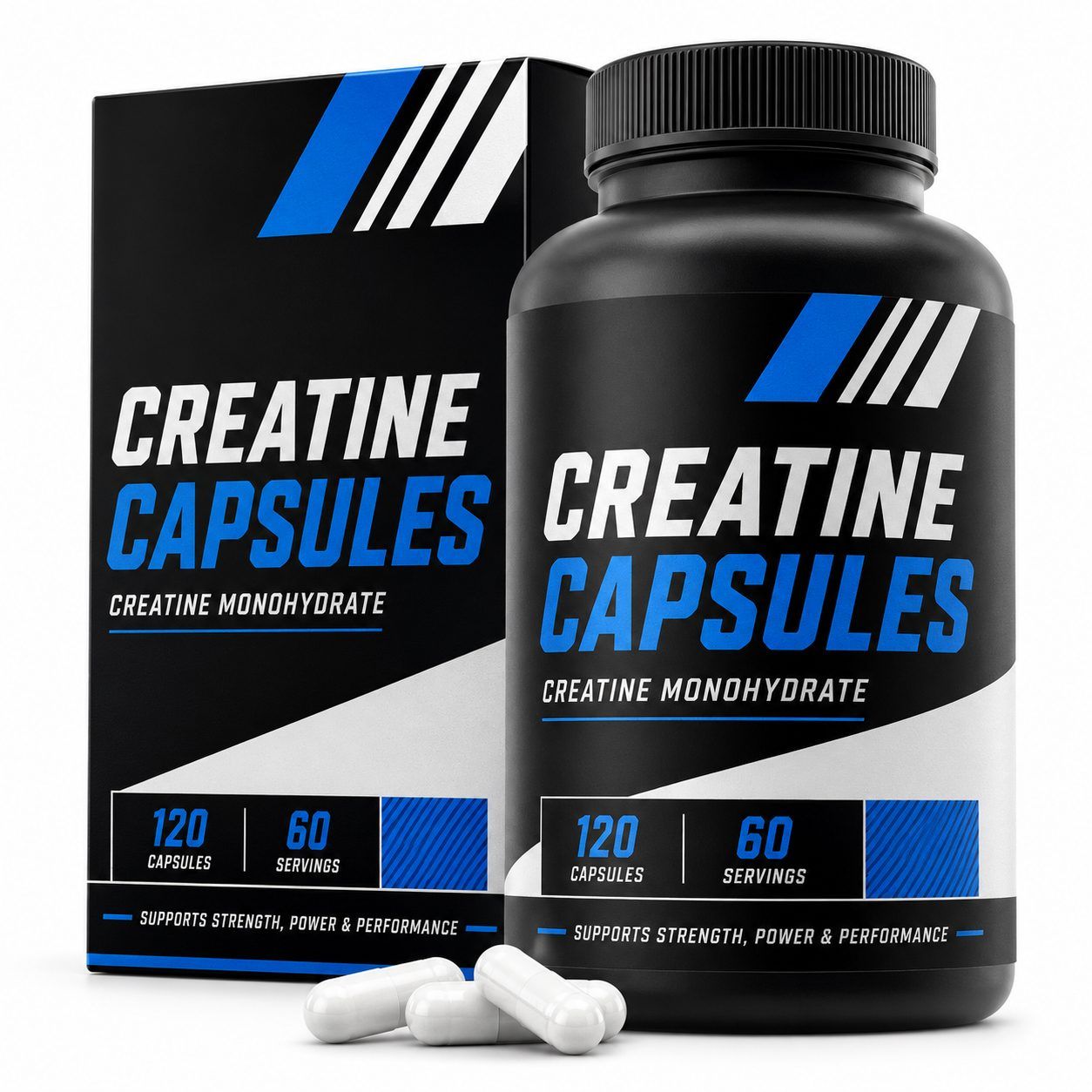
The uncomfortable answer is that most of it is not. A single-ingredient product is a commodity purchase with a label on it. Creatine monohydrate at five grams a serving is defined by a pharmacopeial monograph: the purity, the particle size and the loss on drying are all specified before anyone gets involved. Any competent factory can fill it, and exclusivity on such a product is a promise about behaviour rather than a property right. This is why supplement formula ownership matters far less on a commodity SKU than on a differentiated one.
What is protectable in a formula sits in four layers, and the top two are the ones worth negotiating hard. The first is the ingredient combination and the ratio in the formula, which is a trade secret for as long as it stays secret. The second is the specification detail behind the formula: the marker the extract is standardised to, the mesh the powder is milled to, the overage applied to a vitamin that degrades. The third is the flavour and masking system, which is the hardest layer for a competitor to reverse engineer and the one most supply agreements never mention. The fourth is the process itself.
- The ratio: a twelve-ingredient formula at a specific ratio is a recipe, and a recipe is a trade secret while you keep it secret.
- The specification: the marker compound, the mesh size and the overage are what make two formulas with the same ingredient list behave differently.
- The flavour system: masking a bitter botanical or a sulphur note is real bench work, and it is the layer a competitor cannot read off a label.
- The process: blend time and compression force change hardness, dissolution and fill weight for an identical ingredient list.
- The claims and the artwork: not part of the formula at all, but the assets that buyers confuse with it most often.
The practical consequence is straightforward. If your product is a single commodity ingredient, spend the money on trademark, artwork and speed rather than on exclusivity clauses over the formula, because the clause would be protecting something nobody can own. If your product is a differentiated formula or a difficult flavour, spend it on the assignment language and on process controls, because that is where the value actually sits.
Patents versus trade secrets: the economics are not close
Brand owners occasionally ask whether the formula should be patented. For a dietary supplement it almost never should be. A patent application publishes at eighteen months, which hands the formula to every competitor in the market in exchange for protection that is expensive to obtain and harder to enforce than it looks. A US utility patent commonly runs five figures in filing and prosecution costs alone, and a supplement formula struggles to clear the novelty bar when dozens of similar products are already on the shelf.
The trade secret route is cheaper and, in this industry, stronger. A trade secret costs nothing to register, lasts for as long as the secrecy holds, and covers exactly the things a patent cannot: a masking system, a mill setting, a supplier-specific grade of raw material. The trade-off is absolute. The moment the formula is published, in a patent, in a public filing or in a marketing deck sent to a retailer, the protection ends. That is why the confidentiality clause is worth more than the patent budget.
Nothing kills a trade secret faster than a brand putting the full formula, with ratios, on a landing page, in a crowdfunding campaign or in a retailer pitch deck. The Supplement Facts panel is mandatory and lists amounts. The ratios between actives, the grade of each material and the masking system are not, and keeping those three off the internet is most of the protection available to you.
The five documents that decide supplement formula ownership
Five documents decide who owns the formula, and usually only two of them get signed. None is long, reading them takes an afternoon, and skipping them is the most expensive shortcut available in this industry.
| Document | The clause that decides it | The trap |
|---|---|---|
| Mutual non-disclosure agreement | Definition of confidential information and the survival period | A three-year survival on a formula you intend to sell for eight years |
| Development agreement | Assignment of foreground intellectual property to a named party | Silence on assignment, which leaves the creator as owner by default |
| Supply or manufacturing agreement | Ownership of the formula specification, and whether the factory may sell the same one to others | No exclusivity clause, but a minimum volume clause that binds you |
| Quality agreement | Change control, and who approves a supplier or process change | Unilateral change rights, so the formula drifts without your signature |
| Artwork and photography licence | Assignment or licence of label design and product photography | The factory owns the files and licenses the same photo set to your competitor |
The last row catches people who thought they had finished. A label design created by a factory employee belongs to that employee's employer unless it is assigned, and product photography belongs to whoever pressed the shutter. If your launch depends on a photo set you cannot prove a licence to, you are renting your own brand's shelf presence.
One clause deserves a paragraph of its own, because it decides whether the protection survives a bad year: change control. A formula that the factory can alter without your written approval is a formula you do not control, regardless of who owns it on paper. Require written approval for any change to an ingredient supplier, a specification limit or a process parameter, and require the factory to requote rather than silently substitute when a material becomes unavailable.
What exclusivity actually costs, and what breaks it
Exclusivity is not a favour and it is not free. It is a priced option on a factory's capacity, and the price is paid in one of three currencies: a premium on unit price, a committed annual volume, or a development fee paid up front. A factory that grants free exclusivity to anyone who asks has granted it to nobody, because it has no mechanism to enforce a promise made without consideration.
The chart is illustrative rather than a quotation, but the shape reflects how these deals are built. The narrower the scope, the cheaper it is, and the option with no volume floor is the most expensive because it moves all the risk onto the factory. What matters more than the number is the currency, because each one fails in a different way.
| Exclusivity type | Typical deal | What silently breaks it |
|---|---|---|
| Category exclusivity | Higher unit price or a development fee | A new SKU in a different format, which the factory argues is a different category |
| Territory exclusivity | Committed annual volume per market | Grey-market resale into your territory by another customer |
| Channel exclusivity | Volume commitment in one channel | The same formula sold through another channel under different labelling |
| Time-limited exclusivity | Twelve to twenty-four months, then open | A renewal clause nobody noticed lapsing |
| Volume-linked exclusivity | Minimum annual units, reviewed yearly | A shortfall year that resets the factory's obligation |
There is one exclusivity request that no serious factory will sign, and asking for it signals inexperience: perpetual, worldwide, all-channel exclusivity on a formula the factory developed, with no volume commitment attached. It is an open-ended transfer of an asset in exchange for nothing. The requests that get signed are the ones where the brand takes measurable risk in return, whether that is a committed annual volume, a paid development fee, or a tooling investment the factory could not otherwise recover.
How a factory keeps one brand's formula out of another's
A factory running four competing products in the same category owes a duty to all four, and the mechanism is less glamorous than a legal clause. It is internal process, and a brand can audit it in ten minutes by asking how the bill of materials is stored. A factory that emails an unmodified spreadsheet to whoever asks is telling you exactly how it treats every customer's formula.
- The bill of materials is issued with coded ingredient names, and the decoding key is held by one or two named people rather than by the whole sales team.
- Production sees a works order with weights and parameters, not a marketing specification with actives and ratios spelled out.
- Raw material purchasing is split, so that no single buyer can reconstruct a formula from purchase orders alone.
- Samples of competing formulations are stored separately, labelled by customer code rather than by product name.
- Line changeovers include a documented cleaning and clearance step, and that record is retained with the batch record.
- Photography and video on a line running a confidential formula is restricted, because a ten-second clip can reveal a pack format and a piece count.
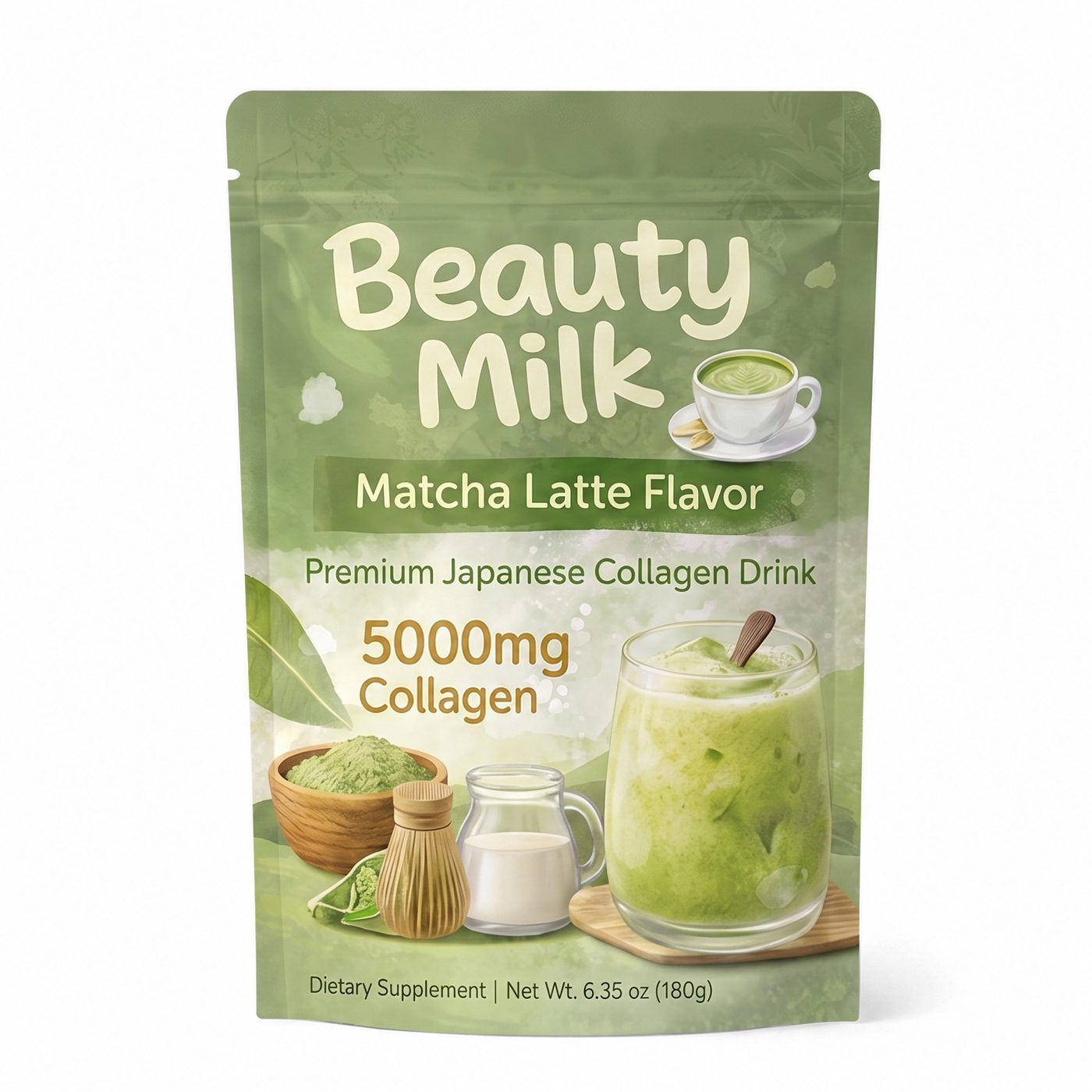
The flavour point deserves emphasis because it is the least protected layer in the industry. Six variants of the same collagen base formula look identical on a label: the same five thousand milligrams, the same vitamin C, the same servings per pouch. What differs is the masking system that makes a hydrolysed collagen palatable in water, and that system represents hundreds of hours of bench work no competitor can copy from a panel. If you funded it, it belongs in the assignment clause by name.
If the relationship ends: the transfer package to negotiate now
The moment to negotiate a second source for the formula is before the first order, when everyone is optimistic and the factory has every reason to agree. Once volumes are running, the leverage reverses. What follows is the package worth asking for, and it is the same package a new factory will ask you for, so building it early costs nothing and saves eight to fourteen weeks later.
- The full bill of materials with ingredient grades, not just names, including the specification each material has to meet.
- The manufacturing specification: target weights, tolerances, blend time, screen size, compression force or fill temperature as applicable.
- The approved finished product specification with test methods and limits, which is the document a new factory will be audited against.
- The flavour system reference, or a written commitment that the flavour house will supply the same compound to a named alternative.
- Tooling drawings for any custom tablet punch, mould or bottle, plus written confirmation of who paid for them and who may collect them.
- Artwork source files in an editable format rather than flattened print-ready files, plus a written assignment or perpetual licence.
- The stability protocol and any data already generated, because a new factory will not inherit the shelf life claim without it.
- One retained production sample per lot, or a written commitment that the factory will release samples to you on request.
- A named technical contact after the final invoice, with a response time written into the agreement rather than into an email.
- The right to audit how the formula is protected, or at minimum a written description of the controls in place.
The item that causes the most arguments is tooling. Custom tablet punches and gummy moulds cost real money, typically somewhere between one and four thousand US dollars per station set, and factories reasonably refuse to release tooling to a customer who still owes them money. The clean answer is to settle tooling ownership and collection rights in the development agreement, with the final invoice as the trigger, rather than discovering the disagreement on the day you want to move.
Trademark, artwork and photography are separate assets
A brand name is not part of the formula and is protected by an entirely different mechanism. Register the trademark in your own name in the markets you sell into, and do it before the first shipment rather than after the first distributor asks for proof. A factory that offers to register it for you should be refused: a trademark held by your supplier is a lever against you, and unwinding one costs far more than the registration ever did.
Trade dress, which covers the overall look of the pack, is the second layer and the one that actually deters copycats on a marketplace, because a platform will act on a look and feel complaint far faster than on a recipe dispute. The third layer is the label copyright and the photography licence. Both are works created by someone, both default to the creator, and both need a written assignment or a licence that permits commercial reuse.
The physical pack is where all three layers meet, which is why the packaging guide covers artwork ownership alongside structure and materials. For the formula itself, the creatine monohydrate program is the commodity end of the range and the multi collagen capsule program is the differentiated end, and the ownership question is different for each.
Ask who owns the formula before you pay for it
Send us the formula you want built and we will tell you which parts of it are protectable, which parts are commodity, what an exclusivity clause would cost on your volumes, and what transfer package we will sign before the first deposit.
How to settle supplement formula ownership before signing
- Supplement formula ownership is set by the development and supply agreements, not by who paid the invoice, and the creator owns it until it is assigned in writing.
- A waived development fee is the clearest signal that the factory intends to keep the formula and recover the cost in unit price.
- Only the ratio, the specification detail, the flavour system and the process are protectable; a single-ingredient formula has nothing to own.
- Trade secret beats patent for a supplement formula: it is free, it lasts as long as secrecy holds, and it covers the masking system a patent cannot.
- Exclusivity is bought with a unit price premium, a volume commitment or a development fee, and a promise in an email buys nothing.
- Negotiate the formula transfer package, tooling release and artwork licence while everyone is still friendly, not on the day you want to move.
Related reading: MOQ and lead times explains why a small first order weakens an exclusivity ask, quality control and batch release covers the change control clause in practice, and line extensions shows how one base formula becomes a range you can defend.
Where this leaves the negotiation
None of this is adversarial, and a factory that reacts badly to these questions is answering them. The questions are normal: who owns the formula we are about to develop, what happens to it if we stop buying, and what happens to it if you sell the same thing to our competitor. A capable partner has the answers in writing, because it has had this conversation before and built the paperwork for it.
The brands that get hurt are not the ones who asked too many questions. They are the ones who approved a sample, paid a deposit, and discovered eighteen months later that the formula they funded is now listed by a competitor with the same specification and a better price. Supplement formula ownership is one clause, it costs an afternoon to settle, and it is the difference between owning a product and renting one.
Key takeaways
- Supplement formula ownership is decided by the development and supply agreements, not by the invoice; the creator owns the work until it is assigned in writing.
- A waived development fee means the factory keeps the formula and recovers the cost in unit price across your next three orders.
- Only the ratio, the specification detail, the flavour system and the process are protectable; a single-ingredient SKU is a commodity with nothing to own.
- Trade secret beats patent for supplements: free to hold, lasts while secrecy holds, and covers the masking system a patent cannot.
- Exclusivity is bought with a unit price premium, a volume commitment or a development fee, and it is voided by category drift, grey-market resale or a lapsed renewal.
- Negotiate the transfer package, tooling release and artwork licence before the first order, while the factory still has a reason to agree.
Frequently asked questions
Does my manufacturer own my formula?
It depends entirely on the development agreement. If the factory created the blend and the agreement does not assign the intellectual property to you in writing, the factory is usually the owner and you have a licence to sell it. Paying for development buys the service, not the rights. Ask for an express assignment clause naming you as the owner of the foreground work, and check that it survives termination of the supply agreement.
Can I stop my manufacturer from selling the same formula to someone else?
Only if exclusivity was bought and defined. A general assurance in an email is unenforceable in practice. What works is a clause that names the scope, whether it is a category, a territory, a channel or a single SKU, states the duration, and states the consideration you are paying, which is normally a unit price premium, a committed annual volume or a development fee. Ask what happens on a shortfall year before you sign a volume-linked version.
Do I need a patent for my supplement formula?
Almost never. A patent publishes the recipe at eighteen months, costs five figures to file and prosecute, and is difficult to enforce against a competitor who changes two percentages. A trade secret costs nothing to hold, lasts as long as secrecy does, and protects the parts that actually differentiate you, such as the masking system and the mill specification. The exception is a genuinely novel delivery technology, where a formulation patent can be worth the disclosure.
Who owns the label artwork and the product photography?
By default, whoever created them. A label designed by a factory employee normally belongs to the factory, and photographs taken by the factory belong to the photographer or their employer, unless there is a written assignment or licence. That matters commercially: if the same photo set is licensed to a competitor, your listing is not distinctive. Ask for an assignment of the artwork and an exclusive commercial licence for the photography before launch.
Can I move my formula to another manufacturer?
Yes, if you own it and you have the transfer package. You will need the bill of materials with grades, the manufacturing specification including blend time and compression force, the finished product specification with methods and limits, the flavour system reference and the artwork source files. Expect eight to fourteen weeks to qualify a second source, including at least three validation batches, because the same formula behaves differently on different equipment.
What happens to custom tooling if I switch manufacturers?
Whoever paid for it usually owns it, but collection is a separate right that has to be written down. Custom tablet punches and gummy moulds typically cost one to four thousand US dollars per station set, and factories will often hold them against unpaid invoices. Settle ownership, storage and release conditions in the development agreement, with the final invoice as the trigger, rather than arguing about it on the day you want to leave.
Is a stock formula worth paying to make exclusive?
Rarely. A single-ingredient product such as creatine monohydrate at five grams a serving is defined by a pharmacopeial monograph, so there is no recipe to own and any competent factory can fill it. Paying an exclusivity premium on a commodity SKU is rent on something nobody can own. Spend that budget on trademark registration, distinctive trade dress and speed to market instead, and save the exclusivity spend for a blend or flavour system that is genuinely yours.
Have a project in mind? We'll come back with MOQ, formula options and lead time within 24 hours.
Request a Quote