Why the sample is not the product
Every week a brand owner asks us to send a sample before committing to a bulk order. It is the right question, and it is often the moment a project starts to drift, because a sample is a marketing artefact and a product is a specification. The sachet that arrives in a courier box was probably weighed by hand from a 200 gram bench batch, filled into a stock pouch and shipped the day it was made. Nothing in it predicts how the same blend behaves in a 60 kilogram ribbon blender, through an auger filler, into a canister that then sits in a container for six weeks.
That gap is not a reason to distrust samples. It is the reason supplement product development runs in stages, in a fixed order, and why skipping one is eventually paid for in a production run that cannot be sold, a claim the label cannot support, or a shelf life that fails at month nine.
What a brief has to contain before anyone weighs anything
In supplement product development, time is bought or lost in the brief. When a brief arrives with a dose, a format and a market but no target specification, the first sample round becomes an expensive way of discovering what the buyer actually wanted. The briefs that reach a signed specification in the fewest rounds tend to carry the same handful of decisions, written down rather than described on a call.
- Dose per serving in milligrams or grams of the active, not as a share of a proprietary blend.
- Format plus the serving size you expect: two capsules, one stick pack, four gummies.
- Target market, because permitted claims, sweeteners and warning statements differ between the US, the EU, the Gulf and Southeast Asia.
- Channel: retail shelf, marketplace listing, clinic or bulk B2B repack. Each implies a different pack and a different price ceiling.
- The shelf life you intend to print, and whether that is a 24 month ambient claim.
- Any ingredient your marketing plan forbids: artificial colours, sugar alcohols, allergens, titanium dioxide.
- The label copy already written, including every structure and function claim you expect to keep.
- A target landed cost per unit, even a rough one. It tells the formulator which levers are worth pulling.
Stage one: formula development on a bench, not on a line
The first stage produces a bench sample: 200 to 500 grams of powder, or 100 to 300 units if the format needs a press. This is where the dose is tested against the format, where a bitter active meets a masking system, and where a formulator discovers that the serving requested does not fit the shell or the sachet already chosen. Calendar time is typically seven to ten working days, and it is the cheapest week in the project, which is why a sample should never be rushed.
What a bench sample cannot tell you is anything about physical behaviour at scale. A blend that pours cleanly from a scoop can bridge in a hopper. A powder that dissolves in a glass in fifteen seconds can leave a sediment ring in a shaker because the retail pack carries a different dose. That is why the second sample round should be made on a pilot line wherever the factory has one, and why a supplier whose only sample option is hand-filled is telling you something about their process.
| Stage | Typical quantity | Calendar time | What it proves | What it cannot prove |
|---|---|---|---|---|
| Bench sample | 200-500 g, or 100-300 units | 7-10 working days | The dose fits the format; taste and dispersion are workable | Flow, fill accuracy, seal integrity |
| Revised sample round | 500 g to 2 kg | 5-7 days per round | Flavour load, texture and mouthfeel after adjustment | Shelf life, pack compatibility |
| Pilot sample batch | 300-800 finished units | 7-10 days after the specification freeze | Fill weight variance, line yield, seal and torque settings | Consumer response, and cost at volume |
| First production run | 1,000 units and above | About 15 working days | Cost per unit at volume, lot-to-lot consistency | Anything you did not specify |
The three sample rounds, and what each one is proving
Most projects settle in three rounds, and each round answers a different question. Blurring them is how a project reaches round six with no decision made and a launch date that has moved twice.
Round one: can this formula exist in this format
Round one is a feasibility test. The dose either fits or it does not, and no amount of flavour work rescues a physical impossibility. If the answer is that the serving needs four gummies where you planned two, the cost model changes before anything else does and the sample has to be rebuilt from the dose up, and it is far better to learn that in week two than in week ten.
Round two: does it taste and feel like the product you described
Round two is sensory. The flavour load is set, the sweetener system is fixed, the mouthfeel is adjusted for the liquid volume the label instructs. Send it to eight to twelve people who are not your team; a three person tasting panel will approve almost anything, including the version your customers will reject.
Round three: will the sample run on the line
Round three should be production-representative, and it is worth asking for by name: a sample drawn from a pilot batch or a production run rather than from the bench, with the sample lot number on the paperwork. If the supplier cannot provide one, ask what pilot capacity they have, because the answer decides how much risk you carry into the first order.
Where dose and format collide
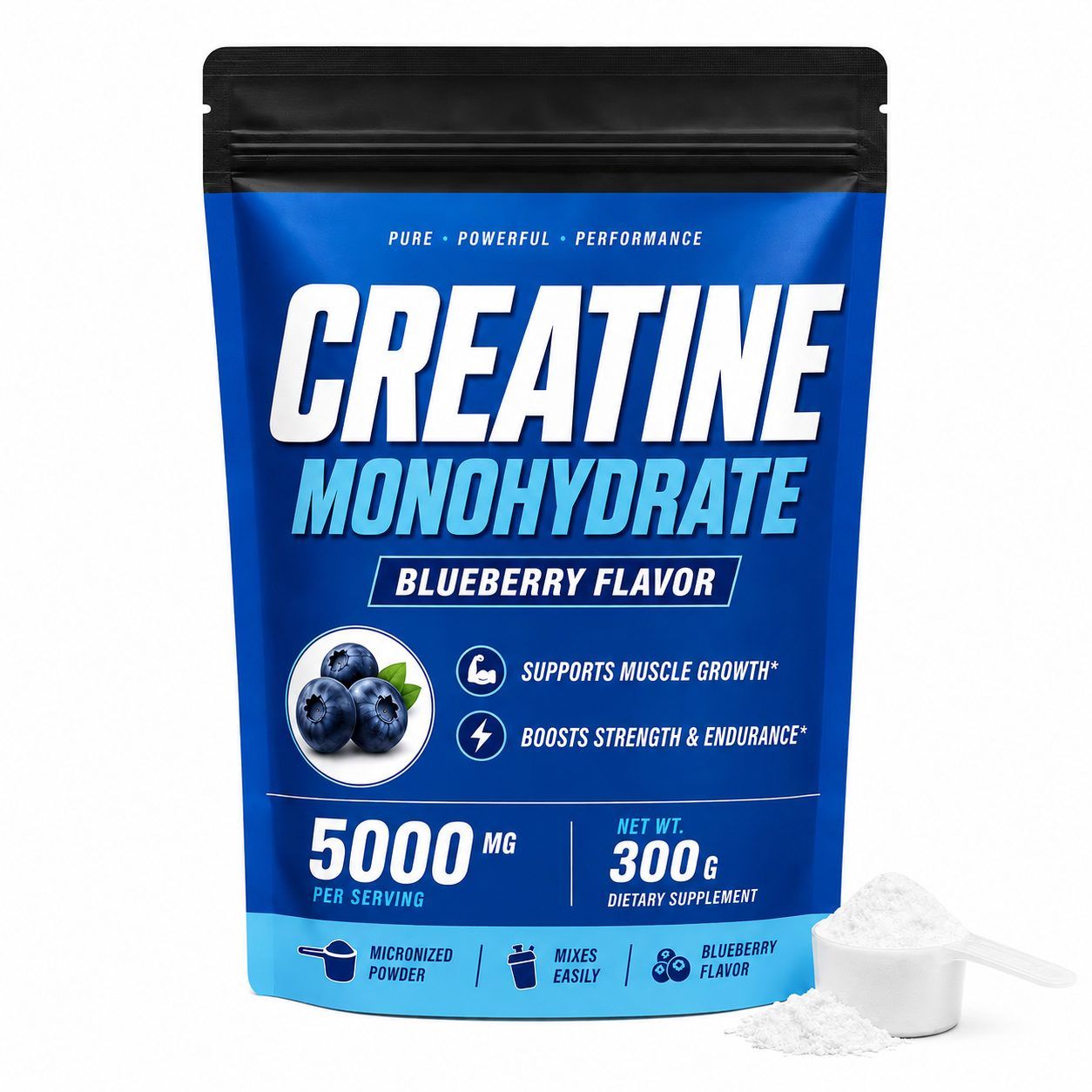
The most common cause of a fourth round is a dose that does not fit the chosen format. Buyers regularly ask how many gummies deliver a five gram creatine serving, and the honest answer rests on a ceiling that rarely appears on a specification sheet: a gummy carries roughly 1,000 to 1,250 milligrams of creatine before the texture collapses and the sweetener load has to climb to cover the bitterness. Five grams therefore needs four or five gummies, not two.
| Format | Realistic ceiling per unit | Units for a 5 g dose | What the ceiling does to the project |
|---|---|---|---|
| Powder, 5 g scoop | 5 g and above | 1 scoop | Cheapest per gram; the pack, not the formula, sets the price |
| Stick pack | 5-10 g | 1 stick | Highest pack cost, best single-serve positioning |
| Chewable tablet | 800-1,000 mg | 5-6 tablets | Serving size becomes the objection on the label |
| Hard capsule | 500-800 mg | 7-10 capsules | Not commercially viable at a 5 g dose |
| Gummy | 1,000-1,250 mg | 4-5 gummies | Sugar and texture limits arrive before the dose does |
That table is also why a creatine gummy project costs more per gram than a tub, and why the honest answer to 'can you match the tub price in gummies' is no. The gummy format buys convenience and compliance, not economy, and a brand planning a price war on a gummy is planning to lose it.
Four of those weeks are artwork, the part of supplement product development nobody budgets for and almost everybody underestimates. Dielines for a new pouch or bottle take three to five days, the first proof five to seven, and every correction restarts that clock. A project that freezes the formula in week six but starts artwork in week ten has not saved four weeks, it has moved them to the end.
The specification freeze document
Development ends with a document, not a sample; the sample is only the evidence that the document is achievable. The freeze is the moment the formula, the process and the pack stop being a discussion, and it should contain numbers rather than adjectives. Everything afterwards is a change control, and change controls cost money because they invalidate work already paid for.
| Specification line | Typical target | Why it ends the argument |
|---|---|---|
| Particle size | 80 mesh, about 180 microns, for drink mixes | Sets mouthfeel and settling; a 60 mesh powder feels gritty in water |
| Bulk and tapped density | A number with the test method named | Determines fill weight per scoop, sachet or capsule |
| Fill weight tolerance | Plus or minus 3 percent target, 5 percent reject | Turns a filling line into a release criterion |
| Moisture and water activity | 5 percent or below, water activity 0.3 or below for dry blends | Predicts caking in a tropical warehouse |
| Microbiological limits | Total plate count, yeast and mould, absence of specified pathogens | Becomes the release test in the certificate of analysis |
| Flavour system | Named flavour, dosage as a percentage of the blend | Any change here restarts the stability file |
Stability runs beside development, not after it
A 24 month shelf life is not something a manufacturer can promise on the day of the first shipment; it is a claim supported by data that has to start early. Accelerated conditions, typically 40 C and 75 percent relative humidity, give enough signal in six to twelve weeks to catch the failures that matter: a flavour that fades, a colour that shifts, a powder that cakes, a softgel that sticks together in the bottle.
The practical consequence is that stability should be booked at the second sample round, not at the purchase order. Waiting until the formula is final is how a launch slips a quarter. Our guide to supplement shelf life and stability testing sets out the test matrix and the real-time data retail buyers ask for.
Artwork is usually the critical path
Labels are not a design afterthought. A pouch needs a dieline, a bottle needs a label size and panel layout, a carton needs a copy deck that survives a regulatory read. Two proof rounds are normal and three is common when a brand launches in several markets with different mandatory statements. If the factory prints and applies labels in house, ask which print method they use, because digital and flexo carry different minimums and different colour tolerances.
Print method also decides what a label can promise. Metallic finishes, matte laminates and spot colours are all available, and each adds a setup cost that only amortises above a certain run length. The packaging guide covers the formats and their MOQ consequences in detail.
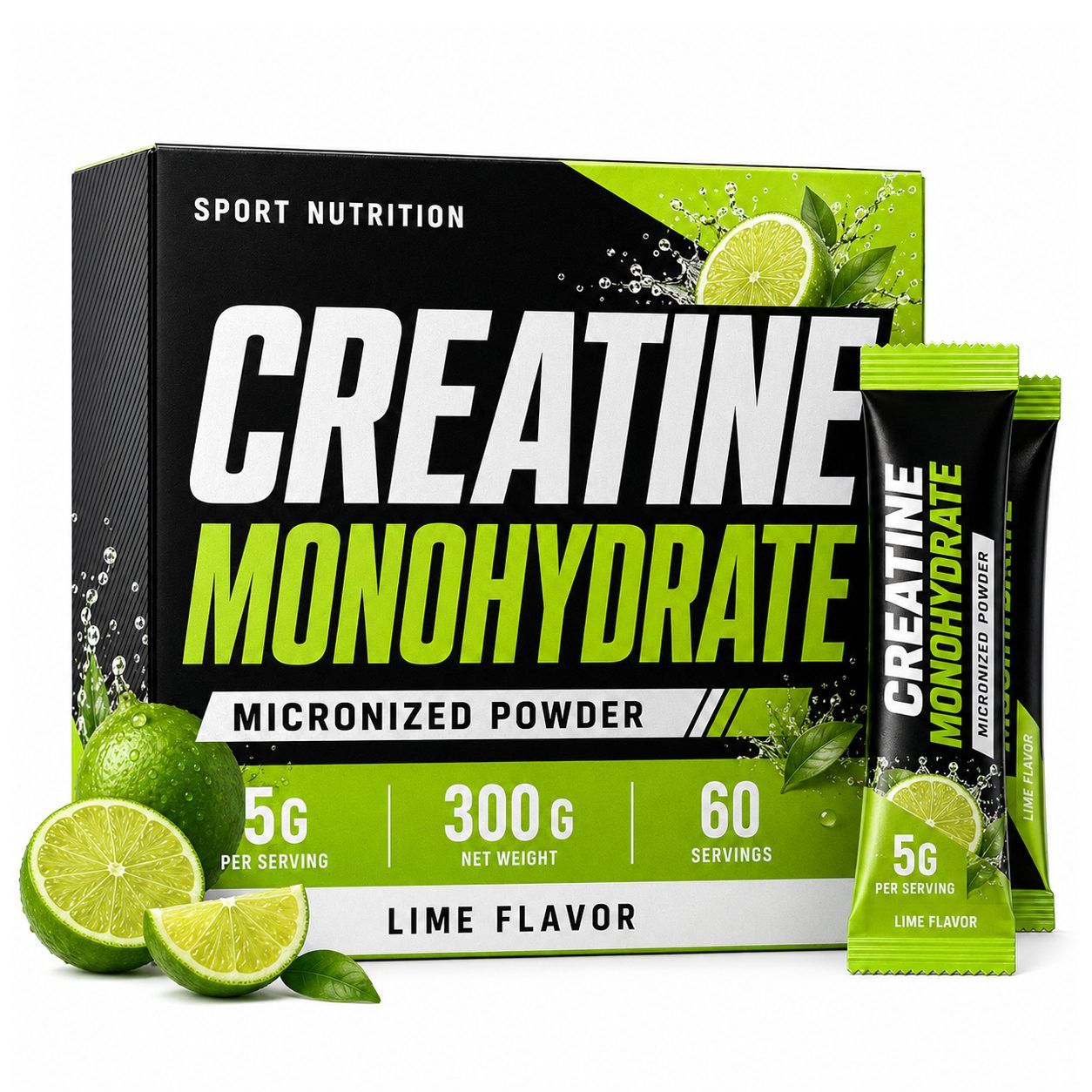
A bench sample approved in week three is not approval of a product, it is approval of an idea. Ask for the pilot sample instead, keep 20 units from it, and write the sample lot number into the purchase order. When the first production run lands, those 20 units are your reference standard, and the argument about whether the flavour changed becomes a comparison instead of an opinion.
Pilot batches: the cheapest insurance in the project
A pilot batch of 300 to 800 units usually costs two to three times the production unit price, and brand owners routinely try to skip it. The arithmetic looks compelling until the first container arrives with fill weights drifting outside tolerance, or a seal failing a leak test on one lane of the filler. A pilot run buys three things: a real fill weight distribution, a real seal strength figure, and a yield number that lets the factory quote production honestly rather than optimistically.
From approval to a purchase order
Once the specification is frozen and artwork approved, the commercial conversation is short. Production typically takes about fifteen working days after deposit and approved artwork, on top of the seven to ten days samples take, and the minimum order is usually 1,000 units per SKU.
The MOQ and lead time guide explains how the count ladder and the pack format move that number, and why a 60 count rarely costs twice a 30 count.
Where a category already exists on the line, the path is shorter because the base formula, the process and the pack are already validated. A creatine monohydrate powder project, for instance, starts from a validated base and moves straight to flavour and pack, which is why a flavour extension settles in one or two sample rounds rather than three.
That is the real argument for a manufacturer with a broad existing portfolio: in supplement product development you are not paying for invention, you are paying for a shorter route to a specification that already works.
A pre-launch checklist for the brand owner
- Write the dose and the serving size before the first call, and check they fit the format.
- Ask what quantity the sample was made in: under 500 grams means a bench sample, not a line sample.
- Request a pilot sample before approving anything, and keep units from that sample as the reference standard.
- Book accelerated stability at round two rather than at the purchase order.
- Freeze the flavour system in writing at sample approval, including the dosage percentage.
- Approve artwork after a regulatory read, not after a design review.
- Put fill weight tolerance and rejection limits in the specification, not in an email.
- Confirm who owns the formula, the sample and the artwork files before paying a deposit.
- Order the pilot batch even when the maths says it doubles your unit cost.
- Keep one sealed unit from every lot, including the pilot sample, for the whole shelf life you print.
Send the brief, not just the question
Tell us the dose, the format, the market and the shelf life you want to print, and we will come back with a supplement product development plan and a bench sample inside ten working days.
What supplement product development really costs in time
- A bench sample takes 7 to 10 days; a project that needs three rounds is not slow, it is normal.
- Roughly four weeks of a launch calendar belong to artwork and dielines, not to the formula.
- Dose ceiling, not flavour, is what usually forces a fourth round.
- Pilot batches cost two to three times the unit price and are still the cheapest risk reduction available.
- Freeze the specification in numbers; every later change restarts stability and artwork.
Sources
Key takeaways
- The brief decides the timeline: dose, format, market, channel and packed shelf life written down is worth more than a long call.
- A bench sample of 200 to 500 grams proves the formula exists, never that it runs on a line at 60 kilograms a batch.
- Three rounds is the normal shape of supplement product development: feasibility, sensory, then production-representative.
- Dose ceilings by format, not flavour preferences, cause most fourth rounds; a gummy tops out near 1,000 to 1,250 mg of creatine.
- Artwork and dielines consume roughly four weeks of a launch and are the most commonly under-planned stage.
- Freeze the specification in numbers and buy a pilot batch, because both convert unknown risk into a known cost.
Frequently asked questions
Can you send samples before I place a bulk order?
Yes. A bench sample is normally available in seven to ten working days once the dose, format and target market are clear, and a pilot batch sample follows the specification freeze. Ask which one you are being sent: a bench sample proves the formula exists, a pilot sample proves the line can run it. The second is the one worth approving.
How many sample rounds does a new supplement usually take?
Three is the normal shape: a feasibility round, a sensory round and a production-representative round. Flavour extensions of an existing validated formula often settle in one or two, because the base blend, the process and the pack are already fixed. A project that reaches round five is usually carrying an unresolved conflict between dose and format rather than a flavour problem.
Do samples cost anything?
Sample and courier costs are normally chargeable, and many manufacturers credit them against the first purchase order. Ask before ordering, and ask what quantity the sample represents, because that answer tells you whether you are tasting a bench batch or a line batch.
How long does supplement product development take from brief to first shipment?
Plan on twelve to sixteen weeks: one week to a signed specification, one to a bench sample, about three for sample rounds, four for artwork and dielines, one to two for a pilot batch and about fifteen working days for production. Artwork is usually the critical path, not manufacturing.
Can I change the flavour after I approve the sample?
You can, but it is a new project, not a tweak. Changing the flavour system or its dosage invalidates the stability file, restarts the artwork proof and usually creates a new SKU with its own minimum order. If you expect to launch several flavours, ask for the base blend to be frozen first and treat each flavour as a variant.
What should I check when a sample arrives?
Weigh the unit and compare it with the declared net weight, mix it at the exact liquid volume printed on the label, taste it at that dilution rather than neat, and read the panel against the claims you intend to make. Then check the seal and the label registration. A sample that tastes right at half the recommended water volume is a sample that will generate complaints.
Have a project in mind? We'll come back with MOQ, formula options and lead time within 24 hours.
Request a Quote