Why sleep and stress is a private label growth lane
Sleep and stress is the part of the supplement shelf where consumer intent is already high. Buyers are not browsing for a better multivitamin; they are looking for something that helps them fall asleep faster, feel calmer during the day, or recover from a screen-heavy evening. That intent converts, but it also raises the bar. A sleep formula that does not deliver a perceptible effect within the first pack rarely earns a repeat order, and a stress formula that over-promises on the label is one complaint away from a marketplace takedown.
The opportunity for brands running private label sleep and stress supplements is that the category is still fragmented by format. Gummies dominate trial because they feel like a treat, capsules and tablets dominate subscription because they are cheap to ship, powders and drink mixes dominate high-dose combinations, and oral drops are gaining share for fast onset and flexible dosing. Our dosage form selection guide explains the engineering behind each, but the short version is that the format should be chosen after the actives, not before.
The five actives that carry most sleep and stress launches
Most launches in this category use one or more of five ingredients: melatonin, GABA, L-theanine, ashwagandha and magnesium. Each has a different evidence base, a different dose window, and a different format constraint. Getting the pairing wrong is the main reason sleep and stress projects stall at the sample stage.
| Active | Typical dose per serving | What the evidence supports | Format constraints |
|---|---|---|---|
| Melatonin | 0.3-10 mg | Supports the onset of sleep and adjustment to jet lag; benefits flatten above 3-5 mg for many users | Microgram to low-milligram doses suit capsules, tablets, gummies and drops |
| GABA | 100-500 mg | Some studies report reduced markers of stress and improved sleep quality at 100-200 mg | Bitter taste limits gummies unless masked; powder and capsule are easier |
| L-theanine | 100-400 mg | Supports relaxation without drowsiness; 200 mg is the most studied single dose | Heat-stable; works in gummies, capsules, tablets, powders and drops |
| Ashwagandha (KSM-66 or Sensoril) | 300-600 mg extract | Adaptogenic support for stress and occasional sleeplessness; standardised to withanolides | Strong, earthy taste makes capsules and tablets preferable to powders unless heavily flavoured |
| Magnesium glycinate | 100-300 mg elemental | Supports relaxation and sleep quality; glycinate is gentle on the stomach | Bulky powder needs larger capsules or a powder tub; chelated forms cost more than oxide |
The practical insight is that these actives are rarely interchangeable. Melatonin is a chronobiotic that signals timing; L-theanine is an amino acid that modulates alertness; ashwagandha is an adaptogen that works over weeks. A formula that claims all three benefits on one label has to deliver each mechanism at a meaningful dose, or the consumer will notice the mismatch before the second order.
Yukang already runs several private label sleep and stress supplements in these actives. Our melatonin gummies deliver 10 mg of melatonin, 100 mg of L-theanine, 50 mg of lemon balm, 50 mg of GABA and 50 mg of ashwagandha per two-gummy serving, while the ashwagandha melatonin gummies pair 5 mg of melatonin with 300 mg of ashwagandha root extract. For brands that want a non-hormonal evening option, the GABA gummies provide 500 mg of GABA, 100 mg of L-theanine, 50 mg of 5-HTP and 10 mg of vitamin B6 per serving.
Format trade-offs: gummies win trial, capsules win subscription
Format choice in sleep and stress is a bet on consumer behaviour. Gummies have the highest trial rate but also the highest cost per active gram, because a 3 g pectin gummy can only carry 600-1,200 mg of powdered actives before texture suffers. Capsules and tablets are cheaper to produce and ship, but a consumer who associates bedtime with a ritual may prefer a flavoured drink or a dropper. Drops act fast and allow titration, but the fill-volume overage and drop-count validation add development work.
| Format | Active load per serving | Consumer fit | Manufacturing notes |
|---|---|---|---|
| Gummies | 600-1,200 mg | High trial, giftable, easy evening ritual | Pectin cook step limits heat-sensitive actives; moisture barrier is critical |
| Capsules | 300-1,000 mg | Subscription-friendly, portable, low ship weight | Two-piece shells hold bitter powders well; avoid large size 00 if swallow count matters |
| Tablets | 700-1,500 mg | Cost-efficient, familiar format | Compression and coating can mask taste; disintegration time affects onset |
| Powders | 3,000-10,000 mg | High-dose blends, mix-into-drink ritual | Flavour and anti-caking system decide repeat purchase |
| Drops | Variable by dropper | Fast onset, precise titration | Dropper calibration, fill overage and preservation are non-trivial |
One detail that separates experienced brands from first-time launches is the serving count decision. A 60-count melatonin gummy bottle sounds generous, but at two gummies per night it is only a 30-day supply. A 30-day supply is the standard subscription cadence, so the pack count, the dose per serving and the retail price all have to line up with that monthly rhythm. A bottle that lasts 45 days breaks the subscription model.
This index is illustrative rather than a quotation. It assumes the same active blend at a comparable dose, a standard bottle or pouch, and a first batch of 1,000-3,000 units. Drops are expensive because the bottle, dropper assembly and fill-overhead dominate unit cost. Tablets and capsules are cheaper because the line speed is high and the packaging is simple. The real cost driver is not the active; it is the count, the packaging format and the overage needed to keep the label accurate through shelf life.
Dose math and the claims that survive a review
Sleep and stress claims are heavily scrutinised because they touch outcomes consumers care about intensely. The United States allows structure or function claims with the DSHEA disclaimer, so supports relaxation and supports healthy sleep patterns are usable, while treats insomnia or reduces anxiety are disease claims and are not. The European Union is stricter: the EU Register lists very few authorised claims for melatonin, and none for ashwagandha, GABA or L-theanine, so most European labels must describe the nutrient's role in general terms rather than promise an outcome.
| Active | Permissible United States wording | European Union position | Wording to avoid |
|---|---|---|---|
| Melatonin | Supports the onset of sleep; supports healthy sleep patterns | Authorised claim at 1 mg: melatonin contributes to the reduction of time taken to fall asleep | Cures insomnia, treats sleep disorders, replaces prescription sleep aids |
| L-theanine | Supports relaxation without drowsiness; promotes calm focus | No authorised health claim; describe physiological role only | Eliminates anxiety, treats panic attacks, cures stress |
| Ashwagandha | Adaptogenic support for stress; supports a sense of calm | No authorised health claim for withanolides; novel food considerations may apply | Reduces cortisol, treats adrenal fatigue, cures chronic stress |
| GABA | Supports relaxation; supports calm mood | No authorised health claim; use general nutrient-role wording | Blocks anxiety, treats depression, cures insomnia |
| Magnesium | Supports muscle relaxation; supports healthy sleep | Contributes to normal muscle function and reduction of tiredness | Cures restless legs, eliminates cramps, replaces medical treatment |
A common compliance trap is copying a competitor's front-of-pack. Many United States sleep supplements print language that is technically a disease claim, and some have received FDA warning letters for it. The safest approach is to write the claim list before the formula is finalised, run it past the manufacturer's regulatory contact, and keep a record of the evidence file for each claim. That file is what protects the brand if a regulator or platform asks questions later.
The full document set for United States, European Union and Halal launches is covered in our guide to FDA, cGMP and Halal requirements.
Manufacturing traps only formulators talk about
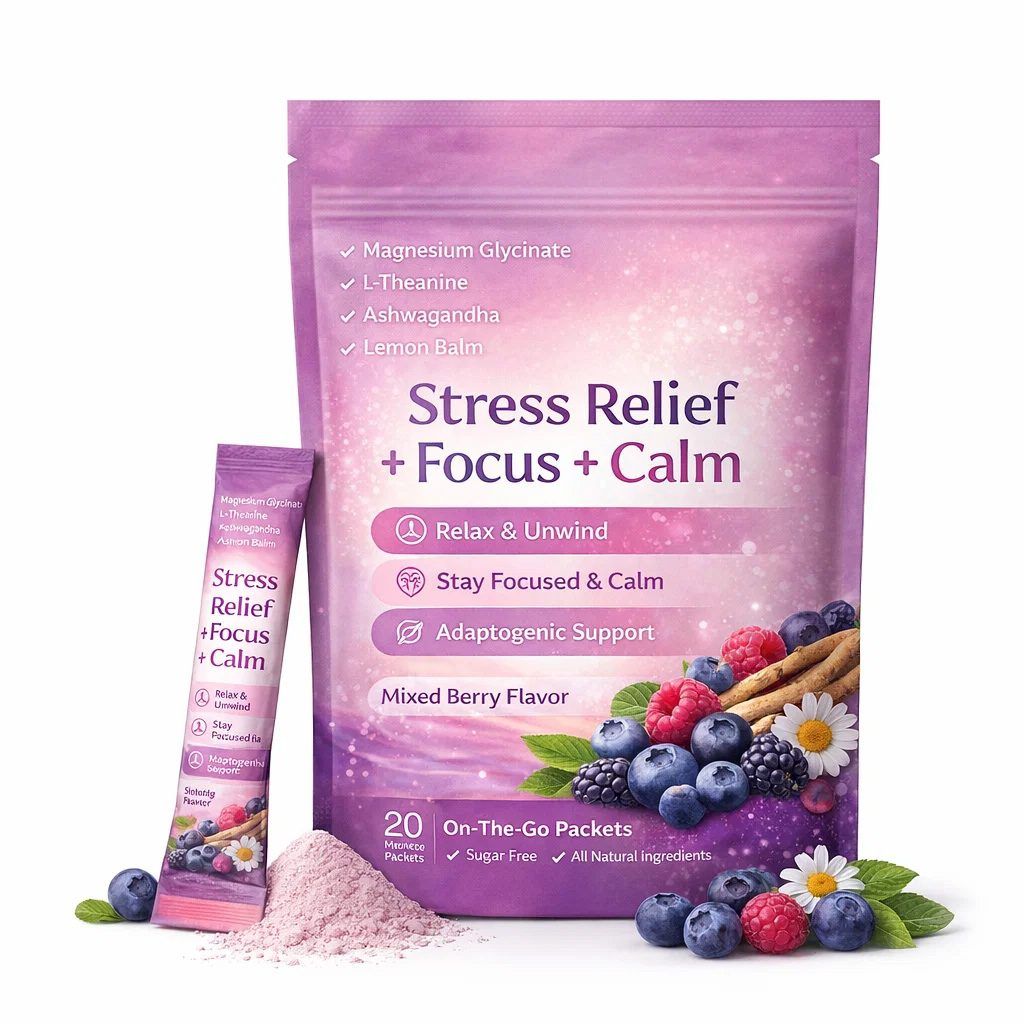
Three practical issues show up on almost every sleep and stress project. The first is ashwagandha taste. A standardised root extract tastes earthy and bitter, and it can carry through a gummy base even at 50 mg. Masking it requires either a capsule or tablet format, or a flavour system strong enough to hide the active without turning the product into candy. The second is melatonin potency stability. Melatonin is light-sensitive and can degrade in translucent packaging; amber or opaque bottles, induction seals and desiccants are normal for melatonin SKUs. The third is GABA bitterness in powder form, which usually needs a citrate or malate buffer plus a strong berry or citrus flavour to make a drink mix palatable.
Dropper products have their own hidden issue. A 1 mL dropper delivers roughly 20 drops of a water-glycerine blend at room temperature, but the same dropper on a more viscous oil base can deliver 15 drops or fewer. If the label says one dropper per serving and the consumer underfills it, the dose is wrong. Drop-count validation on the actual formulation at filling temperature is mandatory, and most manufacturers add 3-5 percent fill overage to account for dead volume in the dropper bulb and bottle neck.
MOQ, lead times and what the first batch costs
First-batch economics in sleep and stress depend almost entirely on format. Gummies need custom moulds if you want a shape, which pushes MOQ to 3,000-5,000 units and adds tooling lead time. Capsules and tablets start lower, often 1,000-3,000 units, because the tooling is standard. Powders can start at 1,000-2,000 units but require more complex filling and sealing equipment for stick packs. Drops are format-expensive: the bottle, dropper, label and box are a larger share of unit cost than the active, and small runs are rarely economical below 2,000-3,000 units.
The sequence from brief to pallet is the same regardless of category. Sampling runs 7-10 days from formula confirmation, bulk production runs 15-25 working days depending on format and packaging, and ocean freight adds 18-25 days to North America. Our MOQ and lead time guide breaks down the full timeline and the documents needed at each stage.
| Format | Typical MOQ | Sample lead time | Bulk production | Why the range moves |
|---|---|---|---|---|
| Gummies | 3,000-5,000 units | 7-10 days | 15-25 working days | Custom shape, colour and sugar-free base raise tooling and run length |
| Capsules | 1,000-3,000 units | 7-10 days | 15 working days | Shell type and fill weight are the main variables |
| Tablets | 1,000-3,000 units | 7-10 days | 15-20 working days | Coating and custom tooling extend the schedule |
| Powders | 1,000-2,000 units | 7-10 days | 15-20 working days | Stick packs cost more per unit than tubs |
| Drops | 2,000-3,000 units | 7-10 days | 15-25 working days | Bottle, dropper and fill overage dominate cost |
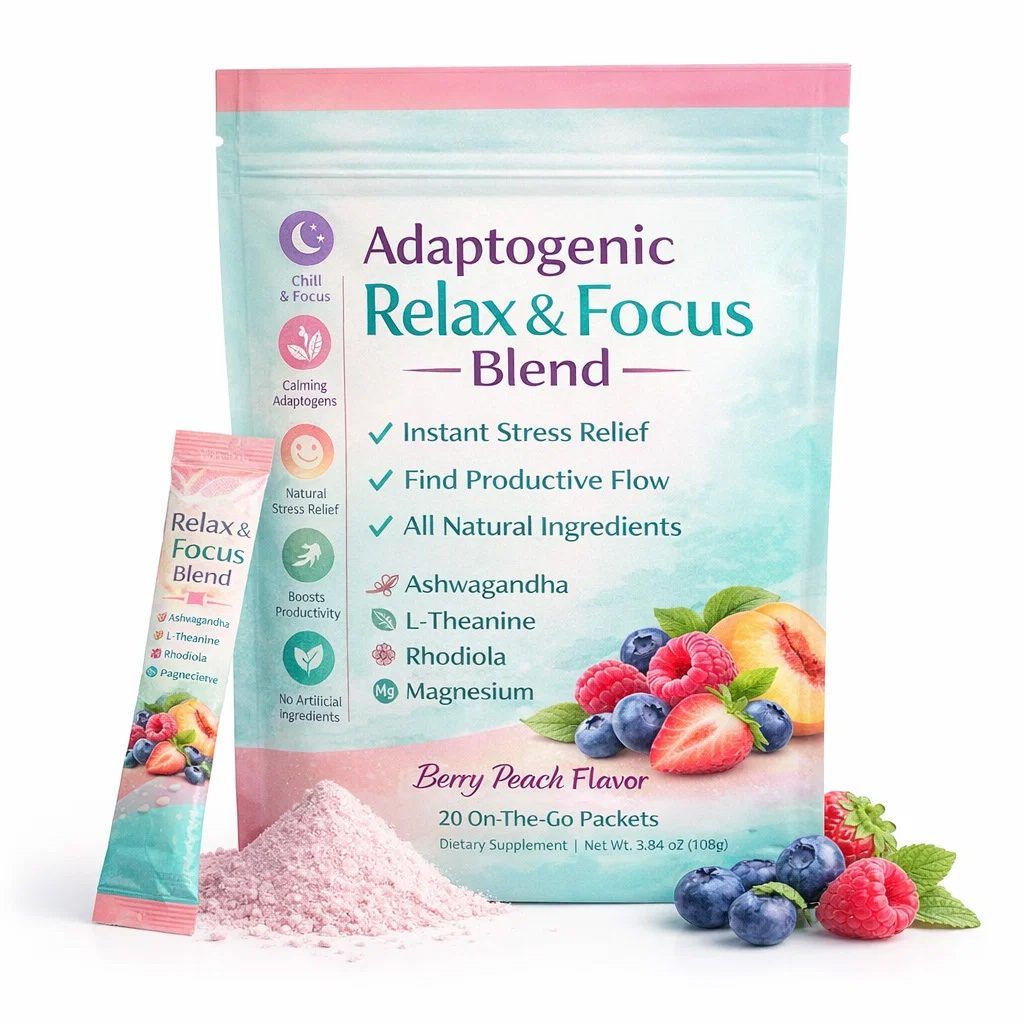
A final cost warning: sleep and stress brands often want a blend because it sounds more complete, but blends multiply testing and documentation costs. Each active needs identity testing, assay, heavy metals and microbial release, and a stability programme that covers every marker. A four-active blend can cost 30-50 percent more in QC than a single-hero SKU of the same format. Starting with one or two actives and expanding the line once the first SKU is stable is usually the smarter cash-flow decision.
A private label sleep and stress launch checklist
Most delays in private label sleep and stress supplements come from decisions left open in the brief. The checklist below is based on the points that have cost real projects time at the sample stage.
- Choose the primary benefit first: faster sleep onset, deeper sleep, daytime calm or stress resilience.
- Match the active to the benefit, not the trend: melatonin for timing, L-theanine for calm alertness, ashwagandha for adaptation, magnesium for relaxation.
- Set the dose per serving in absolute milligrams and confirm it fits the chosen format.
- Write the intended claims before sampling and have the manufacturer flag market-specific wording issues.
- Pick the format based on subscription behaviour, not only trial appeal.
- Specify packaging colour and opacity for light-sensitive actives such as melatonin.
- Agree the stability programme, including the overage needed to hit label claim at month 24.
- Confirm the serving count matches the intended subscription cadence, usually 30 days.
- Request a certificate of analysis template and a release specification before the first sample.
- Plan for two label texts if the product will sell in both the United States and the European Union.
If the format is still open, start with gummies for trial-friendly microdose actives like melatonin, or hard capsules for bitter adaptogens like ashwagandha. For high-dose combinations, powders and oral liquids are usually the only formats that fit the dose.
Planning private label sleep and stress supplements?
Send the active list, target dose, format and markets. We will confirm which dosage form fits the formula, what the label can say, and what the first batch will cost, with quotations returned within 24 hours.
Sleep and stress private label essentials
- Private label sleep and stress supplements succeed when the format, dose and claim are aligned with a single primary benefit.
- Melatonin, GABA, L-theanine, ashwagandha and magnesium each have different evidence, dose windows and format constraints.
- Gummies drive trial; capsules and tablets drive subscription; powders and drops fit high-dose or fast-onset products.
- Claim language is market-specific: US structure or function claims need the DSHEA disclaimer, while the EU Register offers very few authorised sleep and stress claims.
- Ashwagandha taste, melatonin light sensitivity and GABA bitterness are the most common formulation traps in this category.
- First-batch MOQ ranges from 1,000 units for capsules and powders to 3,000-5,000 for gummies, with samples in 7-10 days and production in 15-25 working days.
Sources
- US Food and Drug Administration - structure/function claim notification and DSHEA disclaimer guidance
- European Commission - EU Register of authorised nutrition and health claims
- NIH Office of Dietary Supplements - Melatonin fact sheet for health professionals
- NIH Office of Dietary Supplements - Magnesium fact sheet for health professionals
- Chandrasekhar K et al., A prospective, randomized double-blind, placebo-controlled study of safety and efficacy of a high-concentration full-spectrum extract of ashwagandha root in reducing stress and anxiety in adults (PubMed 23439798)
- Kim S et al., GABA and L-theanine mixture decreases sleep latency and improves NREM sleep (PubMed 31442112)
Key takeaways
- Private label sleep and stress supplements succeed when the format, dose and claim are aligned with a single primary benefit.
- Melatonin, GABA, L-theanine, ashwagandha and magnesium each have different evidence, dose windows and format constraints.
- Gummies drive trial; capsules and tablets drive subscription; powders and drops fit high-dose or fast-onset products.
- Claim language is market-specific: US structure or function claims need the DSHEA disclaimer, while the EU Register offers very few authorised sleep and stress claims.
- Ashwagandha taste, melatonin light sensitivity and GABA bitterness are the most common formulation traps in this category.
- First-batch MOQ ranges from 1,000 units for capsules and powders to 3,000-5,000 for gummies, with samples in 7-10 days and production in 15-25 working days.
Frequently asked questions
What are the best ingredients for a private label sleep supplement?
Melatonin, L-theanine, GABA, ashwagandha and magnesium glycinate are the actives with the most formulation history. Melatonin supports sleep onset, L-theanine supports relaxation without drowsiness, ashwagandha offers adaptogenic support over weeks, and magnesium glycinate supports muscle relaxation. The best choice depends on whether the product targets faster sleep onset, deeper sleep, daytime calm or stress resilience.
Which dosage form works best for sleep and stress supplements?
Gummies work best for trial and giftability, capsules and tablets for subscription programmes, powders for high-dose blends, and drops for fast onset and titration. The right format is the one that matches the dose, the active's taste and stability, and the consumer's expected routine.
How much melatonin should a sleep supplement contain?
Most evidence supports 0.3-5 mg for sleep onset and circadian adjustment, with benefits flattening for many users above 3-5 mg. The European Union authorises a melatonin claim at 1 mg for reducing time taken to fall asleep. Higher doses are common on the shelf but do not necessarily improve efficacy and may increase morning grogginess.
Can I sell the same sleep supplement in the United States and the European Union?
The formula often can, but the label text usually cannot be reused. The United States allows structure or function claims with the DSHEA disclaimer, while the EU Register authorises very few sleep and stress claims. Plan for two reviewed label texts rather than one translation.
What is the minimum order quantity for private label sleep gummies?
Standard pectin gummies typically start at 3,000-5,000 units for a first batch, with custom shapes or sugar-free bases pushing the number higher. Capsules and powders can start at 1,000-3,000 units, while drops usually need 2,000-3,000 units to cover bottle, dropper and fill-overhead costs.
Why do sleep and stress blends cost more to manufacture than single-hero products?
Each active needs identity testing, assay, heavy-metal and microbial release, and the stability programme must cover every marker. A four-active blend can add 30-50 percent to QC costs compared with a single-hero SKU, and the documentation file is larger for each market. Starting with one or two actives and expanding the line after the first SKU is stable is usually the better cash-flow decision.
Have a project in mind? We'll come back with MOQ, formula options and lead time within 24 hours.
Request a Quote