Private label liquid supplements are the quiet premium category in a brand owner's portfolio. In public TikTok Shop US category data they command the highest revenue per unit of any identified dosage form, yet the same properties that justify the price — a water-based or oil-based carrier, a measured dropper, a glass bottle and a perishable microbiological profile — also make them the easiest format to get wrong before the first bottle ships.
A liquid is not a capsule without a shell. It is a live formulation system. The base solvent, pH, preservative or antioxidant load, bottle barrier, dropper orifice and fill volume all interact. Change one and the shelf life, potency or taste changes. This guide walks through the decisions we make on our oral drops and oral liquids lines for private label liquid supplements, with the numbers that belong in a specification before you sign off artwork.
If you are still weighing dosage forms, start with our supplement dosage form selection guide. It compares liquids and drops against capsules, tablets, softgels, gummies and powders on cost, MOQ and shelf life, and it explains why liquids are the fastest-growing format in the market. For a ready example of the format at its most premium, see our private label liquid collagen drink - a 50 mL ready-to-drink collagen shot built around hyaluronic acid and biotin - and the full engineering walkthrough in our private label collagen drink manufacturer guide.
Why the revenue premium exists, and what it costs to earn
Public category data from TikTok Shop US Top 100 health products puts the average selling price per unit sold for liquid and drop formats at roughly $59, compared with about $26 for powders, $32 for capsules and $33 for gummies. The figure is not a market share claim — liquids are a smaller slice of total units, about 5.3 percent of identified forms — but the revenue per unit is the highest of any identified category. That premium reflects two things consumers willingly pay for: flexible dosing and the perception of faster absorption.
From a manufacturing standpoint the premium also reflects real cost. A 60 mL amber glass dropper bottle, a calibrated dropper assembly, a tamper-evident seal and a folding carton cost more than a 60-count bottle of capsules or a 30-serving stick pack. The liquid base, the preservative or antioxidant system and the fill-volume overage add cost blocks that do not exist in dry forms. The question is not whether liquids are expensive — they are — but whether the price premium covers the extra handling and risk.
Water-based, oil-based and ready-to-drink: the three liquid families
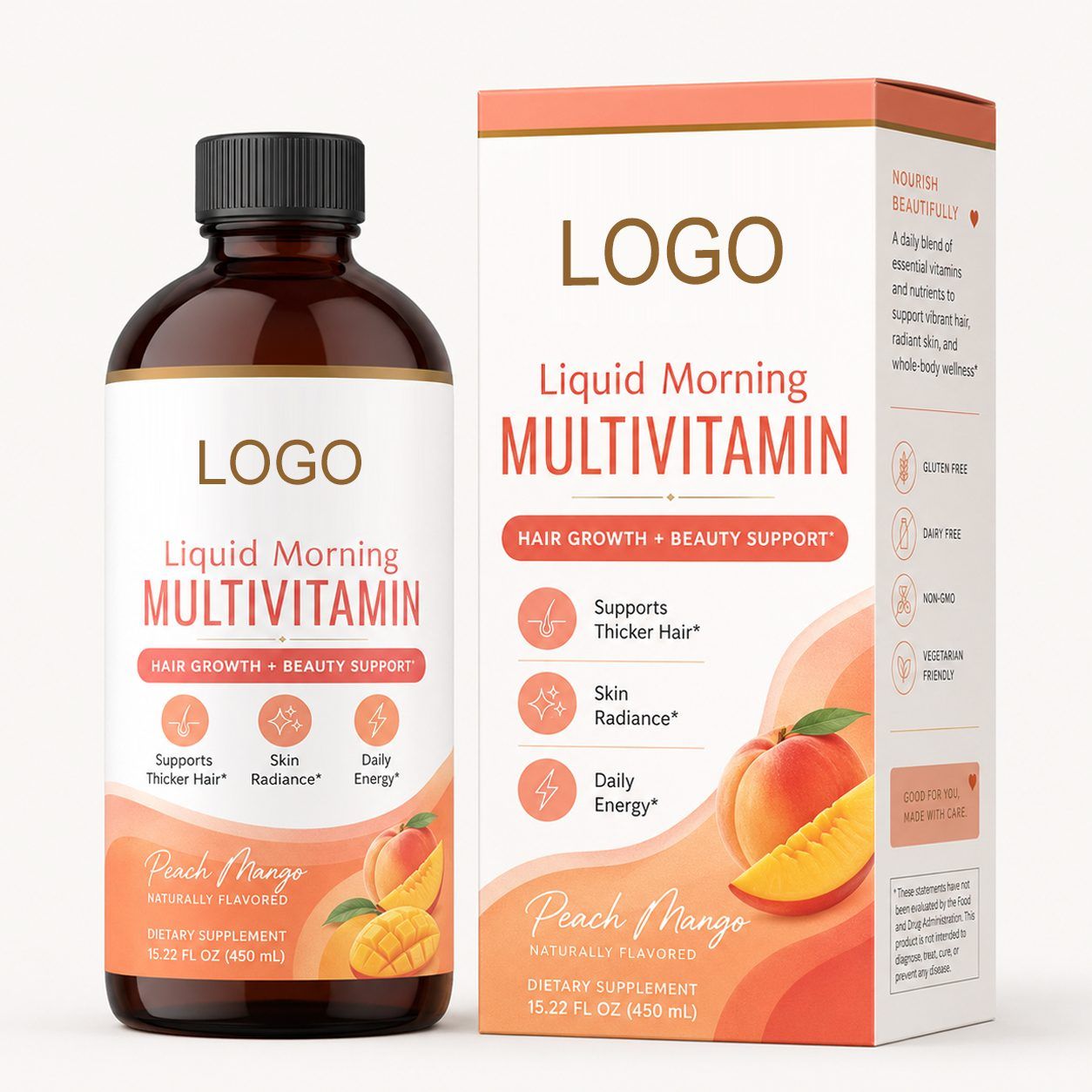
Most private label liquid supplements fall into one of three families. Water-based drops use purified water and vegetable glycerin as a base, need a preservative and sit in a pH window. Oil-based drops use a carrier oil such as fractionated coconut oil or MCT and an antioxidant system instead of a preservative. Ready-to-drink oral liquids, including beauty drinks and collagen shots, are usually aqueous, single-serve and packaged in bottles, ampoules or stick sachets.
The choice between water and oil is usually forced by the active. Fat-soluble vitamins — vitamin D3, vitamin A, vitamin E and some K2 forms — need oil to stay in solution. Water-soluble vitamins, minerals, botanical extracts and enzymes sit in a water-glycerin system. If the active is an oil or a lipophilic extract, oil is the honest base. If it is water-soluble, an aqueous drop is the honest base. Suspensions and emulsions exist, but they add homogenization and stability work that a first project rarely budgets for.
| Property | Water-based drops | Oil-based drops | Ready-to-drink liquids |
|---|---|---|---|
| pH target | 4.0 - 5.5 for sorbate efficacy | Not applicable; keep anhydrous | 4.0 - 4.5 typical; buffer system needed |
| Preservative / antioxidant | Potassium sorbate + citric acid; or high-glycerin / alcohol | Mixed tocopherols; amber glass; nitrogen flush optional | Potassium sorbate, sodium benzoate or pasteurization |
| Base solvent | Purified water + vegetable glycerin | Fractionated coconut oil or MCT oil | Water, juice or glycerin blend |
| Microbial risk | High unless pH and preservative controlled | Very low; water activity near zero | High; larger volume, longer open time |
| Typical package | 30-120 mL amber glass with dropper | 30-60 mL amber glass with dropper | 50 mL bottle, ampoule or stick |
| Best fit | Biotin, B-complex, botanical extracts, enzymes | Vitamin D3, vitamin A, oil extracts | Collagen, beauty shots, functional beverages |
The three dose-accuracy details no brief covers
Drop volume is not the same as dose
A product label that reads '1 mL per serving, approximately 30 drops' is making a promise about the dropper, the liquid and the temperature. In practice the drop volume of a water-glycerin formula at room temperature can be 30 percent smaller or larger than an oil formula from the same dropper orifice, because viscosity and surface tension change the way a drop forms and releases. A thicker glycerin-rich liquid strings at the tip before falling; a thin oil releases cleanly in larger drops. If your dosing instructions say 'take 10 drops,' the consumer is trusting physics, not the label.
The only honest way to set a drop-based dose is to validate the actual dropper on the actual formula at the fill temperature. We run a drop-count validation on each new liquid project, measuring the mass per drop and converting back to millilitres. The alternative is to dose by volume in a graduated pipette or a measuring cup, which is what many premium liquid brands move to once complaints about inconsistent dosing start appearing in reviews.
Fill volume needs an overage budget
A 60 mL bottle that promises 60 one-millilitre servings cannot be filled with exactly 60 mL. The dropper assembly retains 0.4 to 0.8 mL of liquid that the consumer cannot recover, and a small amount clings to the shoulder and neck of the bottle. If you fill to exactly 60 mL, the last few servings will deliver short and the label claim becomes a compliance risk. The practical overage is 3 to 5 percent above the labelled net contents, written into the fill specification and checked on the line.
That overage is not waste. It is the buffer that keeps every serving inside label tolerance from the first drop to the last. It also protects against evaporation over a 24-month shelf life, which matters for water-based products stored in warehouses without climate control. The fill-volume check is one of the release tests we run on every batch.
Glycerin ratio changes everything
Vegetable glycerin is the workhorse of water-based drops. It adds sweetness, thickens mouthfeel, helps solubilize botanical extracts and lowers water activity enough to take some pressure off the preservative. It also raises viscosity. At ratios above roughly 40 percent the liquid becomes slow to drop, prone to stringing at the pipette and harder to fill accurately. At ratios below 15 percent the product tastes thin and the preservative has to work harder.
We typically start a water-based drop at 20 to 30 percent glycerin and adjust from there. If the active needs a higher glycerin load for taste or stability, we compensate with a larger dropper orifice or a graduated pipette so the dose remains controllable. This is the kind of detail that does not appear on a marketing brief but determines whether a reorder runs smoothly.
Preservatives, pH and the water-activity reality
Water-based drops are a microbiological growth medium unless something stops it. The two levers are pH and preservative. Potassium sorbate, the most common clean-label preservative, is effective mostly below pH 6.5 and strongly effective between pH 4.0 and 5.5, because the active form is undissociated sorbic acid with a pKa around 4.76. Above pH 6 it is largely inactive, which means a brand can list it on the label and still see yeast, mold or bacterial growth. Sodium benzoate behaves similarly. If your formula pH is 6.5 or higher and you are relying on sorbate, you are not preserving the product.
The practical answer is usually citric acid or another food-grade acid to bring the pH into the 4.0 to 4.5 range, plus potassium sorbate at 0.1 to 0.2 percent. That combination is standard in clean-label water-based drops. The pH also affects taste, stability of some actives and the behavior of botanical extracts, so it is set in R&D and monitored as a release test. For brands that want to avoid preservatives entirely, the honest routes are a high-glycerin or alcohol base that suppresses water activity, or a short shelf life with refrigerated storage — each of which changes the label, the package and the market.
A water-based drop without a preservative needs either high glycerin, high alcohol or a pasteurization step. High glycerin changes viscosity and drop behavior. Alcohol limits Halal, kosher and children's markets. Pasteurization adds equipment and validation cost. There is no free lunch in microbiology.
What a real liposomal liquid claim requires
Liposomal delivery is one of the most overused claims in liquid supplements. A true liposomal formulation suspends the active inside phospholipid vesicles with a defined particle size, typically measured by dynamic light scattering and reported as a mean diameter and polydispersity index. Many 'liposomal' drops on the market are simply solutions that contain lecithin; the lecithin is in the liquid, but the active is not encapsulated in vesicles at a meaningful level.
If you want to put 'liposomal' on a label, ask for the particle-size specification, the encapsulation-efficiency data and the method used to generate it. We develop liposomal options using sunflower lecithin or phospholipid blends where the formulation supports it, but we do not use the term unless the process and the documentation support the claim. A false liposomal claim is a regulatory and reputational risk that survives until the first laboratory test or a competitor complaint.
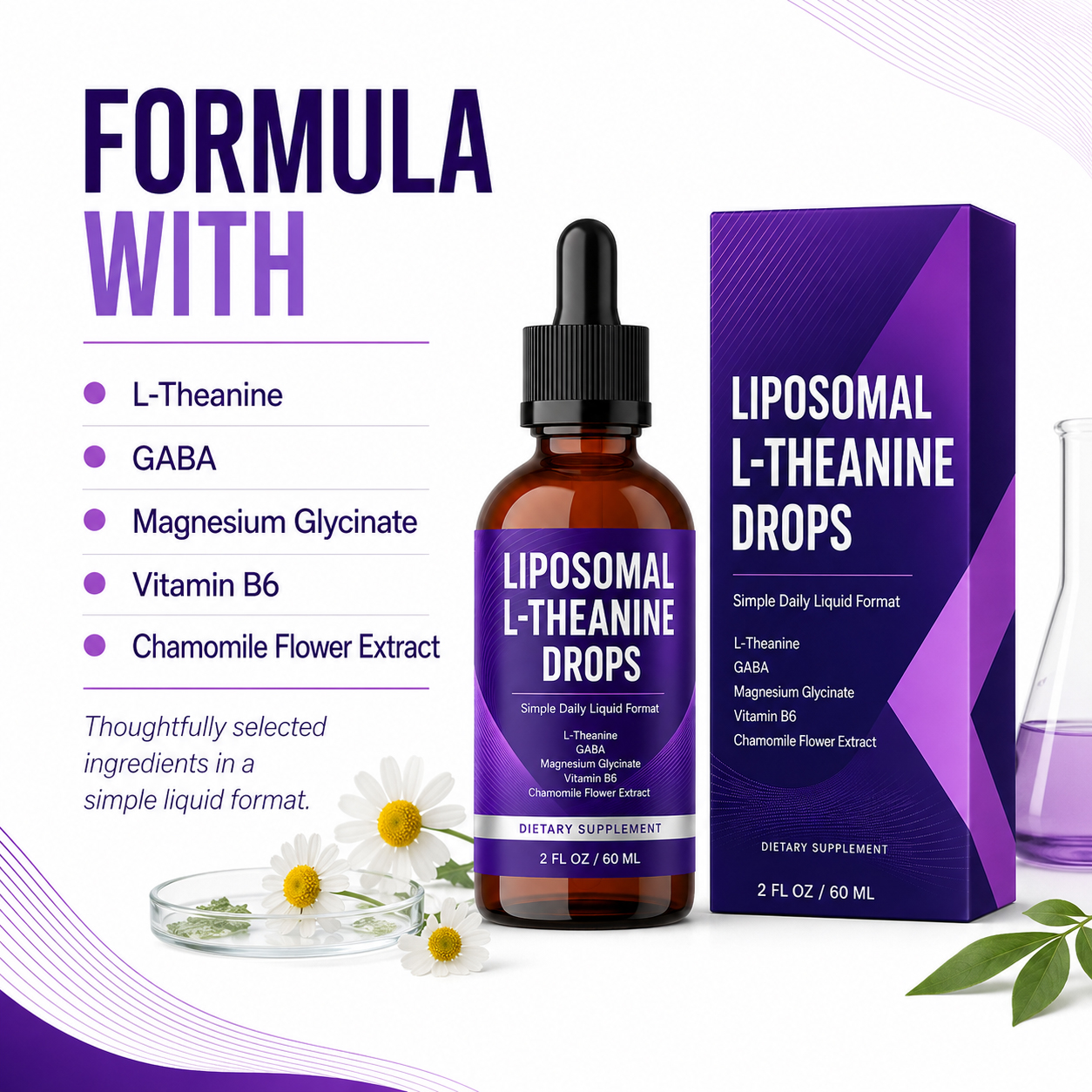
Our private label L-theanine liquid drops use a standard water-glycerin base with a lecithin option; a true liposomal version can be developed when the project budget covers particle-size validation and stability testing.
Packaging is the largest cost block and the longest lead item
For private label liquid supplements, the bottle, dropper, seal and carton typically make up the largest share of unit COGS, more than the active ingredient and often more than the liquid base. A 60 mL amber glass bottle weighs roughly 85 to 110 grams, depending on wall thickness and shoulder design, while the same volume in PET weighs 15 to 25 grams. That weight difference shows up in freight, especially for air or DDP shipments.
Amber glass is the default for light-sensitive actives such as vitamin D3, B vitamins and botanical extracts. It costs more and breaks more easily than PET, but it blocks UV and presents as premium on shelf. PET is lighter and cheaper and works well for stable, non-light-sensitive actives, though it still needs a light-blocking label or sleeve for anything photosensitive. Frosted or coated glass adds decoration cost and can extend lead time by one to two weeks if the coating is outsourced.
Dropper assemblies are another decision point. A standard glass dropper is cheapest. A graduated pipette lets consumers measure by millilitre rather than by drop count, improving dose accuracy. A child-resistant closure adds cost and is required for some markets. A tamper-evident band is standard for retail. Each choice changes the bill of materials and the assembly step on the line.
| Component | Common options | What the choice changes |
|---|---|---|
| Bottle material | Amber glass, clear glass, frosted glass, PET | Cost, freight weight, UV protection, premium feel |
| Dropper assembly | Standard glass, graduated pipette, bulb type | Dose accuracy, consumer convenience, unit cost |
| Closure | Screw cap, child-resistant cap, tamper-evident seal | Regulatory compliance, line speed, per-unit cost |
| Fill volume | 30 mL, 60 mL, 120 mL with 3-5% overage | MOQ, landed cost, serving economics |
| Outer carton | Folding carton, kraft box, premium rigid box | Retail presence, Amazon requirements, cost |
| Label finish | Matte, gloss, waterproof, foil stamping | Durability, shelf appeal, line handling |
Shelf life, potency loss and enzyme activity
Most private label liquid supplements we produce carry a 24-month shelf life when stored in a cool, dry place away from direct light. That claim is backed by accelerated stability testing and, where needed, real-time testing. The biggest threats over 24 months are pH drift, oxidation, light degradation and microbial growth. Vitamin D3 in oil, for example, is protected by the anhydrous base and mixed tocopherols but still needs amber glass. B vitamins in water are sensitive to pH and light and often show potency decline if the pH creeps above 5.5.
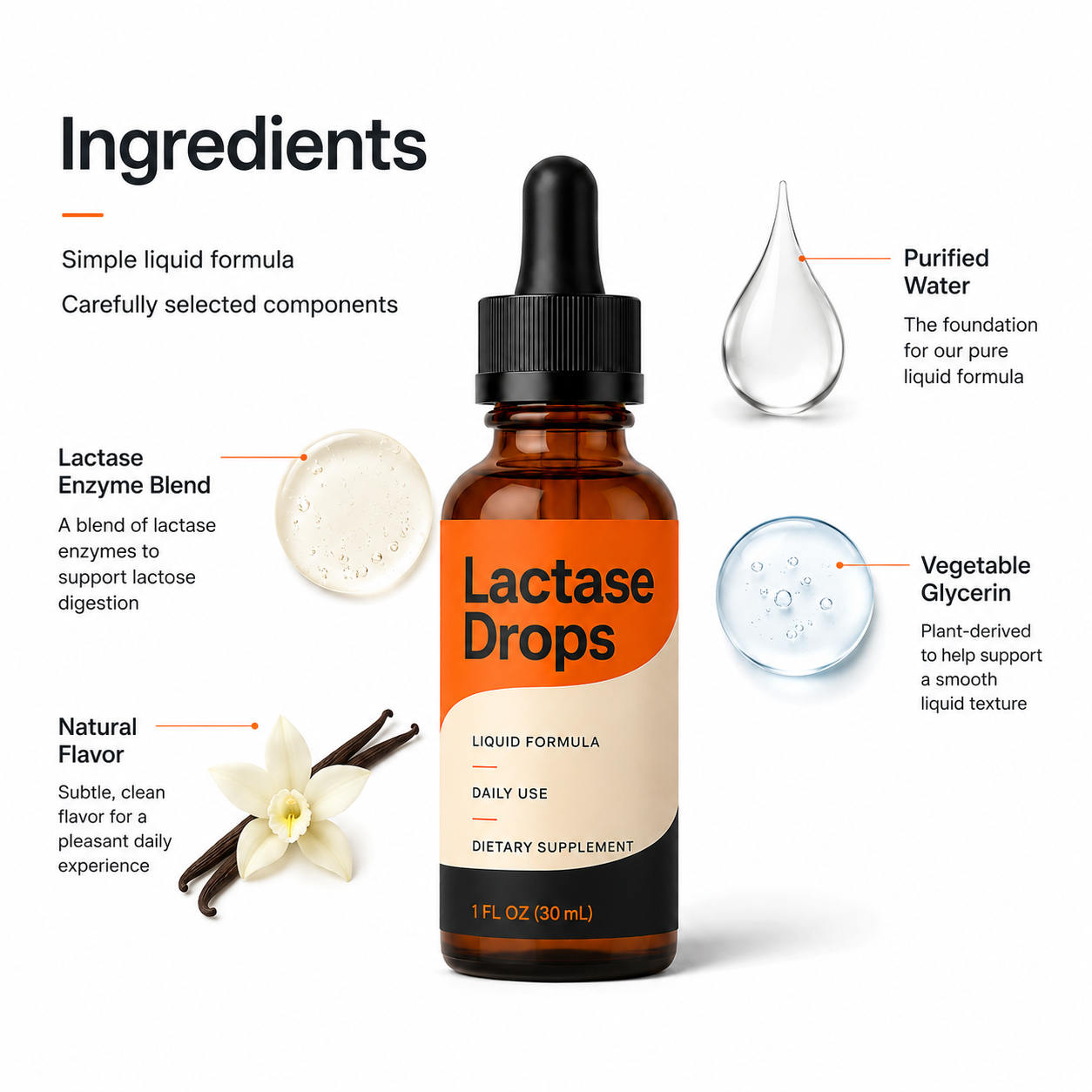
Enzyme drops such as lactase are a special case. Lactase activity is measured in FCC ALU per dose, and enzyme activity decays over time. To hit the label claim at the end of shelf life the fill must contain an overage, typically 15 to 25 percent above the declared activity at release. That overage is not a formulation mistake; it is standard practice for any liquid enzyme product. It also means the release specification must include an activity assay, not just identity and microbiology.
A mineral like magnesium stays magnesium over two years. An enzyme like lactase does not. The release test for a liquid enzyme must show activity at release high enough that the end-of-life activity still meets the label claim. Skip this and the product may pass identity testing but fail its own label by month 18.
MOQ, lead times and what stretches the calendar
Our standard minimum for private label liquid supplements is 1,000 units per product for both drops and ready-to-drink bottles. Samples typically take 7 to 10 days once the formula and sample requirements are confirmed, and standard production runs about 15 days after formula, artwork and packaging approval. That is the same baseline as our capsule and powder lines, but liquids can stretch for two reasons: custom bottle coatings or closures, and a stability protocol that requires a preservative-efficacy test before release.
A preservative-efficacy test, sometimes called antimicrobial effectiveness testing, takes 28 days once started. It is a USP-style challenge study that inoculates the product with bacteria, yeast and mold and measures kill or inhibition rates. It is not needed for anhydrous oil products, but for most water-based drops it is the gate between a promising sample and a releasable batch. We recommend budgeting it into the project timeline from day one rather than adding it as a panic item after the first failed micro check.
The full timeline arithmetic — artwork, packaging minimums and how each dosage form moves the calendar — is covered in our guide to MOQ and lead times in supplement manufacturing.
Labeling and claims: what can go on a liquid bottle
Liquid supplement labels carry the same structure-function rules as any dietary supplement, plus a few format-specific requirements. Serving size must be stated as a volume, with a drop count if the dose is drop-based. The Supplement Facts panel must match the validated serving size, not the bottle volume. Storage directions are part of the product for liquids: 'shake well before use' is not decoration; it homogenizes suspensions and redissolves any settled actives. 'Refrigerate after opening' changes the consumer promise and the stability protocol.
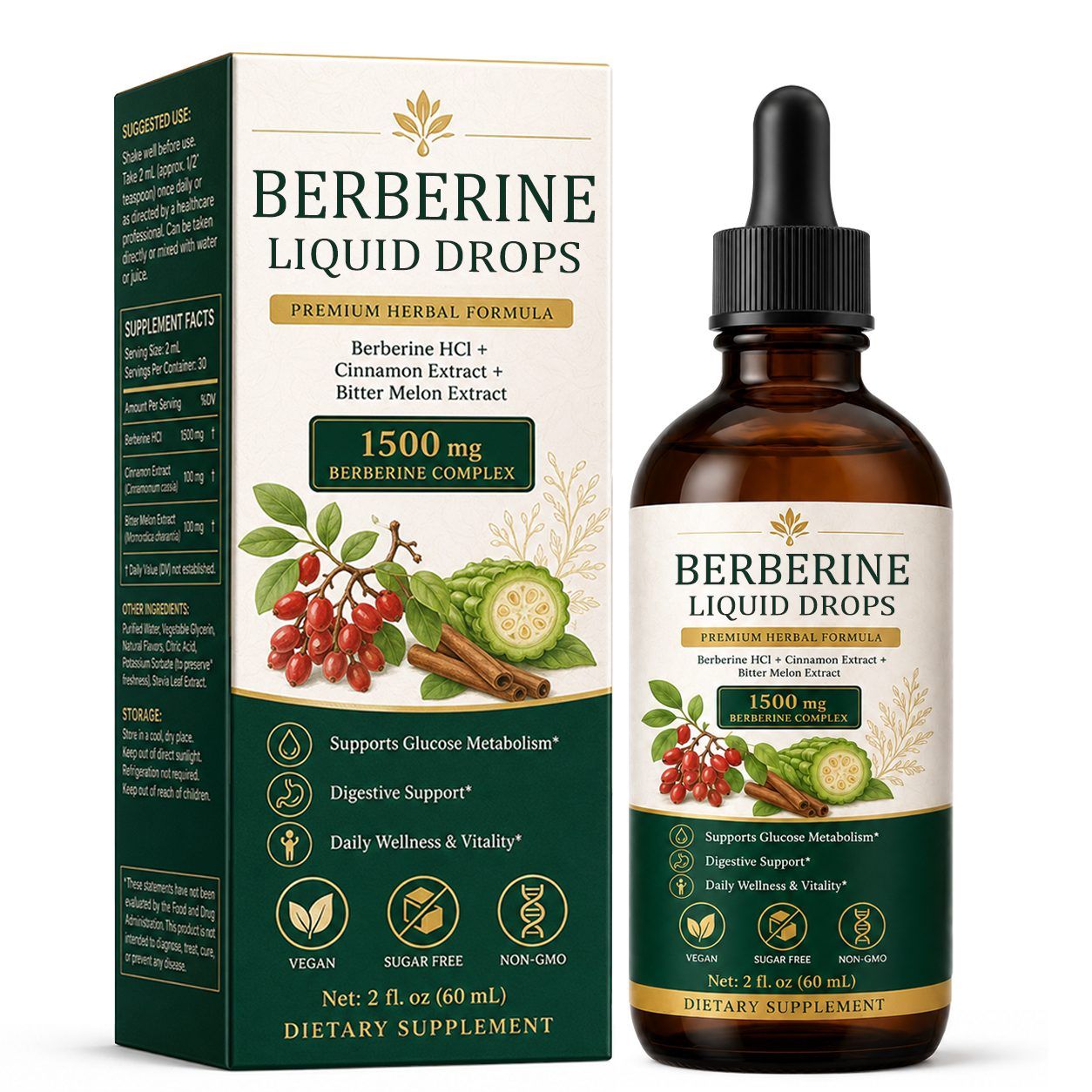
Claims also need to fit the evidence. 'Supports glucose metabolism' or 'helps maintain healthy blood sugar levels already within the normal range' are structure-function claims that can work for berberine. 'Treats diabetes' or 'lowers blood sugar' are disease claims and will not survive a regulatory review. The same distinction applies to 'liposomal,' 'sugar-free,' 'alcohol-free' and 'preservative-free' — each must be supportable by the formula, the process and the documentation.
The country-by-country framework for claims, cGMP expectations and Halal certification is covered in our overview of FDA, cGMP and HALAL requirements. For liquid products the Halal question often lands on the base: an alcohol-free water-glycerin system is straightforward; an alcohol-based tincture is not.
The checklist below is what we send to brand owners scoping their first private label liquid supplements project.
A pre-brief checklist for liquid supplement projects
- Define the active's solubility before choosing water, oil or emulsion base.
- Set the pH target for water-based formulas and confirm the preservative is effective at that pH.
- Specify the glycerin ratio and understand how it changes viscosity and drop behavior.
- Validate the actual dropper on the actual formula; do not assume 30 drops equals 1 mL.
- Budget a 3 to 5 percent fill-volume overage to protect every serving and the label claim.
- Ask for a preservative-efficacy test timeline if the product is water-based.
- Confirm whether 'liposomal' will be supported by particle-size data and encapsulation efficiency.
- Choose bottle material from light sensitivity and freight weight, not shelf styling alone.
- Lock the closure type early: child-resistant, tamper-evident and graduated options have different lead times.
- Plan the enzyme activity overage if the active is an enzyme like lactase.
- Request a COA that includes pH, fill volume, potency and microbiology, not just identity.
- Match the label storage directions to the stability protocol you actually run.
Planning a private label liquid supplement or dropper product?
Send us the active, the target dose per serving, the base you prefer and your destination market. We will come back with a pH-preservative recommendation, a packaging cost breakdown and a sample plan — NDA protected.
What to carry into a liquid supplement project
- Water-based drops need pH below about 5.5 for potassium sorbate to work; otherwise the preservative is largely inactive.
- Dropper dosing is physics, not arithmetic: validate the actual dropper on the actual formula.
- A 60 mL bottle needs 3 to 5 percent overfill above the labelled net contents to protect the last servings.
- Most 'liposomal' claims need particle-size validation; lecithin in the base is not enough.
- Packaging is usually the largest cost block in a finished liquid unit, more than the active ingredient.
- Enzyme drops need an activity overage of 15 to 25 percent to meet label claim at end of shelf life.
Sources
- TikTok Shop US category data — Top 100 health products by dosage form and function (public ranking), 2026
- U.S. FDA - Guidance for Industry: Questions and Answers on Dietary Supplements
- USP General Chapter <51> Antimicrobial Effectiveness Testing
- Yukang Medicine internal formulation and production records for liquid drops and oral liquids SKUs
Key takeaways
- Water-based drops need pH below about 5.5 for potassium sorbate to be effective; otherwise the preservative is largely inactive.
- Dropper dosing depends on viscosity and surface tension; validate the actual dropper on the actual formula.
- A 60 mL bottle needs 3 to 5 percent overfill above labelled net contents to keep every serving within label claim.
- Most 'liposomal' claims need particle-size validation; lecithin in the base is not enough.
- Packaging is usually the largest cost block in a finished liquid unit.
- Enzyme drops need an activity overage of 15 to 25 percent to meet the label claim at end of shelf life.
Frequently asked questions
What is the standard MOQ for private label liquid supplements?
Our standard minimum is 1,000 units per product for both dropper bottles and ready-to-drink liquids. Custom bottle coatings, closures or a true liposomal process can raise that floor, so we confirm the exact MOQ against your packaging and process choices in the quotation.
Can vitamin D3 be made as a water-based drop?
Vitamin D3 is fat-soluble, so an oil-based carrier such as fractionated coconut or MCT oil is the standard formulation. A water-based emulsion is possible but adds homogenization, stability and label work that most first projects do not need.
How long does a liquid supplement project take from brief to delivery?
Sampling takes 7 to 10 days after formula confirmation, and standard production runs about 15 days after artwork and packaging approval. Water-based products that need a 28-day preservative-efficacy test add roughly one month before release, so budget that timeline early.
What makes a liquid supplement shelf-stable for 24 months?
A 24-month shelf life needs the right combination of pH, preservative or antioxidant load, light and oxygen barrier, and validated stability data. Oil-based products avoid microbial growth by keeping water activity near zero; water-based products rely on pH and preservative control.
Are liposomal liquid drops really better absorbed?
A true liposomal formulation can improve bioavailability for some actives, but only if it is supported by particle-size data and encapsulation-efficiency testing. Many products marketed as liposomal are simply lecithin solutions. We only use the claim when the process and documentation support it.
What testing should a finished batch of liquid drops ship with?
A typical release specification covers identity and potency of the active, pH, fill volume, microbial limits, heavy metals and physical inspection of the bottle, dropper and seal. Oil-based products should also show peroxide value or antioxidant content. Enzyme drops need an activity assay that supports the label claim through end of shelf life.
Have a project in mind? We'll come back with MOQ, formula options and lead time within 24 hours.
Request a Quote