Taste is the only specification a customer can check in ten seconds
A new brand will argue for three weeks about a dose table and then approve a flavour over a single email. That order of attention is backwards, because taste is the one part of the specification the customer tests personally, repeatedly, with no certificate of analysis to reassure them. A 30-serving tub is thirty sensory decisions, and the second one matters more than the first: novelty carries the first sip, and only a flavour that survives repetition carries a subscription.
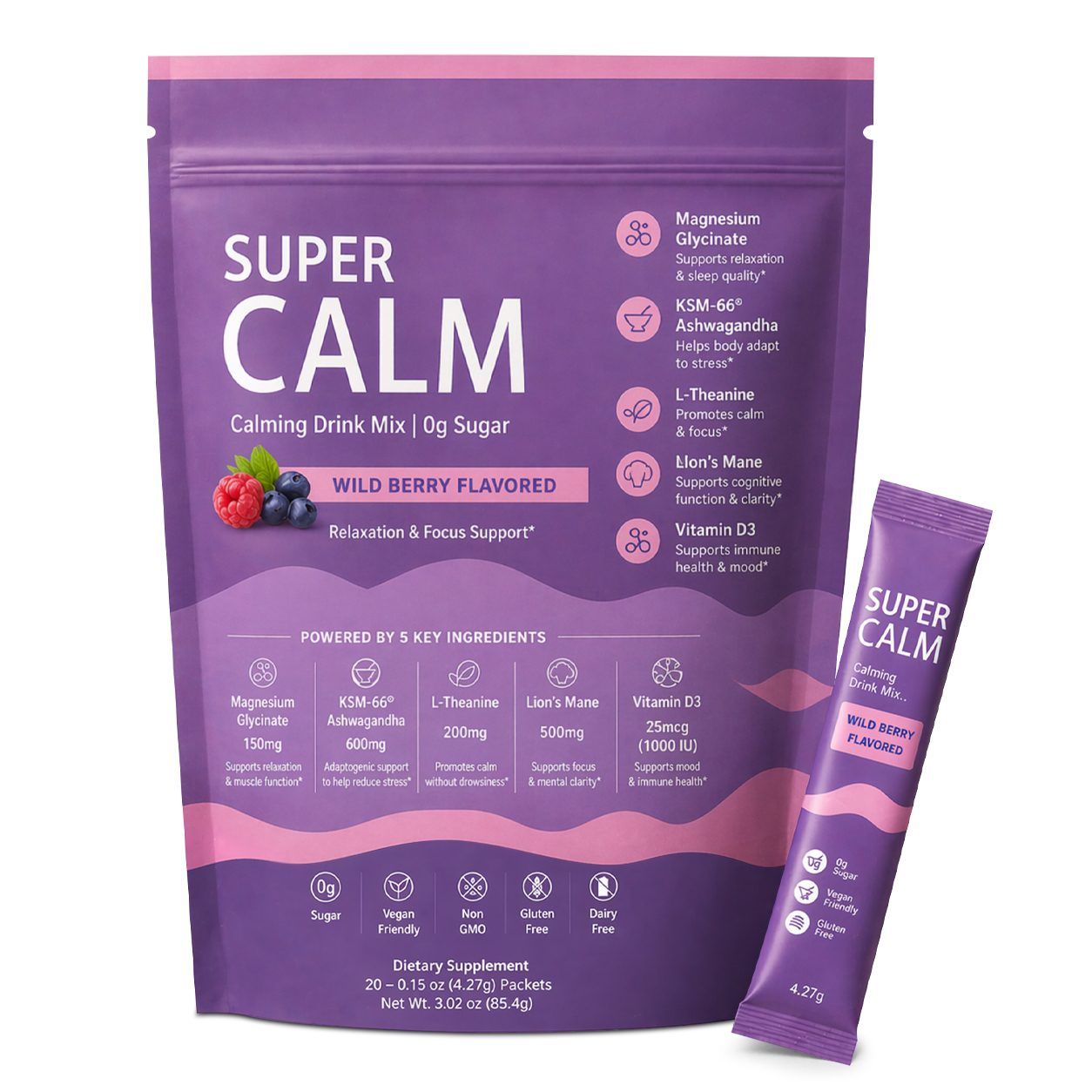
The mask is also where the arithmetic gets tight. A sugar-free calming stick weighs 4.27 g. At the 1.0 to 1.5% flavour load a dry mix can absorb, that is 43 to 64 mg of flavour concentrate, roughly the amount that sits on the head of a pin. Inside that budget the formulator has to cover 600 mg of ashwagandha, 150 mg of magnesium glycinate and 200 mg of L-theanine, and still leave something a buyer would describe as wild berry rather than as a vitamin.
This is why private label supplement flavours fail at the quotation stage rather than at the sensory panel. The dose was fixed in the marketing deck, the format was fixed by the retail price, and nobody checked whether the two left room for a flavour system. The sections below work through the load ceiling by format, the sweetener arithmetic, the masking levers that move a bitter note, and the stability economics that decide whether the note survives month twenty-four.
Why flavour is a commercial decision before it is a creative one
A supplement brand has three points of contact with its customer: the label, the price and the taste. The first two are decided by the manufacturer's quote and the retailer's margin. The third is decided by a flavour house, and it is the only one the customer experiences with their mouth. That asymmetry explains a pattern we see across categories: brands that hand the taste brief to a designer and a mood board lose the reorder, and brands that treat it as a formulation line item keep it.
Private label supplement flavours also carry a regulatory load that most briefs ignore. A flavour is not an inert additive on the panel: it can change the sugar declaration, trigger an allergen statement through its carrier, decide whether a natural claim is defensible, and in the European Union it can pull a product into a category with mandatory warning text. The same 40 mg of strawberry concentrate is a different product in the United States, the European Union and the Gulf, because the same word means three different things on three labels.
The commercial frame is simpler than the technical one. A taste decision sets three numbers: the raw material cost per serving, the number of SKUs the brand can afford to carry, and the share of first-time buyers who come back. Only the first number appears in a quotation. The other two appear in the second year, which is why they are usually the ones that get missed.
The flavour load budget: what a dose can physically carry
Flavour load is the share of the finished unit taken up by the concentrate, and every format has a practical ceiling. Push past it and the powder cakes, the tablet loses its hardness, the gummy sweats, or the flavour turns chemical and lingering. The ceiling is set by mass, by the carrier the concentrate sits on, and by how much of the dose is already committed to actives.
| Format | Usable taste load | Mass per unit | What the ceiling is set by |
|---|---|---|---|
| Capsule, two-piece | 0% | 0 mg | No taste contact until the shell opens; strong aftertastes need a coated beadlet or a softgel instead |
| Tablet, swallowable | 0.1 to 0.3% in the film coat | 2 to 6 mg | The coat carries the note, so the ceiling is coat weight and the swallow, not the bite |
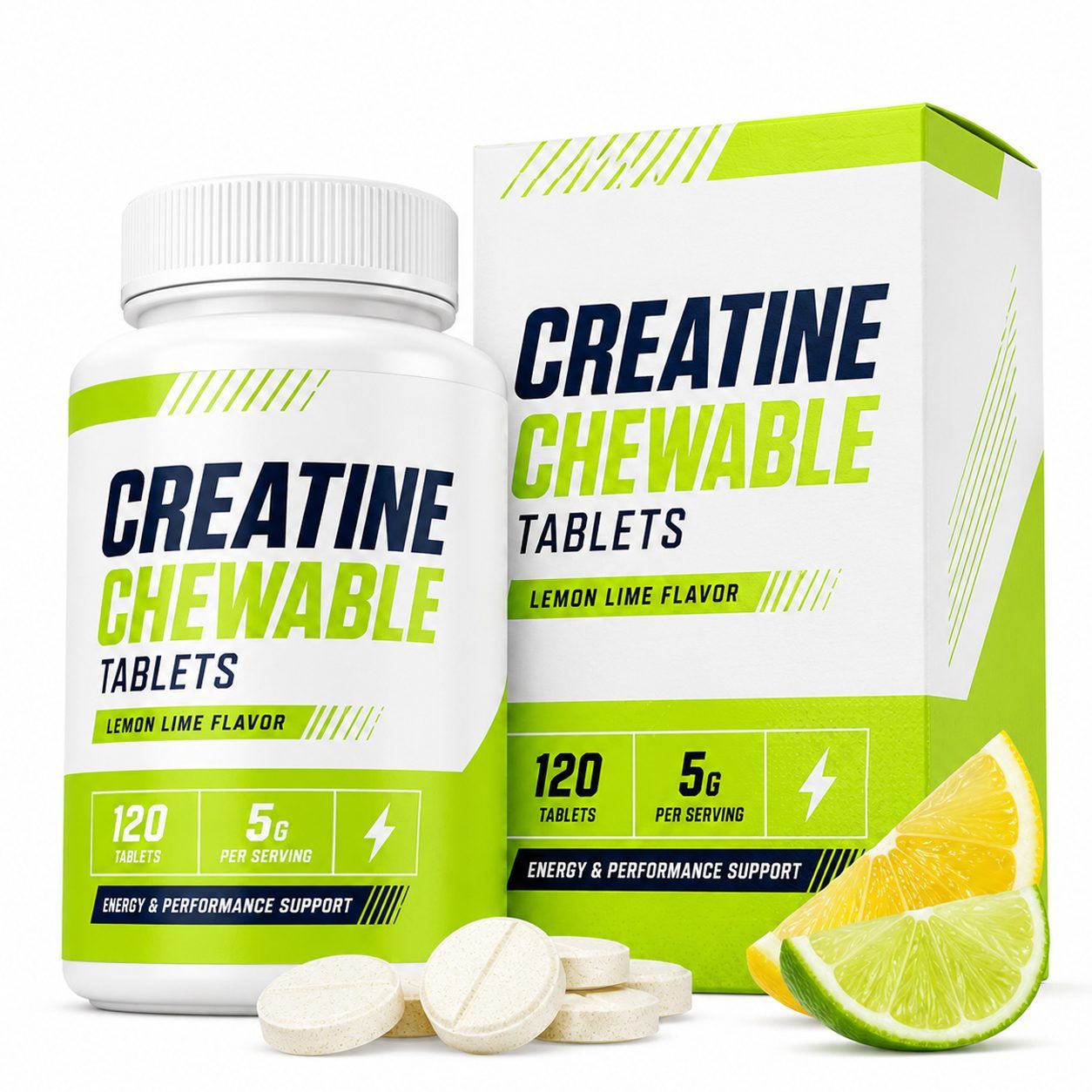
| Tablet, chewable | 0.8 to 1.5% | 12 to 25 mg | Hardness above 8 kp slows release; acid at 0.5 to 1.0% is needed alongside |
| Gummy, 2.5 g | 0.3 to 0.8% | 8 to 20 mg | Cooking at 80 to 95°C burns off 15 to 25%, so the concentrate is dosed for the kettle |
| Softgel | 0 to 0.1% in the fill | 0 to 4 mg | It only masks an oil; the shell gives no taste at all |
| Stick pack, 4.27 g | 0.8 to 1.5% | 34 to 64 mg | Enough for a top note, not for 600 mg of a bitter botanical |
| Powder, 30 g scoop | 1.0 to 1.8% | 300 to 540 mg | A full taste build is possible; 0.3 to 0.8% acid is needed for a sour top note |
| Liquid, 15 mL | 0.1 to 0.4% | 15 to 60 mg | Preservative and acid share the water; citrus fades first |
| Drops, 1 mL | 0.05 to 0.2% | 0.5 to 2 mg | Mostly aroma; bitterness has to be solved in the base, not in the top note |
Two rows in that table decide most projects. The stick pack carries a top note only, which is why sugar-free stick brands converge on berry, citrus and tropical families: those three read clearly at 40 to 60 mg, and almost nothing else does. The 30 g scoop carries a real flavour build, which is why protein brands can afford strawberry cheesecake and capsule brands cannot. When a brief asks for a 4 g stick that tastes like a dessert, the honest answer is a bigger stick, a smaller active dose, or a gummy.
Sweetener systems: the line item that decides both label and cost
In private label supplement flavours, the sweetener is rarely the expensive ingredient and almost always the expensive decision. A high-intensity sweetener is used at 5 to 20 mg per serving, so even a grid price of 300 US dollars per kilogram puts the cost well under one cent. The cost arrives with the bulking agent that has to replace the sugar, and with the claim that the bulking agent forces onto the label.
| Sweetener | Sweetness vs sucrose | Typical level | Cost per unit sweetness | Effect on the label |
|---|---|---|---|---|
| Sucralose | 600x | 5 to 12 mg | 1.0 | No sugar, no polyol, no bulking agent needed; the cheapest route to a 4 g sugar-free stick |
| Steviol glycosides, Reb A | 200 to 300x | 8 to 16 mg | 2.5 | Plant-derived wording; above 250 ppm it leaves a liquorice tail that reads as diet |
| Rebaudioside M | 200 to 350x | 8 to 16 mg | 8 to 12 | The only stevia that stays clean at high load, which matters once the active is bitter |
| Monk fruit, mogroside V | 150 to 300x | 12 to 22 mg | 10 to 15 | Fruit-derived story with a slow onset; usually needs a partner sweetener for the front |
| Erythritol | 0.7x | 1.5 to 2.5 g | 4 to 6 | Bulking agent rather than a sweetener at this dose; 0 kcal in the EU, 0.2 kcal/g in the US |
| Maltitol | 0.9x | 3 to 5 g | 3 | Cheap bulk for gummies; over 10% added polyol the EU label needs a laxative warning |
| Allulose | 0.7x | 3 to 6 g | 12 to 18 | Browns and behaves like sugar, but is not authorised for food use in the EU |
| Cane sugar | 1x | 3 to 4 g | 1.5 | The cheapest taste system of all, and the only one that cannot carry a sugar-free claim |
The chart makes an unpopular point: cane sugar is not the expensive option, the sugar-free claim is. A full-sugar stick at 3.5 g of sucrose per serving costs about the same in raw materials as a sucralose-only stick, and less than half of an erythritol-bulked one. What the brand pays the premium for is the word sugar-free on the front of the pack and the 15 calories it removes. That is a legitimate marketing investment, but it belongs in the pricing model as a marketing investment, not disguised as a formulation cost.
Sweetness equivalence is not linear in a mix. Two sweeteners at half the iso-sweet dose each do not sum to the same sweetness, and a high-intensity sweetener paired with erythritol reads sweeter at the front and thinner at the back than either alone. Every sweetener change needs a fresh panel, not a spreadsheet conversion, because the off-note profile changes with the partner and not just with the dose.
Masking bitter, metallic and savoury actives
Masking is where a private label supplement flavours brief earns or loses its money, and it is the part most often reduced to a single instruction: make it berry. Bitterness, metallic notes and savoury notes are three different problems with three different fixes, and a single fruit flavour solves none of them on its own.
Bitterness has a threshold, and caffeine sits well above it
Caffeine is detected as bitter at roughly 100 to 200 ppm in water, which means a 100 mg dose in a 200 mL serving is already at 500 ppm and unmistakable. Sweetener alone cannot cover that. The working combinations are a bitterness blocker such as a phospholipid or a sodium salt at 0.05 to 0.15%, an acid profile that pushes perception forward, and a flavour family with a strong aromatic top note. This is also why energy sticks at 4.8 g prefer sour citrus and tropical over chocolate: a cocoa note over caffeine reads as burnt, while a lime note reads as intentional.
Mineral salts taste like the sea, and the fix is often the salt form
Magnesium oxide is chalky, magnesium chloride is briny, and magnesium citrate at 3 g in 150 mL has a distinct saline-sour tang that no strawberry will hide. Brands that fight this with flavour spend three revision rounds and still ship a product that tastes like a mistake. Brands that change the salt form, moving to glycinate or a blend at a lower elemental dose, solve it in the formula. The same logic applies to potassium, which is bitter and saline above about 300 mg per serving in a ready-to-drink.
Some actives are savoury, and fruit flavours fight them
L-theanine at 200 mg in 150 mL reads umami, close to a weak broth, and a berry flavour over an umami base produces a note that tasters describe as stale without being able to name it. Peach, citrus and white tea families sit on top of umami far better than red fruit does. The same is true of hydrolysed collagen, which carries a gelatine note that vanilla and citrus mask more convincingly than strawberry, and of green tea catechins, which are astringent rather than bitter and need a fat or a cyclodextrin rather than a sweetener.
The three levers that actually move a bitter note
In practice a formulator has three levers and should use them in this order. The first is dose and salt form, because halving a bitter active is free. The second is physical separation, such as a coated beadlet or a two-layer tablet, which keeps the active away from the palate until it is swallowed. The third is the taste system itself: a bitterness blocker, an acid, a sweetener with a clean tail, and a flavour family chosen for the active rather than for the mood board. Flavour is the last lever, not the first, and a brief that starts there will spend its budget in the wrong order.
Flavour stability over a 24-month shelf life
A flavour that passes the panel at week two and fails at month twelve is worse than a flavour nobody liked, because the cost lands after the packaging is printed. Flavour degradation follows the chemistry of the family: citrus depends on aldehydes and terpenes that oxidise, berries depend on esters and anthocyanins that fade with heat, and anything with a dairy or protein base will develop a cardboard note from lipid oxidation before the note itself fails.
| Taste family | Formats it suits | Failure mode | Typical symptom at 12 months |
|---|---|---|---|
| Citrus, orange and lime | Sticks, liquids, gummies | Aldehyde and terpene oxidation, accelerated by light and trace metals | Flat, cardboard-like, top note gone within 6 to 9 months |
| Berry, strawberry and blueberry | Sticks, gummies, chewables | Ester hydrolysis and anthocyanin loss under heat | Jammy then dull; colour fades ahead of flavour |
| Tropical, mango and pineapple | Sticks, liquids | Lactone and sulphur formation at high process temperature | Cooked and syrupy rather than fresh |
| Vanilla and caramel | Proteins, coffee, beadlets | Vanillin oxidation and aldehyde reactions with protein | Off-note at 6 to 9 months in high-protein matrices |
| Mint and menthol | Chewables, lozenges, drops | Menthol sublimation and absorption into packaging | Weak and waxy; the pack smells better than the product |
| Coffee and cocoa | Ready-to-drink, sticks | Maillard reactions with reducing sugars, plus sedimentation | Bitter and chalky with a visible sediment ring |
| Unflavoured, mask only | All formats | Nothing to hide behind | Mineral, savoury or gelatine notes exposed by month 12 |
Two process decisions dominate the outcome. Moisture is the first: a stick at a water activity above 0.4 will lose citrus notes and cake at the same time, which is why a desiccant sachet or a foil with a proper barrier is not an optional extra. Headspace oxygen is the second, and it is the one brands forget in a canister format, where a nitrogen flush costs a fraction of a cent per unit and doubles the aromatic life of a citrus flavour.
How to run a sensory test that means something
Most flavour approvals are a show of hands in a meeting room, which is not a test. A defensible sensory programme is cheap to run and takes about three weeks, and it is the only way to know whether a reformulation is a real improvement or a coin flip.
- Define the attribute set before tasting: sweetness onset, bitterness, aftertaste length, aroma intensity and overall liking, each on a 9-point scale.
- Use a triangle test for any change to an existing product, with at least 24 to 30 assessors so a result can reach significance at the 5% level.
- Train the panel on the reference sample for two sessions; untrained assessors reliably confuse sourness with bitterness in citrus systems.
- Serve at the temperature the customer will use, which for a stick is cold water at 4 to 8°C and for a gummy is room temperature.
- Blind the samples with random three-digit codes and randomise presentation order to remove the first-sample bias.
- Taste the full serve, not a sip, because aftertaste and mouthfeel only appear in the last third of the glass.
- Record a liking gap of at least 1.0 point on the 9-point scale before calling a change an improvement; below that it is noise.
- Repeat the panel at 0, 3, 6 and 12 months on stored samples, because a flavour that wins at week two can lose at month twelve.
- Run the panel in the destination market where the flavour vocabulary differs, especially for berry and botanical notes.
- Keep one reference sample per batch frozen as a sensory standard, so the comparison is against the approved product and not against memory.
Flavour SKU economics: how many flavours before the margin disappears
The most expensive word in a private label supplement flavours brief is a fourth flavour, and it is almost always requested as a free addition. Each flavour carries its own 1,000-unit minimum, its own stability pull, its own artwork version per market, and its own changeover on the line. The changeover is the item buyers underestimate: a stick line that runs three hours between variants loses the equivalent of a full shift across a four-variant run.
| Cost line | Two variants | Four variants | Why it scales this way |
|---|---|---|---|
| Concentrate | 2 x 5 kg | 4 x 5 kg | The flavour house minimum applies per variant, not per order, so cash is committed before the first sale |
| Line changeover | 2 x 3 hours | 4 x 3 hours | Cleaning and re-qualification are per variant, and the labour is fixed |
| Accelerated stability | 2 studies | 4 studies | Each variant is a separate 3-month pull at 40°C and 75% relative humidity |
| Artwork versions | 2 per market | 4 per market | Proofing and regulatory review repeat for every label and every market |
| Minimum order | 2,000 units | 4,000 units | Minimum applies per variant, so the cash requirement doubles with the range |
| Inventory at 60% sell-through | 800 units | 1,600 units | Dead stock concentrates in the two weakest variants, which is where the write-off lands |
The pattern we see in successful private label supplement flavours launches is two flavours at first order and a third in year two, chosen from opposite ends of the taste map so the range covers both the mainstream and the sceptic. A brand selling into a marketplace needs to look like a range, which is why four flavours appear on the listing; a brand selling its first 2,000 units needs to survive the first quarter, which is why two is the commercial answer. Splitting a 1,000-unit minimum across two flavours in a single run is possible on some lines and worth asking about early, because it changes the economics of the whole launch.
Labelling: what natural flavour actually lets you say
The word natural is defined by law in both major markets and it is narrower than most brands assume. In the United States, 21 CFR 101.22 allows natural flavour where the flavouring component comes from a plant or animal source and its significant function is flavouring rather than nutrition; if any artificial component contributes, the label must read natural and artificial flavour. In the European Union, Regulation 1334/2008 only permits natural strawberry flavouring where at least 95% of that component comes from strawberry, so a strawberry note built from other fruits has to be named differently.
The compliance detail that catches export brands is the carrier, not the flavour itself. A spray-dried flavour is usually plated onto maltodextrin or gum arabic, and a liquid flavour may be solubilised with a polysorbate or carried in propylene glycol, all of which have to appear correctly in the ingredient list and may affect a clean-label claim. Our guide to supplement regulations covers the wider market-by-market picture, and the packaging and labelling guide walks through the panel layout.
- Check the sugar claim before the flavour: sugar-free means under 0.5 g of sugars per serving in the US and under 0.5 g per 100 g in the EU.
- Treat polyols as a label event, not a formulation detail: above 10% added polyol the EU label needs the laxative warning.
- Ask the supplier for the full declaration, including carrier and solvent, and not just the allergen statement.
- Verify that a natural claim is supportable per market before the artwork is signed off, because reprinting a label costs more than the concentrate.
- Confirm whether the concentrate contains any component derived from a major allergen, even at a level below the labelling threshold.
- Check that the flavour is approved for the destination market; a note legal in the US is not automatically legal in the EU.
- Keep a sealed retention sample of the approved concentrate with the batch record for traceability.
- Name the flavour source on the specification, because a supplier substitution is the most common cause of a taste complaint.
MOQ and lead time: the flavour house sets the calendar
For private label supplement flavours the critical path usually runs through the flavour house rather than through our line. A custom development takes 3 to 4 weeks including two rounds of samples, a stock concentrate can be matched in 5 to 7 days, and the concentrate itself has a minimum order of about 5 kg. At a 1.2% dose that 5 kg covers roughly 420 kg of finished powder, which at a 30 g serving is about 14,000 servings, so the first concentrate order outlives the first production run by a wide margin. Our standard terms are 1,000 units for a stock formula, samples in 7 to 10 days, about 15 working days of production after material release, and a 24-month shelf life supported by accelerated stability. The MOQ and lead time guide shows where the weeks actually go.
One structural point is worth stating plainly, because it decides who owns the product. The flavour is often the only ingredient in the formula that the brand does not own: it belongs to a flavour house, under a code, with a formula the manufacturer cannot legally replicate. Brands that sign a supply agreement in their own name, and hold the code, keep the ability to move manufacturers later. Brands that let the manufacturer hold the code discover at the second quotation that their signature flavour cannot travel with them.
Questions to settle before the first sensory panel
Should the flavour be liquid or spray-dried?
Spray-dried for anything dry. A liquid flavour at 1% in a 4.27 g stick adds enough moisture and solvent to plasticise the powder, which shows up as caking in the stick and a sticky film on the sealing seam. A spray-dried flavour plated on maltodextrin or gum arabic flows, disperses and survives the stick filler. Liquid systems belong in liquids, drops and gummies, where the water activity is already high and the flavour has somewhere to go.
Can one flavour cover a range of actives?
Only if the actives are similar. A single berry base can carry a collagen, a multivitamin and a probiotic, because none of those three is aggressively bitter. The same base will not carry caffeine, green tea catechins, magnesium chloride and ashwagandha at the same time, and a brand that tries ends up with a flavour that is acceptable on nothing. The workable structure is one flavour family per active profile, which usually means two families for a range of six products.
How much does a flavour change cost after launch?
More than the flavour. A post-launch change means new artwork, a new stability pull, a new sensory panel, and in most markets a new label version, so the direct cost is small and the indirect cost is a quarter of shelf time. This is the strongest argument for spending the extra two weeks on the panel before the first run: the cheapest flavour revision is the one that happens before the printer.
Taste-testing a formula before you commit?
Send the dose table, the format and the destination market for your private label supplement flavours brief. We will return a flavour load check, a sweetener cost comparison and a masking recommendation, usually within two working days.
What to lock before the flavour brief is written
- The format sets the ceiling: a 4.27 g stick carries 34 to 64 mg of concentrate, which is a top note and not a dessert.
- Sugar is rarely the expensive part of a taste system; the sugar-free claim is, and it can double the raw material cost.
- Bitterness is solved by dose and salt form first, physical separation second, and flavour last.
- Umami and mineral actives need citrus, peach or tea families; red berry over L-theanine reads stale.
- Taste families fail on a schedule: citrus at 6 to 9 months, vanilla in protein at 6 to 9 months, berries as the colour fades.
- A second flavour doubles the cash requirement, not just the label count, because the minimum applies per variant.
- The code belongs to the flavour house, so the brand should hold the supply agreement and the code in its own name.
References
- US FDA - 21 CFR 101.22 Foods, labeling of spices, flavorings and colors
- US FDA - 21 CFR 101.60 Nutrient content claims for calorie content
- EU Regulation 1334/2008 on flavourings and certain food ingredients
- EU Regulation 1169/2011 on the provision of food information to consumers
- EFSA - Re-evaluation of steviol glycosides as food additives
Key takeaways
- Flavour load is capped by format mass, so a 4.27 g stick can carry about 60 mg of concentrate and no more.
- The sweetener system is a pricing and labelling decision: sucralose is the cheapest route to sugar-free, and erythritol bulking is where the cost actually sits.
- Masking order matters: dose and salt form, then physical separation, then flavour family, then sweetener.
- Savoury actives such as L-theanine need citrus, peach or tea notes; red berry over umami reads stale to untrained tasters.
- Flavour families degrade on a known schedule, and moisture plus headspace oxygen decide whether citrus survives 24 months.
- A second flavour doubles the minimum order and the stability burden, because the 1,000-unit minimum applies per flavour.
- The flavour code usually belongs to the flavour house, so the brand should hold both the code and the supply agreement.
Frequently asked questions
Can you manufacture a sugar-free flavoured stick pack under 5 g?
Yes, and the format is common. A 4.27 g stick holds a 1.0 to 1.5% flavour load, a sucralose or Reb M sweetener system and 1.5 to 2.5 g of erythritol as the bulking agent, which leaves room for 600 to 900 mg of actives. What it cannot hold is a large bitter dose: above roughly 1 g of a strong botanical the flavour becomes a top note over an exposed base, and the honest options are a bigger stick, a gummy, or a lower dose.
What is the MOQ for private label supplement flavours?
1,000 units per flavour for a stock formula, with the flavour house minimum of about 5 kg of concentrate applying on top. Samples take 7 to 10 days for a stock flavour and 3 to 4 weeks for a custom development with two revision rounds, and production runs about 15 working days after material release. Because the minimum applies per flavour, a four-flavour launch carries four times the cash requirement of a single-flavour one.
Is stevia or sucralose better for a supplement powder?
It depends on the claim and the dose, not on the sweetener. Sucralose is 600 times sweeter than sucrose, needs no bulking agent and costs the least per unit of sweetness, which makes it the practical choice for a small sugar-free stick. Stevia supports a plant-derived story, but Reb A leaves a liquorice tail above about 250 ppm, and only Reb M stays clean at the load needed to cover a bitter active. Reb M costs roughly 8 to 12 times the sucralose route per unit of sweetness.
How do you mask the taste of magnesium or caffeine?
Not with fruit flavour alone. Caffeine is bitter at 100 to 200 ppm in water, so a 100 mg dose in 200 mL is far above the threshold and needs a bitterness blocker at 0.05 to 0.15% plus an acid and an aromatic top note. Magnesium is a salt problem before it is a flavour problem: oxide is chalky and chloride is briny, so moving to glycinate or lowering the elemental dose solves more than any flavour revision will.
Why does a flavour that passed the panel taste different after six months?
Because the molecules that carry the top note are the ones that react first. Citrus depends on aldehydes and terpenes that oxidise with headspace oxygen, berries depend on esters that hydrolyse with heat and moisture, and vanilla reacts with protein. The two process controls that matter most are water activity below 0.4 and a nitrogen flush or a high-barrier foil, which together can double the aromatic life of a citrus flavour.
Does natural flavour mean the same thing in the US and the EU?
No, and the difference is a common cause of rejected artwork. In the United States, 21 CFR 101.22 allows natural flavour for a flavouring component derived from a plant or animal source, with the artificial wording required if any artificial component contributes. In the European Union, Regulation 1334/2008 requires at least 95% of the flavouring component to come from the named source before the label may say natural strawberry flavouring.
Have a project in mind? We'll come back with MOQ, formula options and lead time within 24 hours.
Request a Quote